
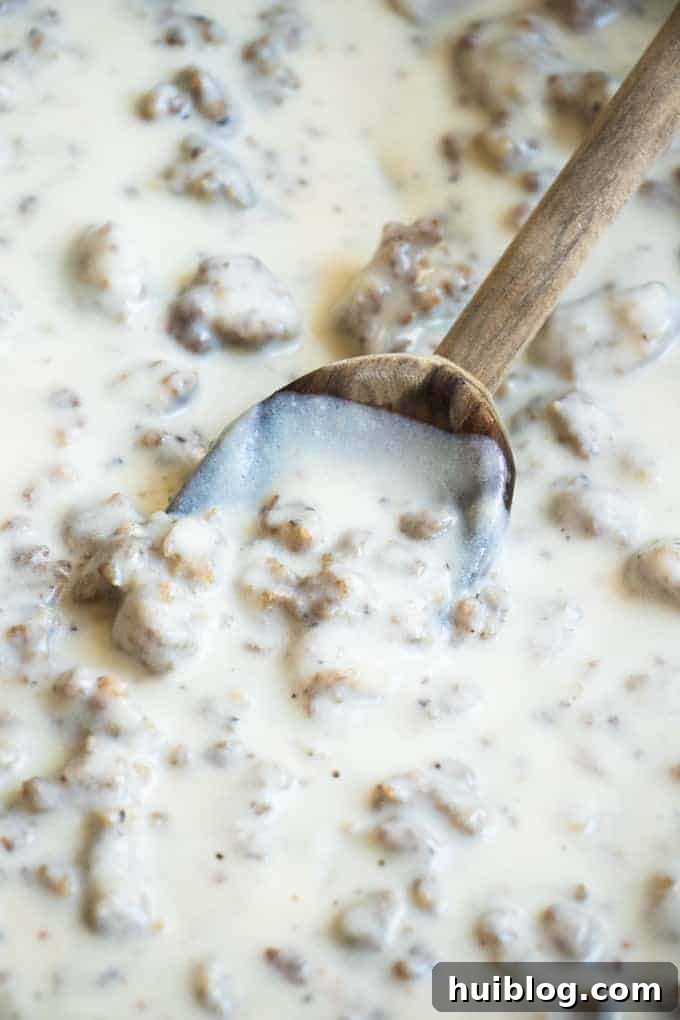
There are few aromas as comforting and inviting as a skillet filled with sizzling sausage, soon to transform into a rich, creamy gravy. Sausage Gravy, often affectionately known as Sawmill Gravy, is a true cornerstone of Southern American cuisine. This beloved breakfast staple isn’t just incredibly delicious; it’s also remarkably simple to prepare, requiring less than a handful of basic ingredients and coming together in mere minutes. Forget complicated recipes or lengthy cooking times – this hearty, soul-satisfying dish is designed for ease, delivering profound flavor with minimal effort.
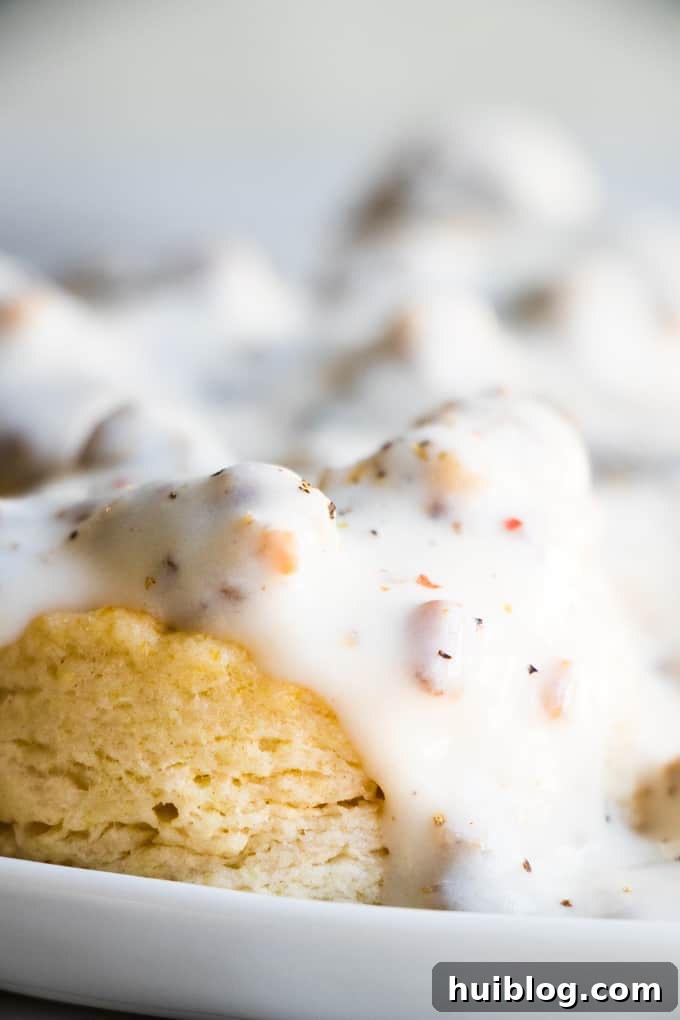
Whether you’re new to the world of Southern cooking or a seasoned pro looking for that perfect, reliable recipe, this guide to homemade sausage gravy promises to be a game-changer. It’s more than just a meal; it’s an experience, a taste of tradition that brings warmth and joy to any table. Get ready to elevate your breakfast game with what might just be the best sausage gravy recipe you’ll ever encounter.
The Enduring Charm of Sausage Gravy: A Southern Breakfast Staple
Sausage gravy, particularly when paired with fluffy, tender biscuits, holds a special place in the hearts of many. Its origins trace back to the humble kitchens of the American South, where resourcefulness and hearty ingredients were key. Often referred to as “Sawmill Gravy,” this name harks back to logging camps and rural communities where it provided a substantial and affordable meal for hard-working laborers. Made from the drippings of pan-fried sausage, thickened with flour, and enriched with milk, it was a practical, high-energy dish perfect for starting a long day.
What makes this simple dish so universally adored? It’s the harmonious blend of savory, peppery sausage, the creamy texture of the gravy, and its incredible versatility. While its core ingredients are few, the magic lies in how they are combined, creating a rich, flavorful sauce that transforms ordinary biscuits into an extraordinary feast. We’ll explore the nuances that elevate a good gravy to an outstanding one, ensuring every spoonful is bursting with classic comfort.
Crafting the Perfect Flavor Profile: The Foundation of Exceptional Gravy
The secret to truly outstanding sausage gravy lies in maximizing the flavor from each of its minimal components. With so few ingredients, each one plays a critical role in the final outcome. Prioritizing quality and understanding how each element contributes is paramount.
Selecting the Best Sausage
The sausage is undeniably the star of this dish. Its flavor forms the very base of the gravy, so choose wisely. For a classic, comforting taste that truly shines, I wholeheartedly recommend a quality Regular or Mild Pork Sausage. Many brands offer excellent options, often labeled as “breakfast sausage” or “country sausage.” Look for one that’s well-seasoned with a good balance of savory spices.
While mild is a fantastic starting point, don’t shy away from experimenting if you prefer a bit more kick. A medium or even spicy pork sausage can add a wonderful depth and warmth to your gravy. Some prefer sage-flavored sausage for its distinct herbaceous notes. The key is to ensure it’s a sausage you genuinely enjoy, as its character will infuse every drop of the gravy. Crucially, don’t drain the rendered fat! This golden liquid is liquid gold for your gravy, forming the essential foundation for your roux.
The Art of the Roux: Building the Gravy’s Body
After browning your sausage, the next vital step is creating the roux, a simple mixture of fat and flour. This is what gives your gravy its luscious, creamy texture. Adding the flour directly to the hot sausage fat is not just about thickening; it’s about developing flavor. By cooking the flour for 3-4 minutes, you achieve two important things:
- **Eliminating the Raw Flour Taste:** Uncooked flour can leave a distinctly unpleasant, pasty taste in your gravy. Proper cooking neutralizes this, allowing the rich flavors to emerge.
- **Creating a Foundation:** The flour absorbs the savory sausage fat, creating a flavored thickening agent that will seamlessly blend into the milk. This “blonde roux” is the backbone of your gravy’s silky smooth consistency and deep flavor.
Seasoning to Perfection
Beyond the inherent seasoning in your chosen sausage, a hearty dose of coarse ground black pepper is non-negotiable for authentic sausage gravy. The larger flakes of pepper provide a more intense, aromatic punch and delightful texture. For salt, it’s always best to start conservatively, as sausage itself can be quite salty. You can always add more at the end after tasting the finished gravy. Some chefs also like to add a pinch of garlic powder or onion powder for added depth, but classic salt and pepper truly allow the sausage flavor to dominate.
Step-by-Step: Mastering Homemade Sausage Gravy
Creating this rich and satisfying sausage gravy is incredibly straightforward. Follow these steps for a consistently delicious result every time.
- Brown the Pork Sausage: Begin by placing 1 pound of ground pork sausage into a large, heavy-bottomed skillet (cast iron works beautifully for even heat distribution). Break the sausage into smaller pieces with a wooden spoon as it cooks. Brown the sausage thoroughly over medium-high heat until it’s cooked through and beautifully browned. This process renders out the flavorful fat. It’s crucial to keep any rendered grease in the skillet; do not drain it out. This fat is essential for building the roux and infusing your gravy with maximum flavor.
- Create the Roux: Once the sausage is browned, sprinkle 1/4 cup of all-purpose flour directly over the cooked sausage and its drippings in the skillet. Stir constantly with your wooden spoon, ensuring the flour completely coats the sausage and absorbs all the fat. Continue to cook this mixture for about 3-4 minutes over medium heat. This step is vital to cook out the raw flour taste, which would otherwise impart an unpleasant flavor to your finished gravy. The mixture should form a thick, somewhat pasty consistency.
- Add Milk and Initial Seasonings: Gradually pour in 3 cups of milk (you can use whole milk for a richer gravy, or 2% for a slightly lighter version). As you pour, whisk continuously to prevent lumps from forming. Once the milk is fully incorporated, add 1/2 teaspoon of salt and 1 teaspoon of coarse ground black pepper. Remember, you can always start with less salt and pepper and add more at the end when you’re tasting the finished gravy to suit your preference.
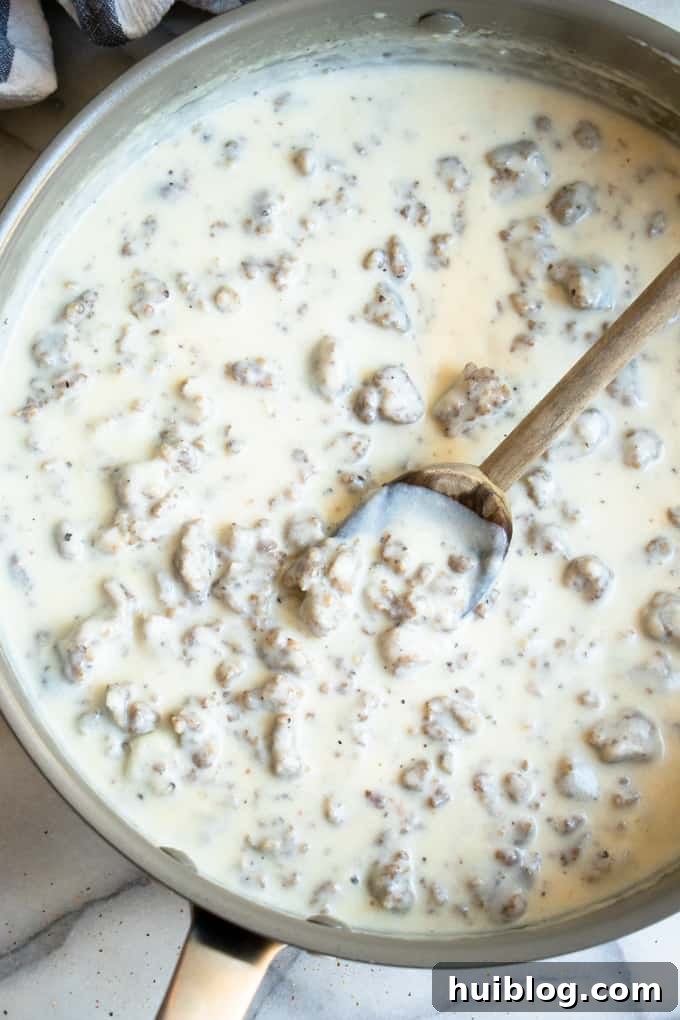
- Simmer and Thicken: Bring the gravy mixture to a gentle simmer over medium heat, stirring frequently to prevent sticking and encourage even thickening. As the gravy simmers, the flour will absorb the liquid and the gravy will begin to thicken. Allow it to simmer for about 7-8 minutes, or until it reaches your desired consistency. It should be thick enough to generously coat the back of a spoon. If you feel the gravy is too thick for your liking, you can add a bit more warm milk, one tablespoon at a time, to thin it out to your preference. Keep in mind that gravy will naturally thicken slightly as it cools.
Perfecting Consistency: Tips and Troubleshooting
Achieving that ideal creamy, pourable consistency is key to a great sausage gravy. Here are some tips and solutions to common issues:
- If your gravy is too thick: Don’t despair! Simply whisk in a small amount of warm milk, about 1-2 tablespoons at a time, until it reaches your preferred consistency. Warm milk helps prevent temperature shock and ensures a smoother blend.
- If your gravy is too thin: You can try simmering it for a few more minutes, stirring frequently, to allow more liquid to evaporate. If it’s still not thickening, you can create a quick slurry with 1 tablespoon of flour and 2 tablespoons of cold water. Whisk this into the simmering gravy and cook for another 1-2 minutes until thickened.
- Dealing with lumps: Lumps usually form when milk is added too quickly or without enough whisking. If you find your gravy has lumps, you can often whisk them out vigorously while it simmers. For a super silky-smooth gravy, some even pass it through a fine-mesh sieve or use an immersion blender briefly.

Make-Ahead & Storage Solutions for Your Gravy
One of the beauties of this sausage gravy recipe is its adaptability for make-ahead convenience, making those busy mornings much easier. If you want to be ready to go first thing in the morning with a hearty breakfast, you can absolutely prepare this gravy recipe in advance.
How to Make This Sausage Gravy Ahead of Time:
Simply prepare the recipe as directed. Once cooked, allow the gravy to cool completely to room temperature. This is important to prevent condensation and maintain quality. Once cooled, transfer the gravy to an airtight container. It can then be stored in the refrigerator.
In the morning, when you’re ready to serve, transfer the gravy back to a skillet and reheat it gently over low to medium heat, stirring frequently. Gravy often thickens significantly as it cools and sits in the refrigerator. If the gravy seems a bit too thick after sitting, just add a splash or two of warm milk (or even water or broth) while reheating, stirring until it reaches your desired consistency. This simple trick brings it back to its creamy, pourable perfection.
How Long Can I Store Sausage Gravy?
Properly stored, this homemade sausage gravy will keep wonderfully in the refrigerator for about 3-4 days. For longer storage, you can freeze the gravy! Transfer it to an airtight, freezer-safe container or heavy-duty freezer bags, leaving a little headspace for expansion. It can be stored in the freezer for 1-2 months. When ready to use, thaw overnight in the refrigerator and then reheat gently on the stovetop, adding milk as needed to adjust consistency.
What to Serve with Classic Sausage Gravy
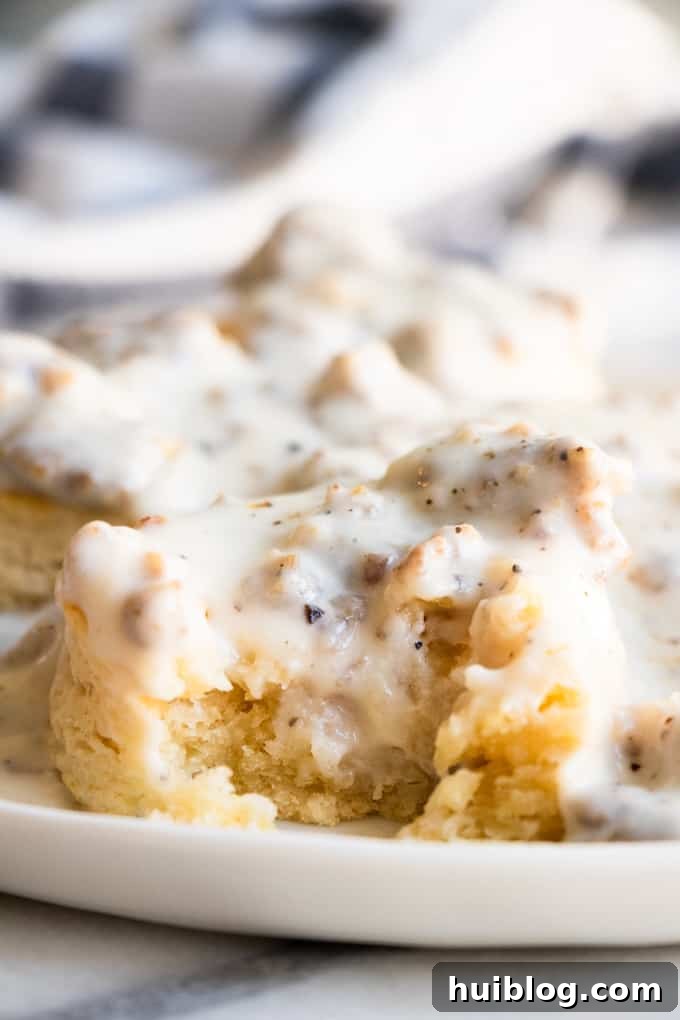
While the first and most iconic pairing that springs to mind is, of course, fluffy biscuits, sausage gravy is incredibly versatile and can elevate a variety of dishes. Here are some delicious ideas:
- Homemade Southern Biscuits: This is the ultimate classic combination for a reason. The soft, buttery layers of a fresh biscuit provide the perfect canvas for the rich, creamy gravy. Try these amazing Homemade Southern Biscuits for an authentic experience.
- Toast: For a simpler alternative, slather your sausage gravy over thick slices of toasted bread. Sourdough or Texas toast works exceptionally well, soaking up all that savory goodness.
- Grits: Creamy, stone-ground grits are another Southern favorite that pairs beautifully with sausage gravy. The subtle corn flavor and creamy texture provide a wonderful contrast.
- Breakfast Potatoes: Whether you prefer crispy hash browns or savory breakfast potatoes, a generous dollop of sausage gravy turns a side dish into a complete, satisfying meal. Try it over these Southwestern Breakfast Potatoes.
- Mashed Potatoes: Don’t limit gravy to just breakfast! For a hearty dinner, serve sausage gravy over a mound of creamy mashed potatoes. It’s an unexpectedly delicious comfort food pairing.
- Eggs: Serve a side of sausage gravy with your favorite style of eggs – scrambled, fried, or poached – for an extra boost of flavor and richness.
Essential Kitchen Tools for Gravy Making
To ensure your gravy-making process is as smooth and enjoyable as the gravy itself, a few essential tools can make a big difference:
- Large Skillet with Lid: A sturdy skillet, especially cast iron, is ideal for browning sausage evenly and building your roux. A lid is handy for keeping things warm or simmering.
- Wooden Spoons / Whisk: A reliable wooden spoon is perfect for breaking up sausage and stirring your roux. A good whisk is indispensable for incorporating the milk smoothly and preventing lumps.
Frequently Asked Questions About Sausage Gravy
Here are answers to some common questions about making perfect homemade sausage gravy:
- Can I use a different type of milk? Yes, while whole milk is recommended for the richest, creamiest gravy due to its fat content, you can use 2% or even skim milk. Just be aware that the gravy might be slightly less rich or thick. For dairy-free options, unsweetened almond or soy milk can work, but choose a brand that doesn’t have a strong flavor that might clash.
- Can I make this gravy gluten-free? Absolutely! Instead of all-purpose flour, you can use a gluten-free all-purpose flour blend (ensure it’s suitable for gravies/thickening). Alternatively, you can use a cornstarch slurry (1 tablespoon cornstarch mixed with 2 tablespoons cold water) added at the simmering stage, though the texture will be slightly different.
- What if I don’t have enough sausage grease? Some lean sausages might not render enough fat. If you find yourself with less than 1/4 cup of grease after browning your sausage, simply add unsalted butter or a neutral oil (like vegetable or canola) to make up the difference before adding the flour.
- Can I use turkey or chicken sausage? Yes, you can! However, turkey and chicken sausages are typically leaner. You’ll likely need to add extra fat (like butter or olive oil) to the skillet before adding the flour to create a proper roux. The flavor profile will also be lighter than traditional pork sausage gravy.
- Why is my gravy separating or oily? This can happen if the gravy isn’t cooked long enough after adding the milk, or if the fat content is too high and not emulsified properly with the flour. Ensure you cook the roux thoroughly and whisk well when adding the milk. If it separates, sometimes whisking vigorously over gentle heat can bring it back together.
Final Thoughts on Your Homemade Sausage Gravy Journey
Creating your own homemade sausage gravy is a rewarding experience that yields one of the most comforting and flavorful dishes imaginable. This recipe proves that extraordinary taste doesn’t require extraordinary effort. With just a few simple steps and key ingredients, you can whip up a batch of rich, creamy, and perfectly seasoned gravy that will become a cherished part of your breakfast or brunch repertoire.
Ready to savor this incredible Sausage Gravy recipe?
PIN IT NOW and keep this classic handy!
Find me on Pinterest for more delightful recipes and inspiration!
Sausage Gravy
2
10
8
Serene
Sausage Gravy! This sausage gravy, also known as sawmill gravy, is beyond easy to make! Needing less than a handful of ingredients, this hearty, comforting recipe comes together in just minutes.

Ingredients
-
1
pound
ground pork sausage -
1/4
cup
all purpose flour -
3
cups
milk -
1/2
teaspoon
salt -
1
teaspoon
coarse ground pepper
Instructions
-
Brown the pork sausage in a large skillet. Make sure you keep any grease in the skillet, don’t drain it out.
-
Add flour to the sausage. Stir this around until you can’t see the flour. Then allow this mixture to cook for about 3-4 minutes.
-
Add the milk. Stir. Add in the seasonings. You can always start with less salt and pepper and add more at the end when you’re tasting the finished gravy.
-
Allow the gravy to simmer. As the gravy simmers it will thicken. Simmer for about 7-8 minutes or until gravy is nice and thick.
Equipment
-
large skillet
-
wooden spoon
Notes
Nutrition
Serving:
1
|
Calories:
241
kcal
|
Carbohydrates:
8
g
|
Protein:
14
g
|
Fat:
16
g
|
Cholesterol:
50
mg
|
Sugar:
4
g
Nutrition information is automatically calculated, so should only be used as an approximation.
Like this? Leave a comment below!