
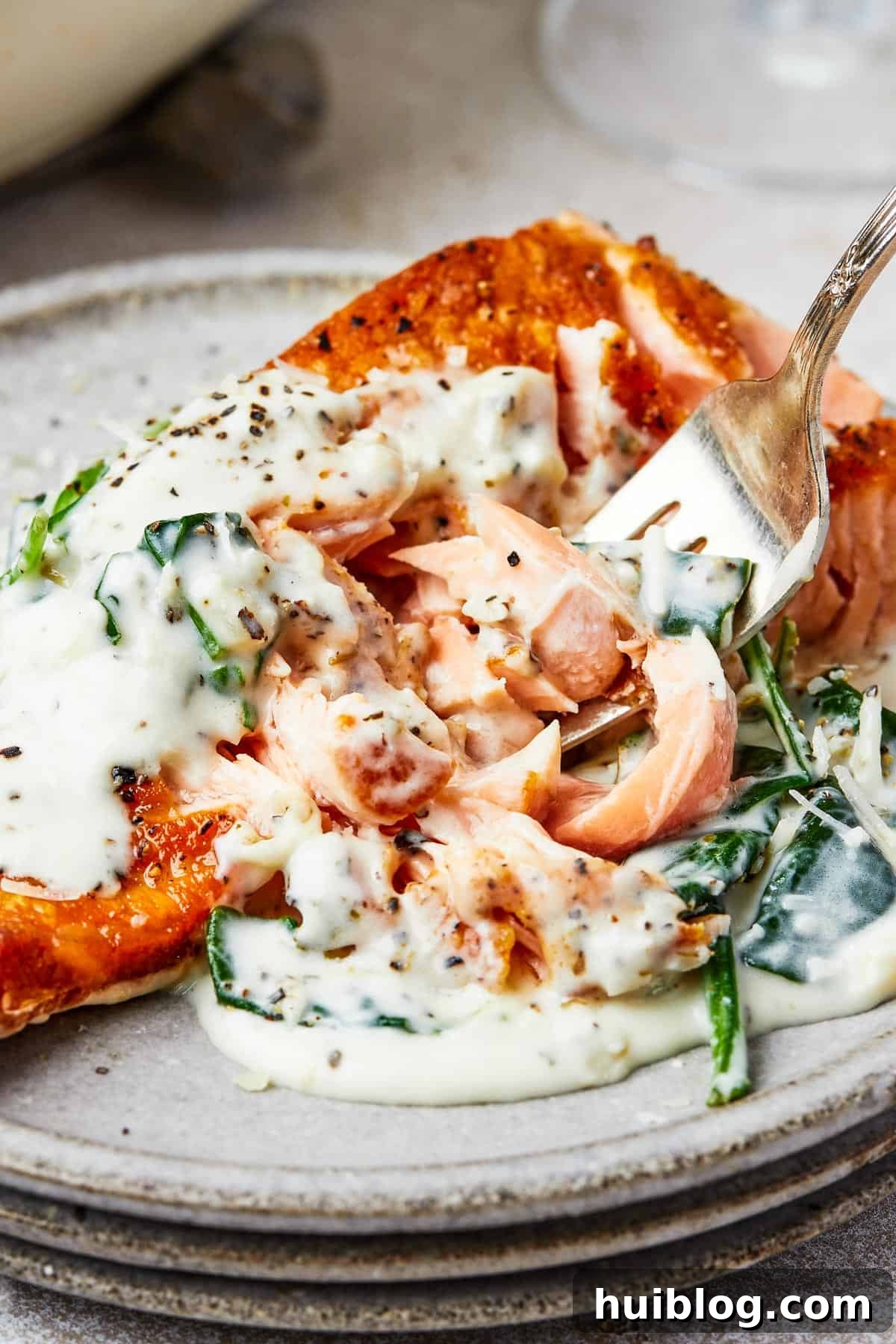
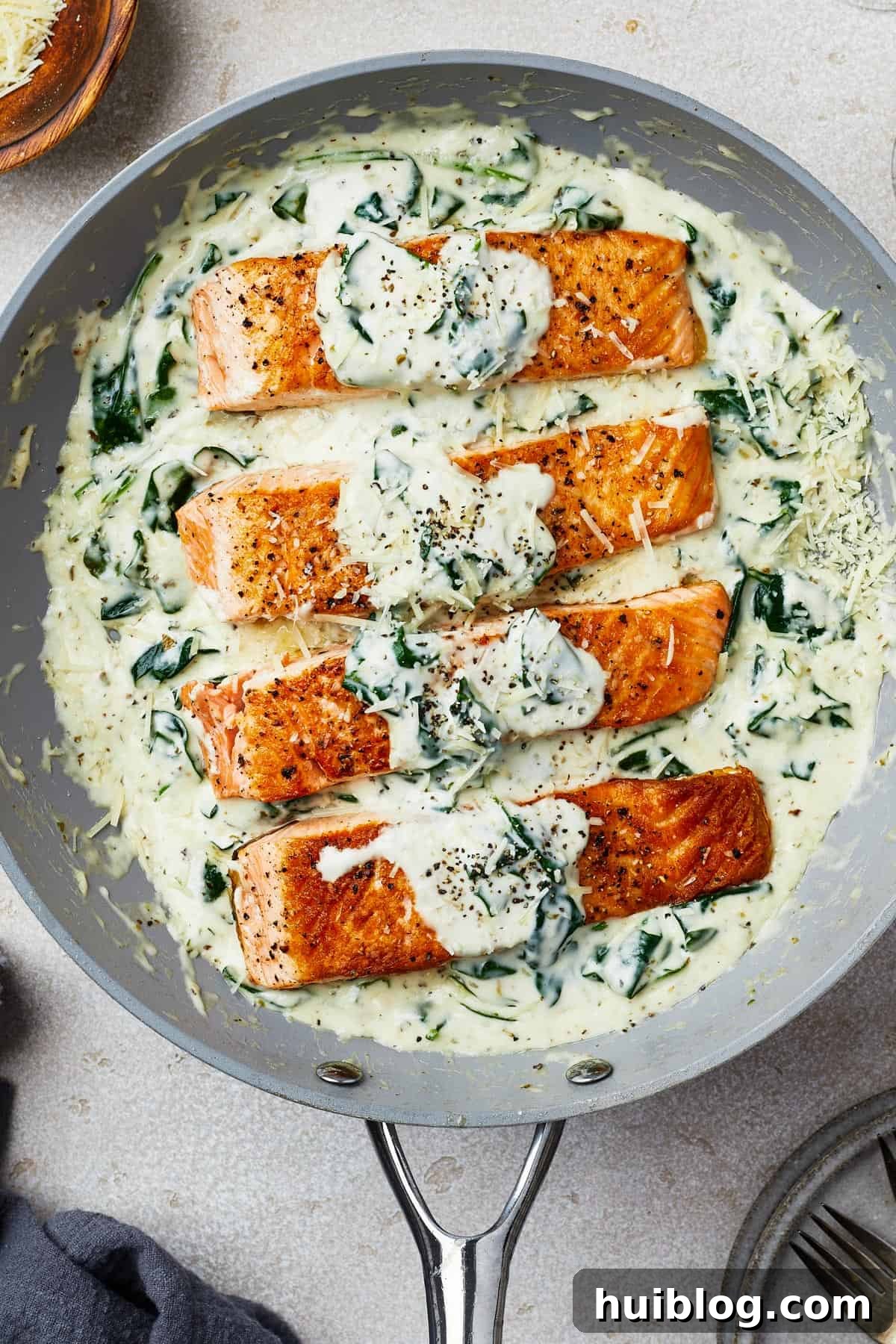
Welcome to the ultimate guide for creating a truly exquisite Salmon Florentine right in your own kitchen! This recipe is a culinary triumph, blending the simple elegance of perfectly cooked salmon with a luxuriant, creamy Florentine sauce. Imagine succulent salmon fillets, pan-seared to a tender crisp, then enveloped in a rich, garlicky, herb-infused Parmesan sauce teeming with vibrant spinach. It’s a dish that tastes incredibly gourmet, yet is surprisingly easy to prepare, making it an ideal choice for a special weeknight dinner or an impressive meal for guests.
Forget complicated cooking techniques or expensive restaurant bills. Our Salmon Florentine recipe demystifies the art of making a truly memorable seafood dish. It’s a guaranteed crowd-pleaser, delivering a symphony of flavors and textures that will have everyone asking for seconds. Get ready to add this to your collection of favorite salmon dinners!
To truly embrace an Italian-inspired dining experience, consider beginning your meal with a comforting bowl of Pasta Fagioli, a hearty soup that warms the soul. And for a grand finale, a classic, velvety Tiramisu will provide the perfect sweet end to a delicious journey from start to finish.
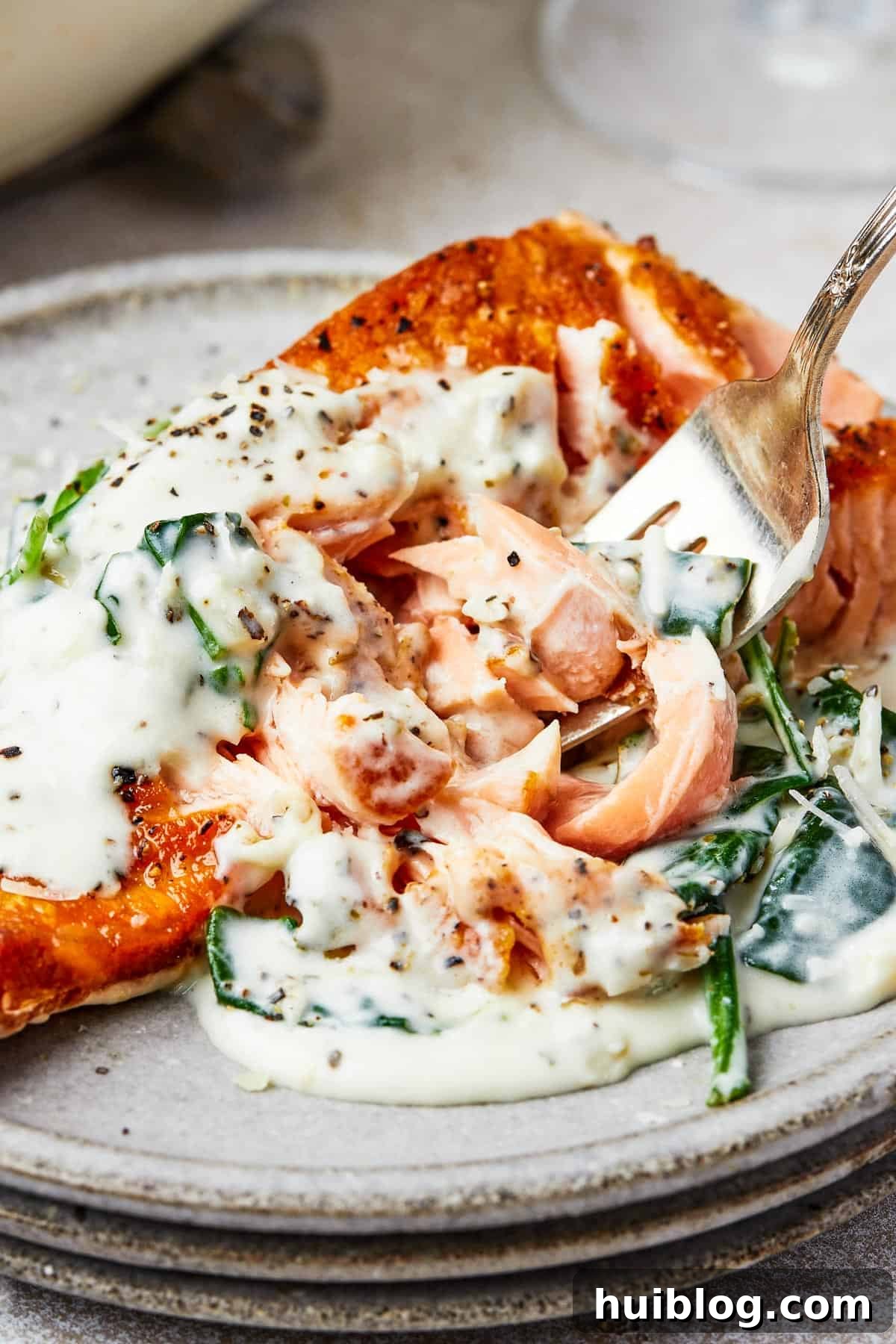
Indulge in Perfectly Pan-Seared Salmon with Creamy Florentine Sauce
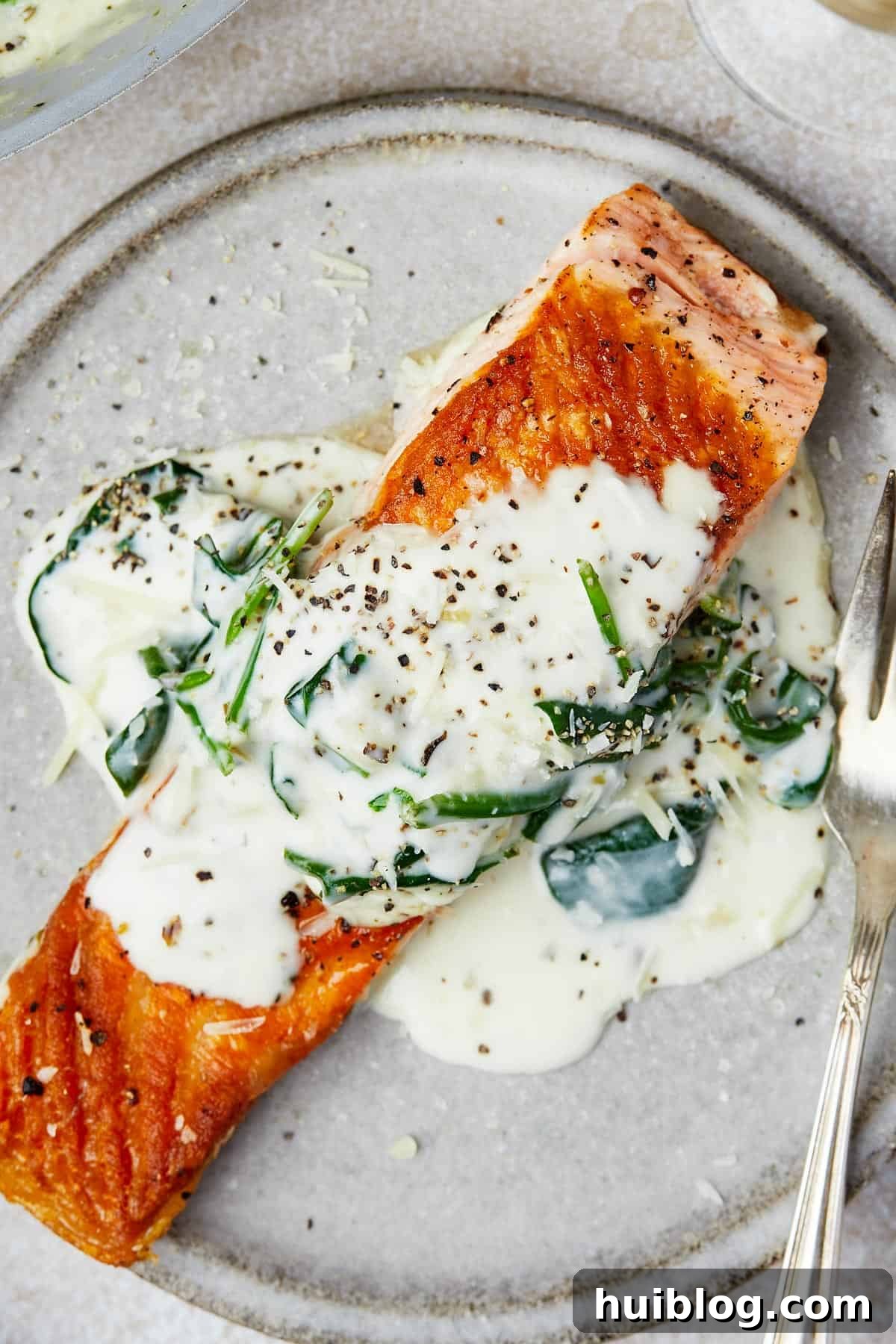
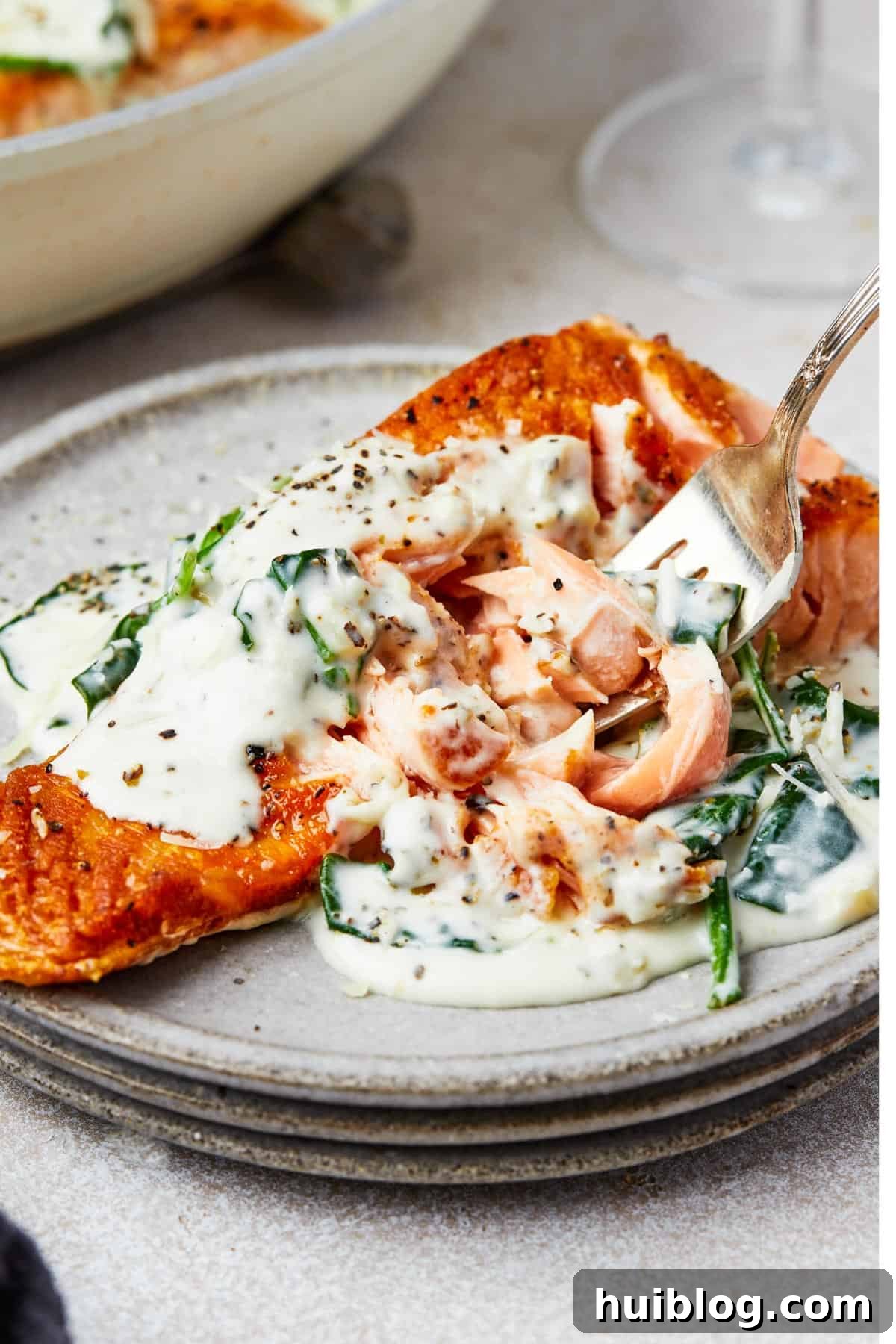
Salmon stands as a beloved fish, celebrated for its rich, buttery texture and distinct flavor that appeals to a wide range of palates. Even those who claim not to be “fish people” often find themselves falling for the charm of a well-prepared salmon dish. This recipe takes that universal appeal and elevates it, transforming simple salmon fillets into a gourmet experience. Each fillet is expertly pan-fried to achieve a beautifully tender interior and a crisp, golden-brown exterior, then generously bathed in our signature creamy Florentine sauce.
Despite its luxurious taste and elegant presentation, this Salmon Florentine is surprisingly straightforward to prepare. The process of pan-frying salmon and crafting the exquisite Florentine sauce is far simpler than it sounds, making it an accessible dish for home cooks of all skill levels. The result is a wholesome, homemade meal that tastes as though it originated from a five-star restaurant, all without the fuss or the hefty price tag. It’s truly the ultimate dinner for those seeking both convenience and culinary excellence. Prepare to witness your family and friends eagerly requesting a second helping!
What Makes a Sauce “Florentine”?
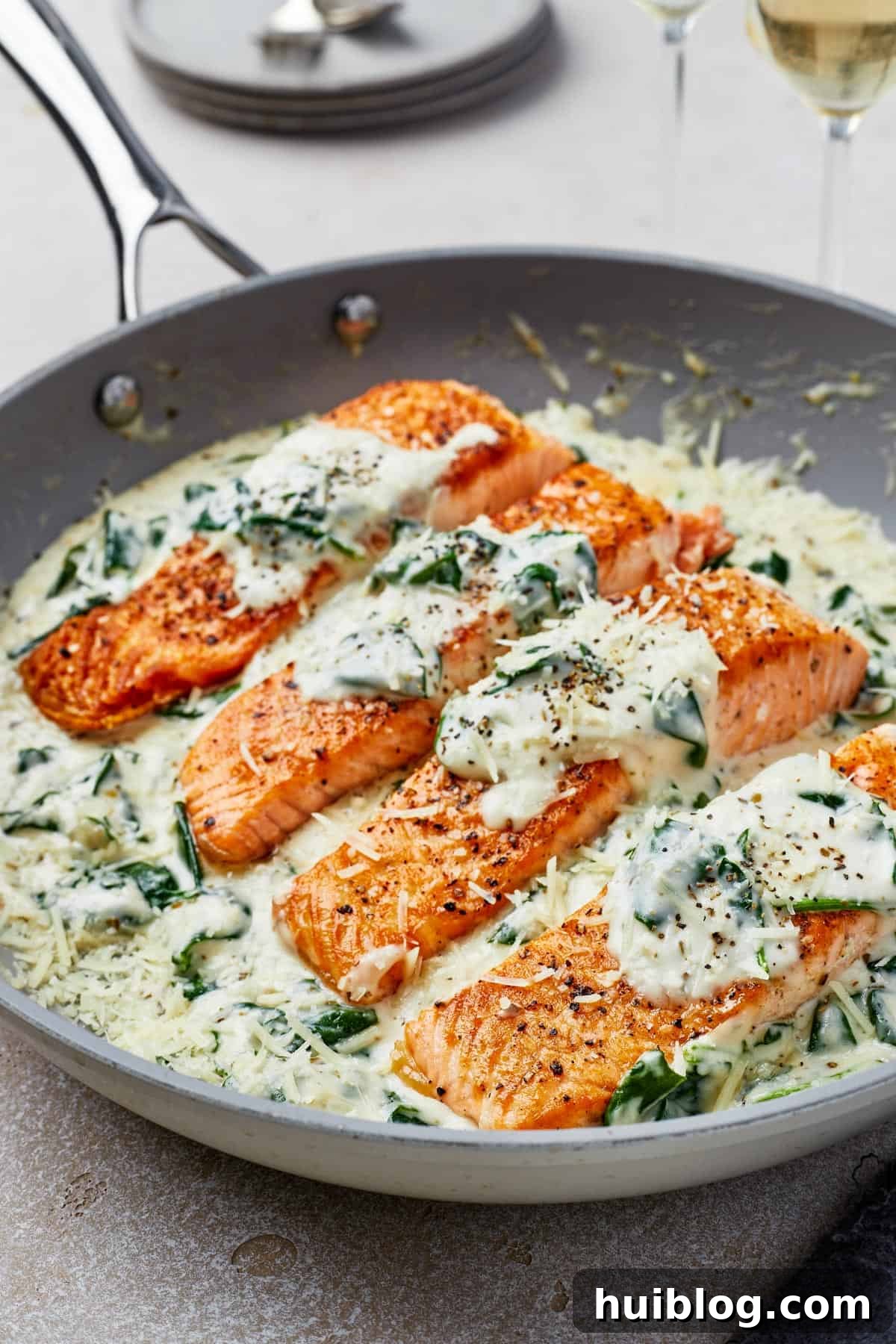
The term “Florentine” in culinary contexts typically refers to dishes prepared “in the style of Florence,” a city renowned for its rich culinary traditions. Historically, this often implies the generous inclusion of spinach. A true Florentine sauce, as we embrace it in this recipe, is a wonderfully creamy and garlicky concoction. It’s traditionally built upon a foundation of rich butter and luscious heavy whipping cream, brightened by fresh spinach, and often seasoned with aromatic herbs. While frequently paired with chicken, its velvety texture and vibrant flavors are an absolutely divine match for tender salmon. The combination of succulent salmon with this savory, verdant sauce creates a harmonious blend that is truly a match made in culinary heaven.
Essential Ingredients for Your Salmon Florentine
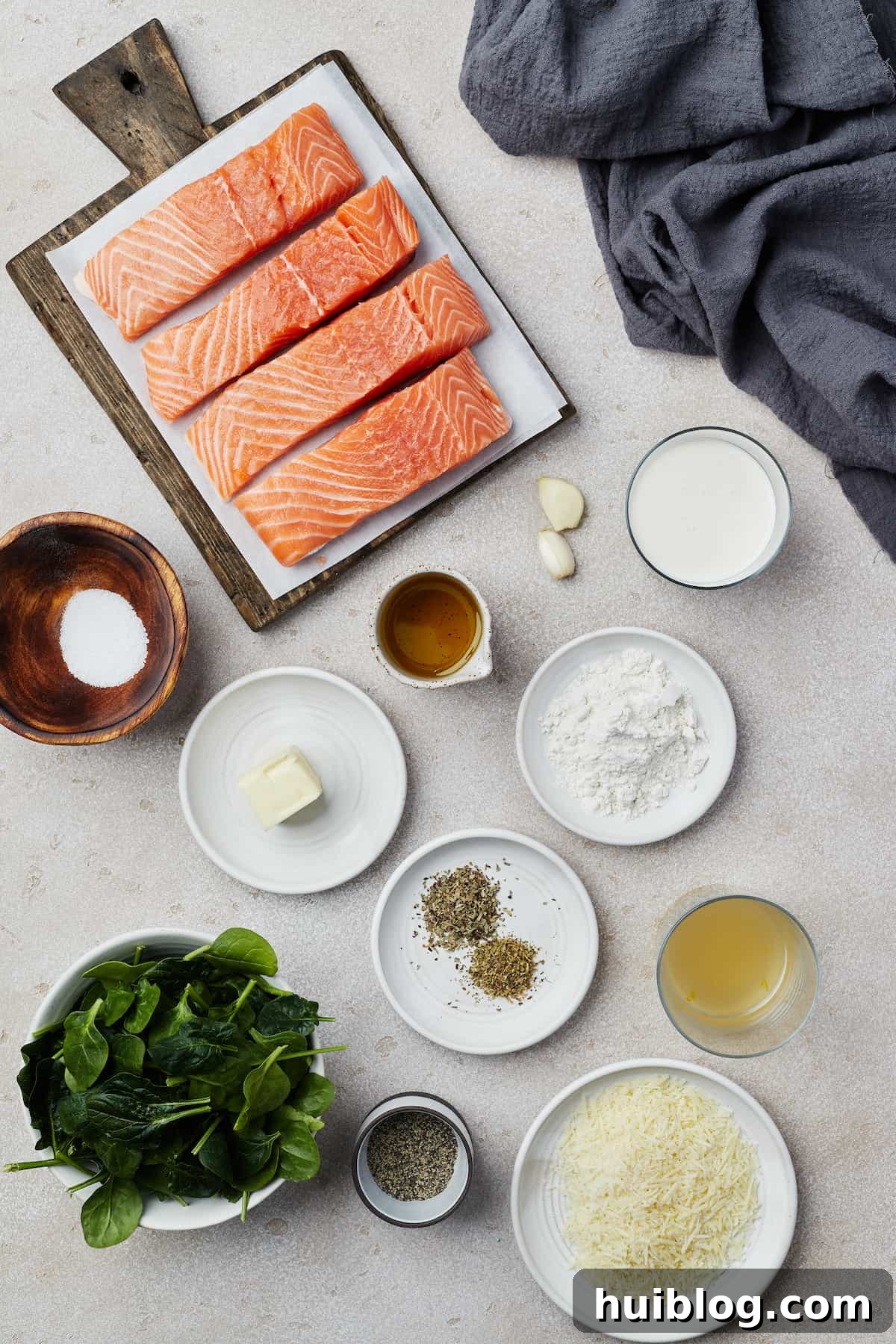
Crafting exceptional Salmon Florentine begins with selecting high-quality ingredients. While the recipe itself is straightforward, the components you choose will significantly impact the final flavor and texture of your dish. Pay particular attention to the salmon and the fresh elements of the Florentine sauce.
The undisputed star of this dish is, of course, the salmon. For the best culinary experience, aim for good-quality fillets. While many home cooks gravitate towards fresh fish, don’t underestimate the quality of frozen salmon. Often, wild-caught frozen fillets can be superior to “fresh” salmon that has been caught, transported, and displayed for an extended, uncertain period. Look for salmon that is vibrant in color, firm to the touch, and free from any strong “fishy” odor. Whether you opt for skinless or skin-on is a matter of personal preference; both work beautifully, though skinless fillets tend to absorb the sauce’s flavors more directly.
For the Perfectly Cooked Salmon
- Salmon Fillets: I personally prefer using skinless salmon fillets for this recipe, allowing the creamy sauce to cling to every surface. However, skin-on fillets are also perfectly fine; the crispy skin can add another delightful texture layer. Aim for individual portions, typically 4 to 6 ounces each.
- Salt and Freshly Ground Black Pepper: Simple seasonings are all you need to enhance the natural richness of the salmon. Season generously on both sides.
- Olive Oil: My go-to for pan-frying, olive oil provides a lovely base flavor and helps achieve that desirable crispy exterior. You can substitute with any other mild cooking oil you prefer, such as avocado oil or grapeseed oil.
For the Irresistible Florentine Sauce
- Butter: Whether salted or unsalted, butter forms the rich foundation of our sauce. If using salted butter, you might want to slightly reduce the added salt in the recipe to adjust for taste.
- Fresh Garlic: Finely minced garlic cloves are crucial for infusing the sauce with its signature aromatic depth. Fresh is always best for maximum flavor.
- All-Purpose Flour: A small amount of all-purpose flour acts as a thickening agent, creating the essential roux that gives the sauce its creamy consistency. For a gluten-free alternative, cornstarch can be used; remember to mix it with a little cold liquid before adding to prevent lumps.
- Heavy Whipping Cream: This is key to achieving that luscious, rich, and velvety texture. While half-and-half can be used as a lighter alternative, or even milk in a pinch, expect a slightly less indulgent and creamy result.
- Chicken Broth: Low-sodium chicken broth is my preferred choice, adding depth without excessive saltiness. Regular chicken broth also works, as does vegetable broth for a vegetarian option, or even just a splash of water if you’re out of broth, though it will slightly diminish the savory complexity.
- Dried Herbs: A classic Italian combination of dried basil and oregano imparts a fragrant, authentic Mediterranean flavor profile to the sauce. Feel free to use fresh herbs if you have them, adjusting the quantity (typically, 3 times the amount of dried herbs for fresh).
- Salt and Freshly Ground Black Pepper: These essential seasonings balance and elevate all the other flavors in the sauce. Taste and adjust as you go.
- Baby Spinach: The “Florentine” star! Ensure your baby spinach is thoroughly washed and dried before adding. If using frozen spinach, thaw it completely in a colander and squeeze out as much excess water as possible to avoid diluting the sauce.
- Parmesan Cheese: Freshly grated Parmesan cheese adds a wonderful salty, nutty, and umami richness that truly completes the sauce. A Parmesan-Romano blend can also be used for a slightly sharper flavor.
Mastering Salmon Florentine: A Step-by-Step Guide
Creating this restaurant-quality Salmon Florentine is a seamless two-part process: perfectly cooking the salmon and then crafting the rich, creamy sauce. You’ll begin by pan-frying your salmon fillets to a beautiful golden crispness, setting them aside to rest while you bring the luscious Florentine sauce to life. Here’s a detailed breakdown of each step, ensuring a flawless and delicious outcome:
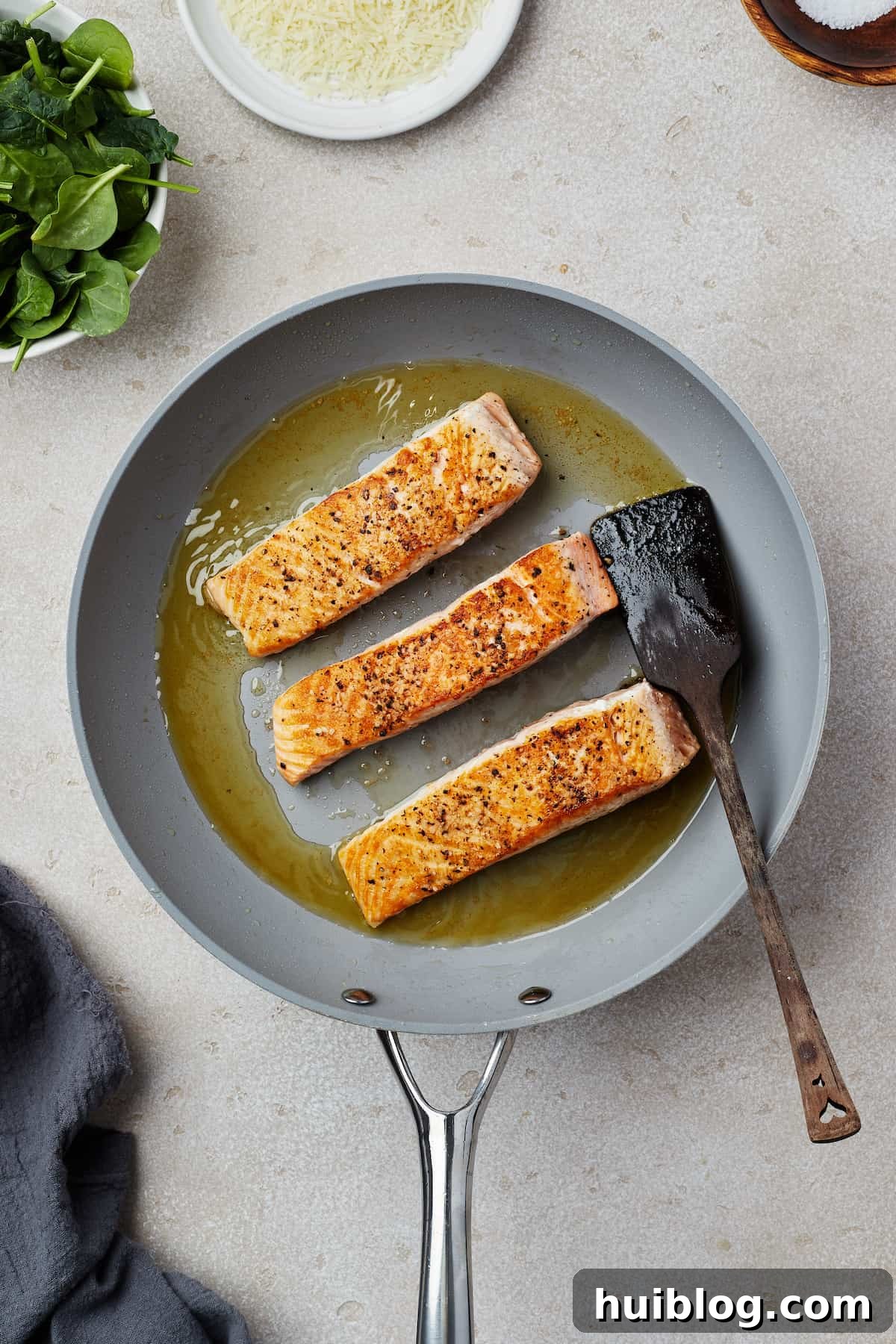
- Pan-Fry the Salmon to Perfection: Begin by patting each salmon fillet thoroughly dry with paper towels. This crucial step helps achieve a crispier skin (if present) and a better sear. Season both sides of each fillet generously with salt and pepper. Next, heat the olive oil in a large, heavy-bottomed skillet over medium heat until it’s hot and shimmering, but not smoking. Carefully place the salmon fillets into the hot oil, flesh side down first if skinless, or skin-side down if skin-on. Cook for approximately five to seven minutes per side, depending on the thickness of your fillets. The salmon should develop a beautiful golden crust and be firm to the touch, easily flaking with a fork. Once cooked, gently remove the fillets from the skillet and transfer them to a plate. Tent them loosely with foil to keep them warm while you prepare the sauce.
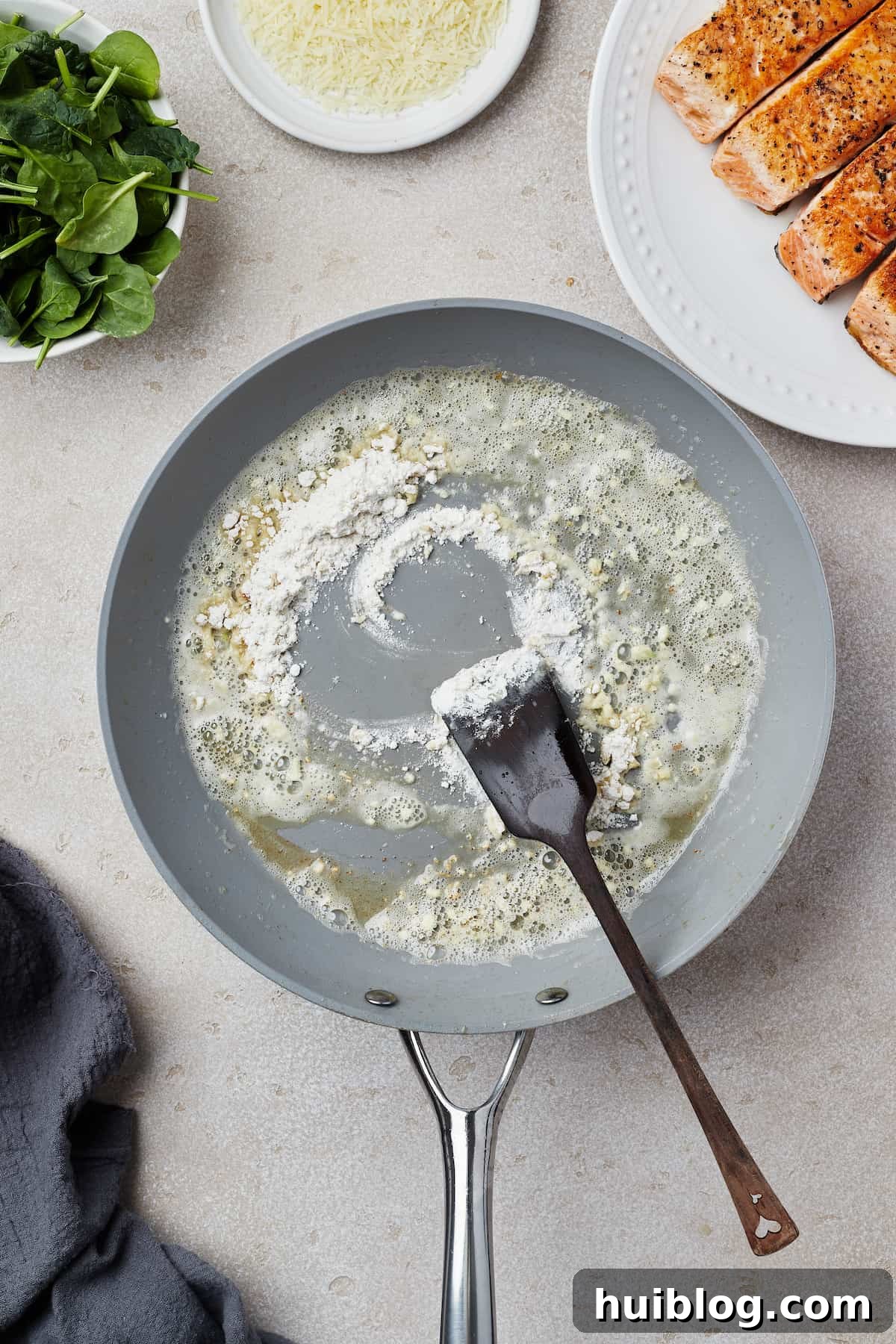
- Craft a Silky Roux Foundation: After removing the salmon, reduce the heat to medium-low. Carefully take the skillet off the heat for a moment, and using a paper towel held with tongs, wipe away any excess oil from the pan. Exercise extreme caution as hot oil can cause severe burns. Return the skillet to the heat. Add the butter and allow it to melt completely. Once melted, add the finely minced garlic and sauté for about one minute, just until it becomes fragrant and slightly softened, but not browned. Immediately sprinkle the all-purpose flour over the garlic and butter. Stir vigorously with a whisk or wooden spoon until the flour is fully incorporated, forming a smooth, golden paste. Continue to cook this mixture for about 30 seconds, stirring constantly. This paste is your roux, the essential thickening agent for your sauce.
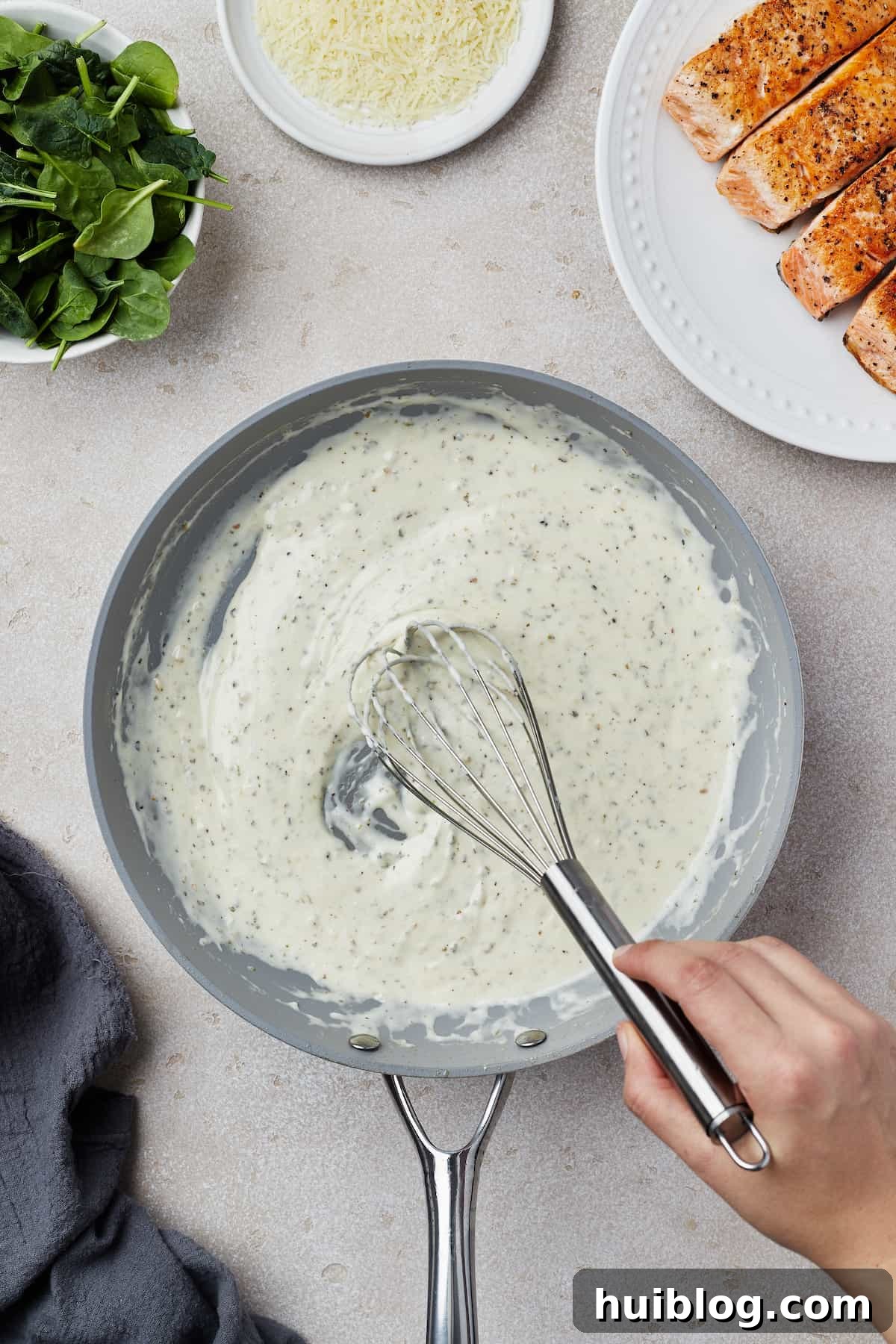
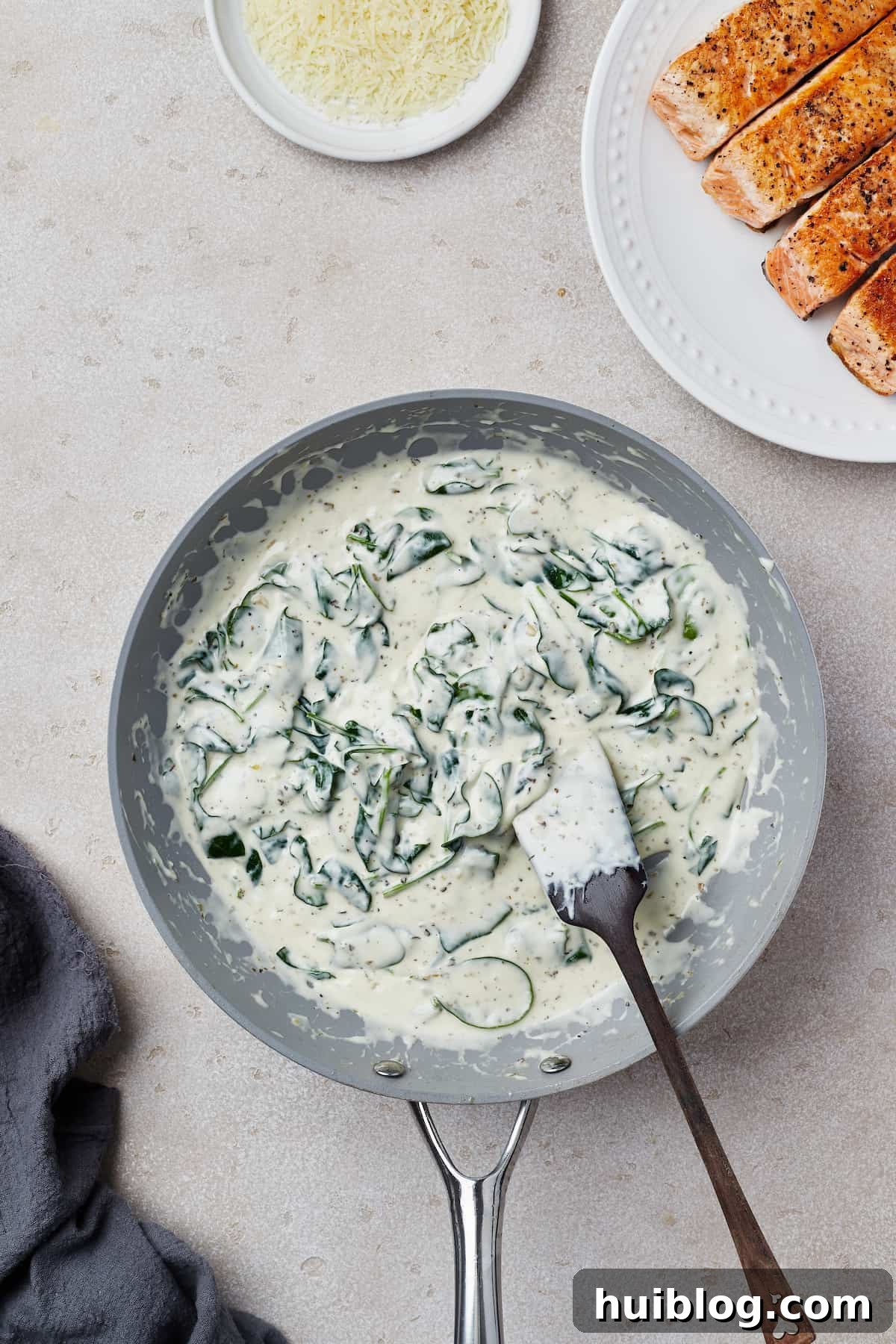
- Develop the Luscious Florentine Sauce: Gradually whisk the heavy whipping cream into the skillet, ensuring you thoroughly dissolve the roux into the liquid. Continue whisking to prevent lumps. Next, pour in the chicken broth, then stir in the dried basil, oregano, salt, and pepper. Continue to stir or whisk constantly over medium-low heat until the sauce begins to thicken to your desired consistency, typically within one to two minutes. Once thickened, add the baby spinach. Stir continuously until the spinach has fully wilted and the sauce is hot and creamy throughout, which should take another one to two minutes. Taste the sauce and adjust seasonings if necessary.
- Unite Salmon and Sauce for Serving: Carefully return the pan-fried salmon fillets to the skillet, nestling them into the rich Florentine sauce. Spoon the warm, creamy sauce generously over each fillet, ensuring they are beautifully coated. Finish by sprinkling a generous amount of freshly grated Parmesan cheese over the entire dish. Serve your exquisite Salmon Florentine immediately, perhaps garnished with a sprig of fresh parsley or a lemon wedge for an extra touch of brightness.
Expert Tips & Delicious Variations for Success
I genuinely hope you feel inspired to create this magnificent Salmon Florentine in your kitchen. To ensure your cooking experience is nothing short of triumphant, and to help you personalize this dish to your taste, here are some invaluable tips and exciting variations to consider:
- Exploring Fish & Seafood Substitutions: The beauty of Florentine sauce lies in its versatility. While salmon is superb, this creamy, garlicky sauce harmonizes beautifully with an array of other fish and seafood. Feel absolutely free to substitute your favorite firm white fish fillets, such as cod, halibut, or tilapia. You might even consider using shrimp or scallops for a quicker-cooking alternative, perhaps preparing them similarly to my beer-battered fish recipe for inspiration on cooking times. Adjust cooking times according to the specific seafood you choose to prevent overcooking.
- Preventing Overcooking for Perfect Texture: The cardinal rule for cooking fish is to avoid overcooking. Overcooked salmon quickly becomes dry, tough, and less flavorful, losing its delectable flakiness. For consistently perfect results, I highly recommend using a reliable meat thermometer. Insert the thermometer into the thickest part of the fillet. Salmon is perfectly cooked when its internal temperature reaches 145°F (63°C). Remove it from the heat just as it reaches this temperature, as it will continue to cook slightly from residual heat.
- Crafting a Dairy-Free Version: For those with dietary restrictions or preferences, this Florentine sauce can be adapted to be dairy-free. Coconut cream (from a can of full-fat coconut milk, chilled and skimmed off the top) is an excellent substitute for heavy cream, offering a similar richness, though with a subtle coconut flavor. Almond milk or cashew milk can also work, but keep in mind they will result in a thinner sauce and may not emulsify or thicken quite as robustly as dairy cream. You might need to adjust the amount of flour or cornstarch to achieve the desired consistency. Ensure you use dairy-free butter or olive oil for the roux.
- Enhancing with Additional Vegetables: While spinach is the star, don’t hesitate to incorporate other vegetables into your Florentine sauce. Sautéed mushrooms, sun-dried tomatoes (drained and chopped), or even halved cherry tomatoes added with the spinach can introduce additional layers of flavor and color.
- Adjusting the Spice Level: If you enjoy a hint of heat, a pinch of red pepper flakes added with the dried herbs can give the sauce a wonderful subtle kick without overpowering the delicate salmon flavor.
- Herb Variations: Experiment with different dried or fresh herbs. A sprig of fresh thyme or rosemary could add a different aromatic note. You could also try a touch of dill, which pairs exceptionally well with salmon.
Delectable Serving Suggestions for Salmon Florentine
One of the beauties of Salmon Florentine is its inherent versatility. It’s a complete meal in itself, but it also pairs wonderfully with a variety of side dishes that can elevate your dining experience. While a simple pairing of crusty bread to soak up every last drop of that creamy sauce, alongside a fresh green salad, is always a fantastic option, here are a few more special ideas to complement your dish:
- Sautéed Green Beans with Garlic: These Sautéed Green Beans are incredibly simple to prepare on the stovetop. They emerge bright, vibrant, and bursting with fresh flavor, making them an excellent counterpoint to the richness of the salmon and sauce. Their crisp-tender texture is especially delightful with well-seasoned salmon.
- Garlic Honey Roasted Sweet Potatoes: For a side dish that’s both healthy and hearty, try these Garlic Honey Roasted Sweet Potatoes. The natural sweetness of the potatoes, enhanced by garlic and a touch of honey, provides a wonderful balance to the savory salmon and creamy Florentine sauce. They also add a great nutritional boost.
- Parmesan Panko Asparagus Fries: If you’re an asparagus enthusiast, you’ll adore this crispy, air-fried rendition. These Parmesan Panko Asparagus Fries are light, irresistibly crisp, and provide a fantastic textural contrast to the smooth, creamy Salmon Florentine.
- Creamy Risotto or Pasta: For a more substantial meal, serve your Salmon Florentine alongside a creamy lemon risotto or a simple pasta dish tossed in olive oil and a touch of the Florentine sauce.
- Quinoa or Couscous: For a lighter, healthier option, quinoa or couscous can serve as an excellent bed for your salmon, absorbing the sauce beautifully.
- Cauliflower Rice: If you’re looking for a low-carb alternative, cauliflower rice is a perfect choice, allowing the flavors of the salmon and sauce to truly shine without adding heavy starches.
Storing and Reheating Your Salmon Florentine Leftovers
While Salmon Florentine is often best enjoyed fresh, you can certainly save and savor any delicious leftovers. Proper storage and reheating techniques are key to maintaining the quality and flavor of this wonderful dish.
- For Refrigeration: To easily store any leftover salmon and sauce, transfer them to an airtight container. Place the container in the refrigerator, where it will remain fresh and delicious for up to 3 days. Leftovers are fantastic for a quick lunch or dinner later in the week. You could even repurpose the salmon into a fabulous Salmon BLT Salad for a creative twist!
- For Freezing: If you wish to store your leftovers for a longer period, both the salmon and the sauce freeze well. Pack them into freezer-safe bags or airtight containers, ensuring as much air as possible is removed to prevent freezer burn. It can be frozen for 2 to 3 months. Always thaw the frozen dish in the refrigerator overnight before attempting to reheat.
- Reheating Instructions: To gently reheat your Salmon Florentine, place the desired portion in a covered skillet over low heat on the stovetop. Add a splash of water or broth if the sauce seems too thick. Heat gently until the salmon is fully warmed through, taking care not to overcook it, as this can dry out the fish. Alternatively, you can reheat in the microwave on a medium setting, stirring the sauce occasionally, until hot.
The Nutritional Goodness of Salmon Florentine
Beyond its incredible taste, Salmon Florentine offers a host of impressive health benefits, making it a smart choice for a balanced diet. Salmon itself is a nutritional powerhouse, widely acclaimed for its rich content of Omega-3 fatty acids. These essential fats are vital for heart health, brain function, and reducing inflammation throughout the body. Regular consumption of Omega-3s can contribute to improved cognitive function, better mood, and a reduced risk of chronic diseases.
Furthermore, salmon is an excellent source of high-quality protein, which is crucial for muscle repair, growth, and overall bodily function. It also provides a significant amount of essential vitamins and minerals, including Vitamin D (important for bone health and immunity), Vitamin B12 (vital for nerve function and red blood cell production), and selenium (an antioxidant that supports thyroid health). The inclusion of fresh spinach adds another layer of nutritional value, packing in vitamins K, A, and C, as well as folate and iron, all contributing to healthy bones, vision, and energy levels. While the creamy sauce adds richness, the overall dish, when enjoyed in moderation, is a fantastic way to incorporate nutrient-dense ingredients into your diet.
Frequently Asked Questions About Salmon Florentine
- Can I use frozen spinach instead of fresh? Yes, absolutely! If using frozen spinach, be sure to thaw it completely and squeeze out as much excess water as possible before adding it to the sauce. This prevents the sauce from becoming watery.
- What if my sauce is too thick or too thin? If your sauce is too thick, gradually whisk in a little extra chicken broth or cream until it reaches your desired consistency. If it’s too thin, you can create a slurry by mixing a teaspoon of flour or cornstarch with an equal amount of cold water, then whisking it into the simmering sauce a little at a time until it thickens.
- Is this recipe gluten-free? As written, the recipe uses all-purpose flour, so it is not gluten-free. However, you can easily make it gluten-free by substituting the all-purpose flour with cornstarch (as mentioned in the ingredients section) or a gluten-free all-purpose flour blend.
- Can I prepare any part of this recipe ahead of time? You can mince the garlic and wash the spinach ahead of time. The sauce itself is best made fresh, as it comes together quickly. While you could technically cook the salmon ahead, it’s always best when fresh from the pan.
Discover More Easy Salmon Recipes
If you’ve fallen in love with the ease and deliciousness of this Salmon Florentine, you’ll be thrilled to explore other incredible salmon dishes. Salmon is a versatile fish that lends itself beautifully to a variety of cooking methods and flavor profiles. Here are some more of my favorite easy salmon recipes that you’re sure to enjoy:
- Sweet & Savory Maple Mustard Salmon Fillets
- Flavorful Old Bay Roasted Salmon
- Quick & Simple Broiled Salmon
- Sheet Pan Baked Salmon with Potatoes and Green Beans
- Irresistible Brown Sugar Grilled Salmon
Salmon Florentine
Ingredients
For the Salmon
- 4 salmon filets, (each filet should weigh about 4 to 6 ounces)
- ½ teaspoon salt
- ½ teaspoon fresh ground black pepper
- 2 tablespoons olive oil
For the Sauce
- 2 tablespoons butter
- 2 cloves garlic, finely minced
- 2 tablespoons all purpose flour, or cornstarch
- 1 cup heavy whipping cream
- ¾ cup chicken broth
- 1 teaspoon dried basil
- ½ teaspoon dried oregano
- ½ teaspoon salt
- ½ teaspoon fresh ground black pepper
- 1 cup baby spinach
- ¼ cup parmesan cheese
Instructions
-
Pat dry the salmon filets with paper towels and season with salt and pepper.
-
Heat a large pan over medium heat and add oil. Once the oil is heated and shimmering, fry the salmon for 5 to 7 minutes on each side, until crispy and firm to the touch. Cook time will depend on how thick your salmon is.
Remove the salmon from the pan and discard any excess oil. Wipe it clean.
-
Return pan to heat and melt the butter over medium low heat. Add garlic and gently fry until softened and fragrant, about 20 seconds.
-
Sprinkle in the flour and mix until it forms a paste, about 30 seconds.
-
Whisk in heavy whipping cream, chicken broth, basil, oregano, salt, and pepper. Stir constantly until thickened, about 1 to 2 minutes.
-
Add spinach and stir until the spinach is wilted, about 1 to 2 minutes.
-
Add the salmon filets back to the pan, spoon sauce over the filets, and sprinkle with parmesan cheese.
Serve immediately.
Nutrition
Nutritional info is an estimate and provided as courtesy. Values may vary according to the ingredients and tools used. Please use your preferred nutritional calculator for more detailed info.
Did you make a recipe? Leave a rating