
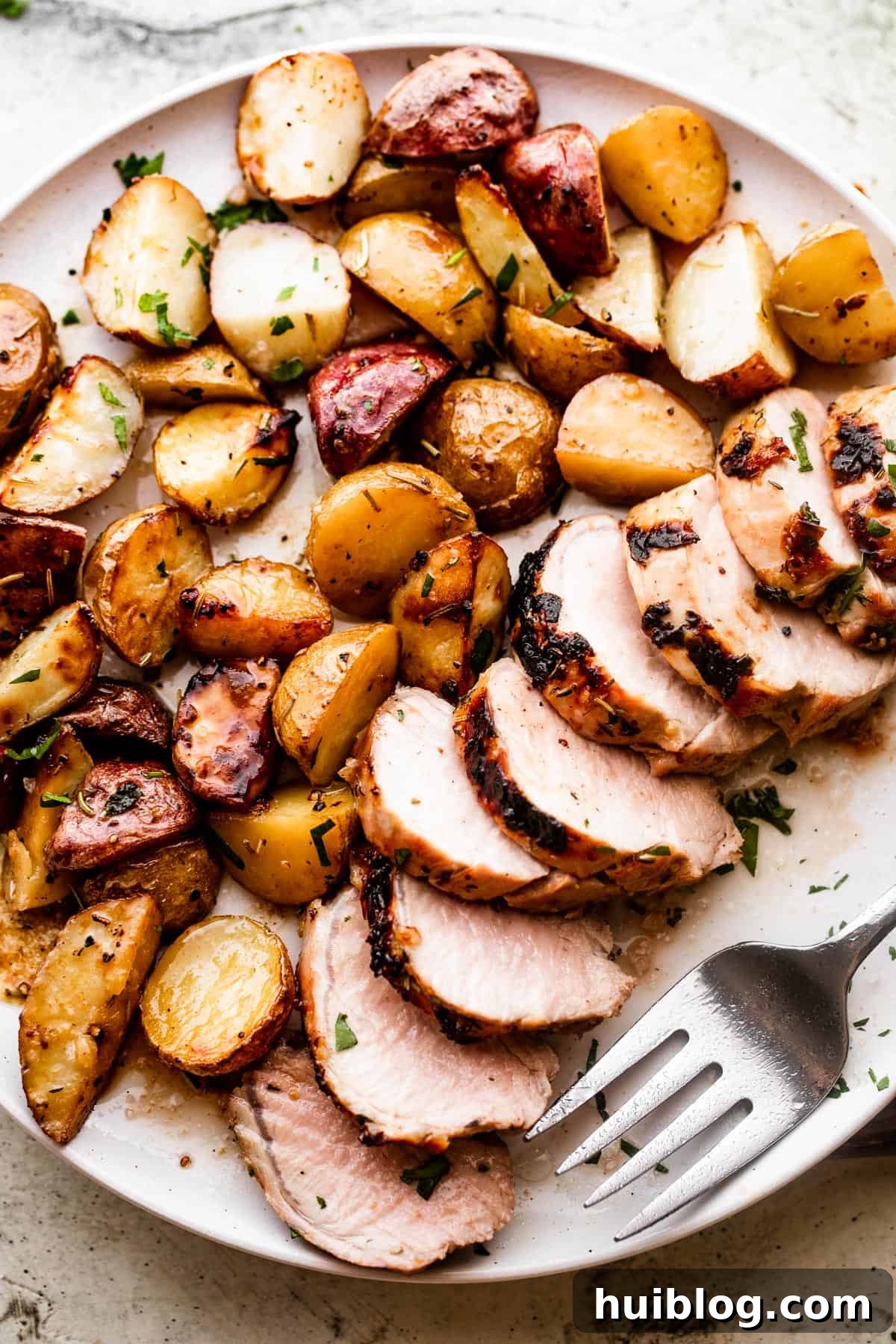
Welcome to a culinary journey that promises both elegance and ease: our Roast Pork Tenderloin with Potatoes recipe. This dish is a true weeknight wonder, delivering tender, succulent pork tenderloin enveloped in a savory-sweet mustard, honey, and herb sauce, perfectly complemented by beautifully crisp roasted baby potatoes. It’s a testament to how simple ingredients can come together to create a profoundly flavorful, healthy, and satisfying meal that looks impressive enough for any special occasion.
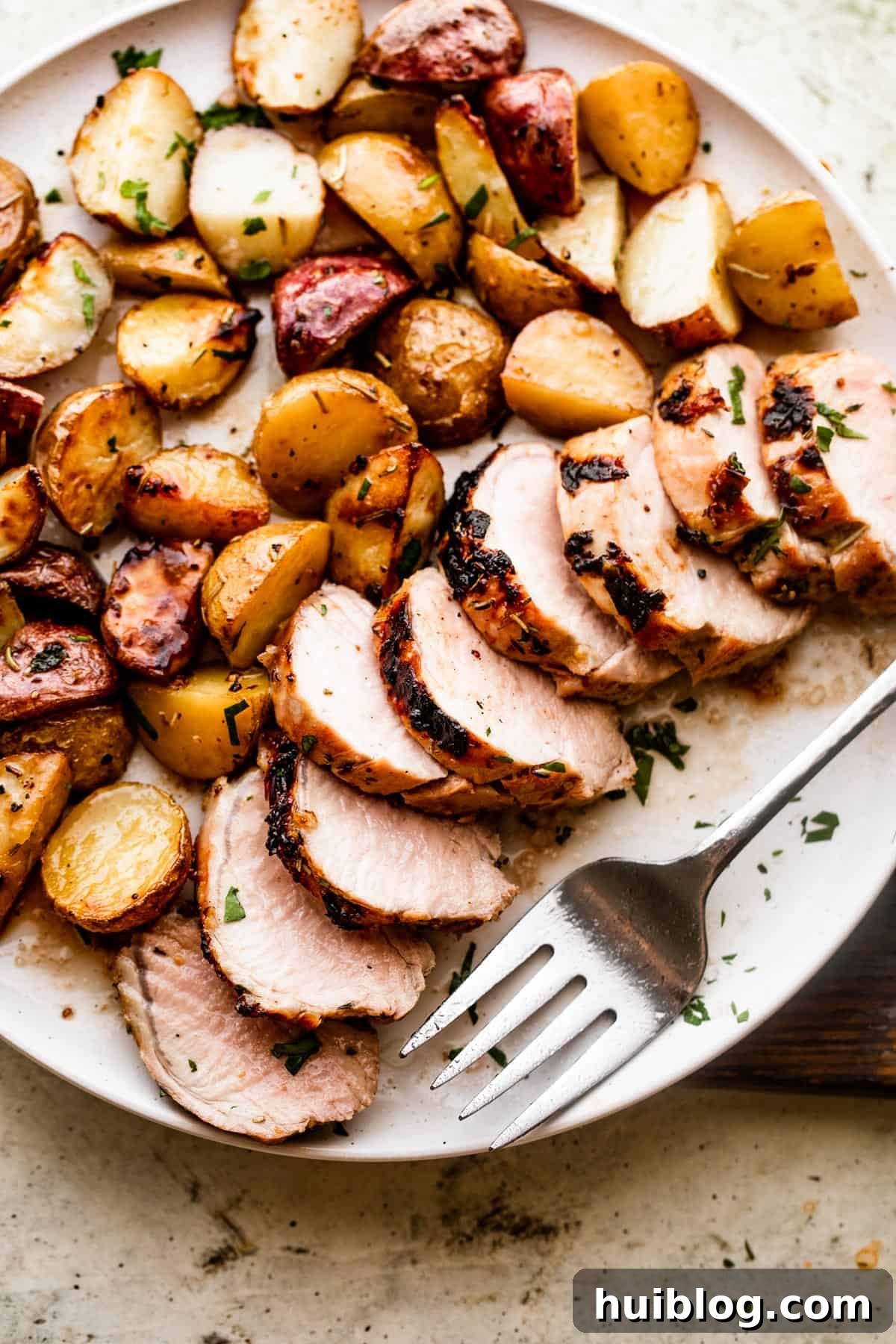
The Ultimate Roast Pork Tenderloin Experience
When you’re searching for a meal that effortlessly combines speed, sophistication, and incredible taste, pork tenderloin consistently rises to the top. This premium cut of pork is renowned for its lean profile, delicate texture, and mild flavor, making it a highly versatile choice for myriad dishes. Its inherent tenderness and minimal fat content mean it cooks quickly, ideal for busy evenings when you crave something special without the fuss.
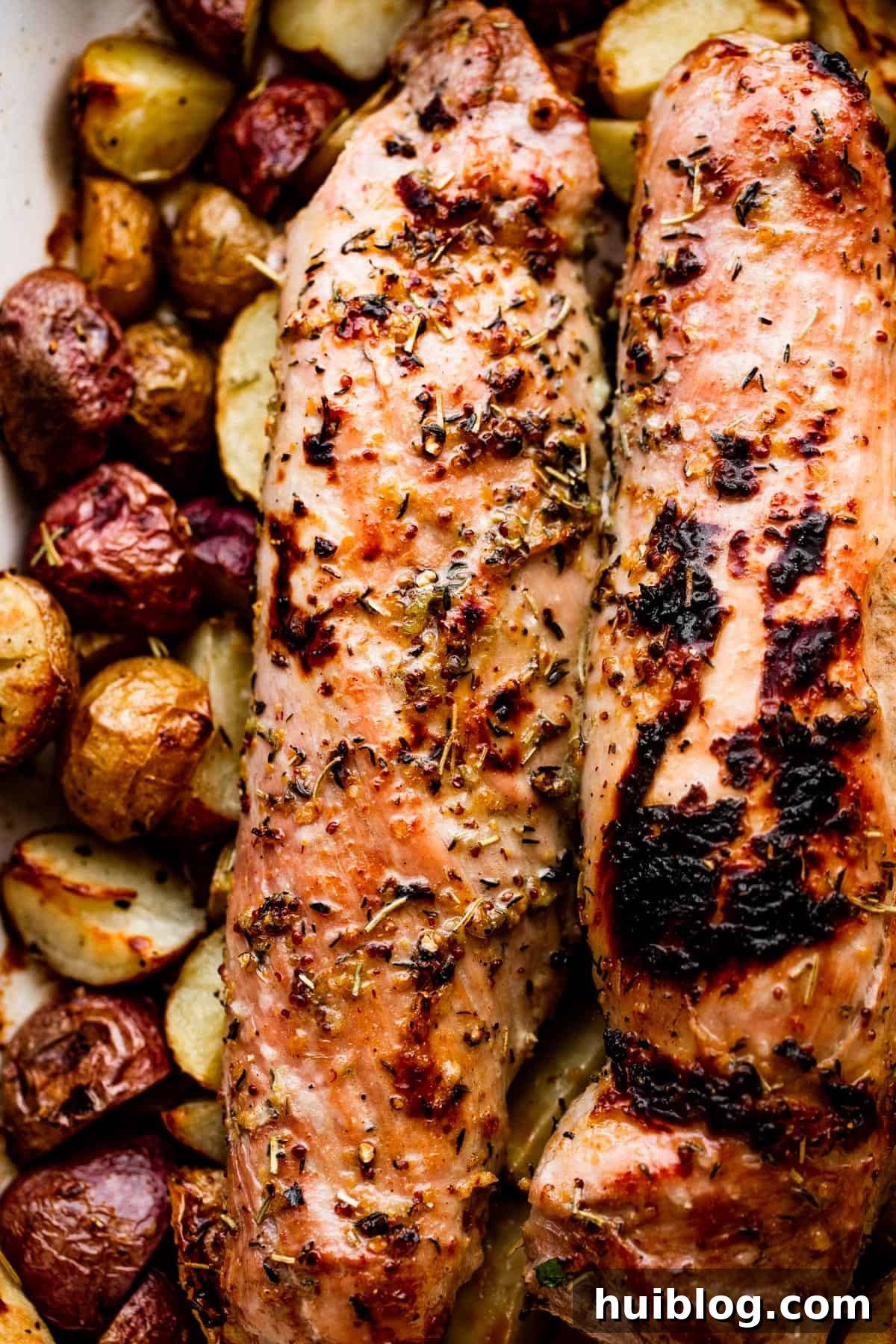
In this particular rendition, the pork tenderloin is elevated by a vibrant, aromatic glaze. We generously coat it in a garlicky concoction infused with fragrant rosemary, a touch of golden honey for natural sweetness, and the rich tang of grainy mustard. This thoughtful blend of ingredients creates a symphony of flavors – a harmonious balance of sweet, savory, and herbaceous notes that penetrate the pork as it roasts, ensuring every bite is moist, juicy, and utterly delicious.
Accompanying our star, the baby potatoes are roasted right alongside the pork, transforming into crispy, golden morsels. Tossed simply with olive oil, rosemary, salt, and pepper, they absorb the mouthwatering juices dripping from the roasting pork. This ingenious method not only enhances the potatoes’ flavor profile but also streamlines the cooking process, melding the elements of the dish into a cohesive, flavorful experience. The result is a restaurant-quality meal that evokes a sense of comforting tradition, yet comes together with remarkable speed and minimal effort.

Why Pork Tenderloin is a Weeknight Hero
Beyond its delectable taste, pork tenderloin offers several advantages that make it a favorite among home cooks:
- Lean & Healthy: It’s one of the leanest cuts of pork, comparable to boneless, skinless chicken breast, making it an excellent choice for health-conscious meals.
- Quick Cooking: Its slender shape allows it to cook rapidly and evenly in the oven, pan, or grill.
- Versatile Flavor Profile: Pork tenderloin readily absorbs marinades and seasonings, adapting beautifully to various cuisines and flavor combinations, from bold and spicy to subtly sweet.
- Elegant Presentation: Despite its ease of preparation, a perfectly roasted and sliced pork tenderloin always looks sophisticated, making it ideal for both casual family dinners and entertaining guests.
Essential Ingredients for a Perfect Roast
Crafting this elegant dish requires only a handful of readily available ingredients. Despite its gourmet appeal, this recipe is designed for simplicity, making it perfect for even your busiest weeknights.
For the Flavorful Pork Tenderloin
- Olive Oil: Extra-virgin olive oil adds a rich, fruity note to the sauce. While any good quality olive oil works, the bolder flavor of EVOO truly shines here.
- Honey: A crucial component that balances the savory elements and mustard’s tang, honey also contributes to the beautiful caramelization of the pork’s exterior. Any type of liquid honey will work wonders.
- Garlic: Freshly minced garlic cloves are non-negotiable for their pungent aroma and deep flavor, forming the backbone of our savory sauce.
- Mustard: We specifically recommend whole grain mustard for its delightful texture and robust, complex flavor. However, feel free to substitute with Dijon, spicy brown, or even yellow mustard based on your preference; each will lend a slightly different character to the glaze.
- Rosemary: Dried rosemary is convenient and effective. If using fresh rosemary, remember to mince the leaves finely (avoiding the woody stems) and use approximately twice the amount for an equivalent intensity of flavor. A few sprigs laid over the tenderloin during baking also infuse a wonderful aroma.
- Thyme: Like rosemary, dried thyme is used for convenience. Fresh thyme, if available, can be substituted at double the quantity for a brighter, more vibrant herbal note.
- Salt and Pepper: Essential seasonings to enhance all the other flavors and bring out the natural taste of the pork.
- Pork Tenderloin: The star! Aim for a single piece or two smaller pieces totaling around 2 pounds. Ensure it’s properly trimmed of any silver skin for the best results.
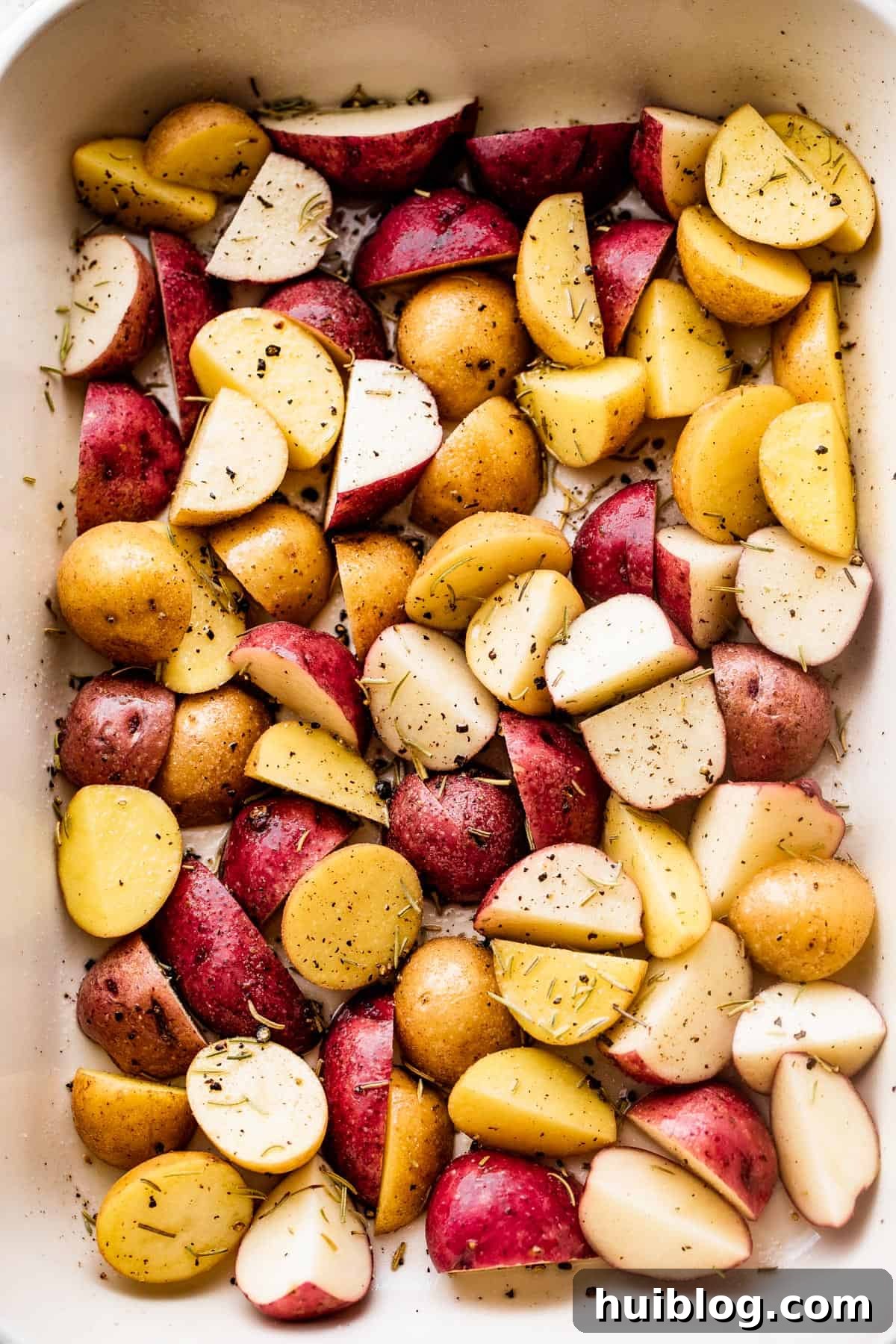
For the Crispy Roasted Potatoes
- Olive Oil: Again, extra-virgin olive oil is preferred for coating the potatoes, helping them crisp up and adding flavor. Any cooking oil you have on hand will do.
- Baby Potatoes: Choose your favorite variety of baby potatoes, such as red, yellow, or a mix of colorful ones. Make sure to scrub them thoroughly. If they are larger than bite-sized, quarter them for even cooking and maximum crispiness.
- Rosemary: The earthy, piney notes of rosemary are a classic pairing with roasted potatoes and beautifully echo the herb used in the pork sauce, creating a cohesive flavor profile for the entire dish.
- Salt and Pepper: Crucial for seasoning the potatoes and bringing out their natural sweetness and earthy flavors.
Pork Loin vs. Pork Tenderloin: An Important Distinction
While their names sound similar, pork loin and pork tenderloin are distinct cuts that require different cooking methods. Pork loin is a much larger, wider cut, often resembling a roast, and requires a longer cooking time at a lower temperature to prevent drying out. Pork tenderloin, as its name suggests, is a long, thin, and very tender muscle, making it quick-cooking and best suited for high-heat methods. For this roast pork tenderloin recipe, pork loin is not an appropriate substitute due to the significant differences in size and cooking characteristics, which would drastically alter the outcome and timing of the dish.
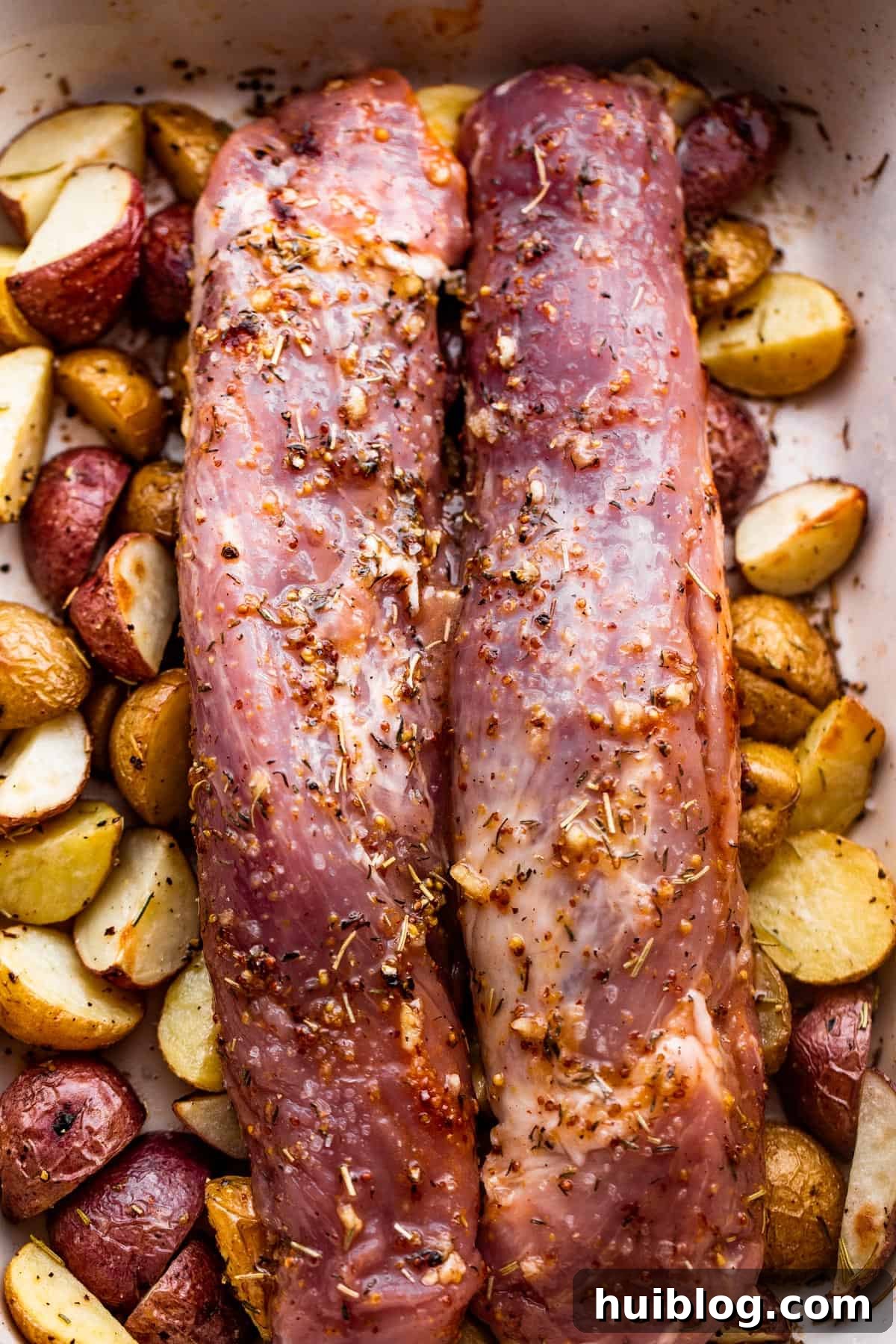
Mastering the Art of Roast Pork Tenderloin with Potatoes
Preparing this dish is surprisingly straightforward, proving that gourmet results don’t always require complex techniques. The beauty of this recipe lies in its simplicity: a few key steps of preparation, followed by hands-off baking, deliver a truly remarkable meal.
- Preheat and Prepare Your Baking Dish: Begin by preheating your oven to 400˚F (200˚C). This relatively high temperature is crucial for achieving a perfectly juicy pork tenderloin with a slight sear on the exterior, and for getting those potatoes wonderfully crisp. Select a large, shallow baking dish or sheet pan that can comfortably accommodate both the pork and potatoes in a single layer without overcrowding.
- Start with the Potatoes: Place your thoroughly washed and quartered baby potatoes into the prepared baking dish. Drizzle them generously with olive oil, then sprinkle with rosemary, salt, and black pepper. Toss everything together until the potatoes are evenly coated. Transfer the dish to the preheated oven and bake for approximately 35 minutes. This head start ensures the potatoes are tender on the inside and begin to crisp up before the pork is added.
- Prepare the Pork Tenderloin Glaze: As the potatoes near the end of their initial baking time, prepare the exquisite glaze for your pork. In a mixing bowl, combine the olive oil, honey, minced garlic, whole grain mustard, dried rosemary, dried thyme, salt, and black pepper. Whisk these ingredients together until they are thoroughly blended into a smooth, aromatic sauce.
- Glaze and Combine: Once the potatoes have had their initial bake, carefully remove the baking dish from the oven. Generously brush the pork tenderloin all over with the prepared honey-mustard-herb mixture. Place the glazed pork tenderloin directly on top of or nestled among the partially roasted potatoes. Pour any remaining sauce from the mixing bowl over both the pork and the potatoes, ensuring no flavor goes to waste.
- Final Bake and Rest: Return the baking dish to the oven and continue to bake for another 22 to 25 minutes. During this time, the pork will cook through, and the potatoes will finish becoming tender and beautifully golden. To ensure perfect doneness without drying out the pork, use an instant-read meat thermometer. The pork tenderloin is cooked through when its internal temperature reaches 145˚F (63˚C). It is critical not to overcook the tenderloin beyond this point, as it can quickly become dry and tough.
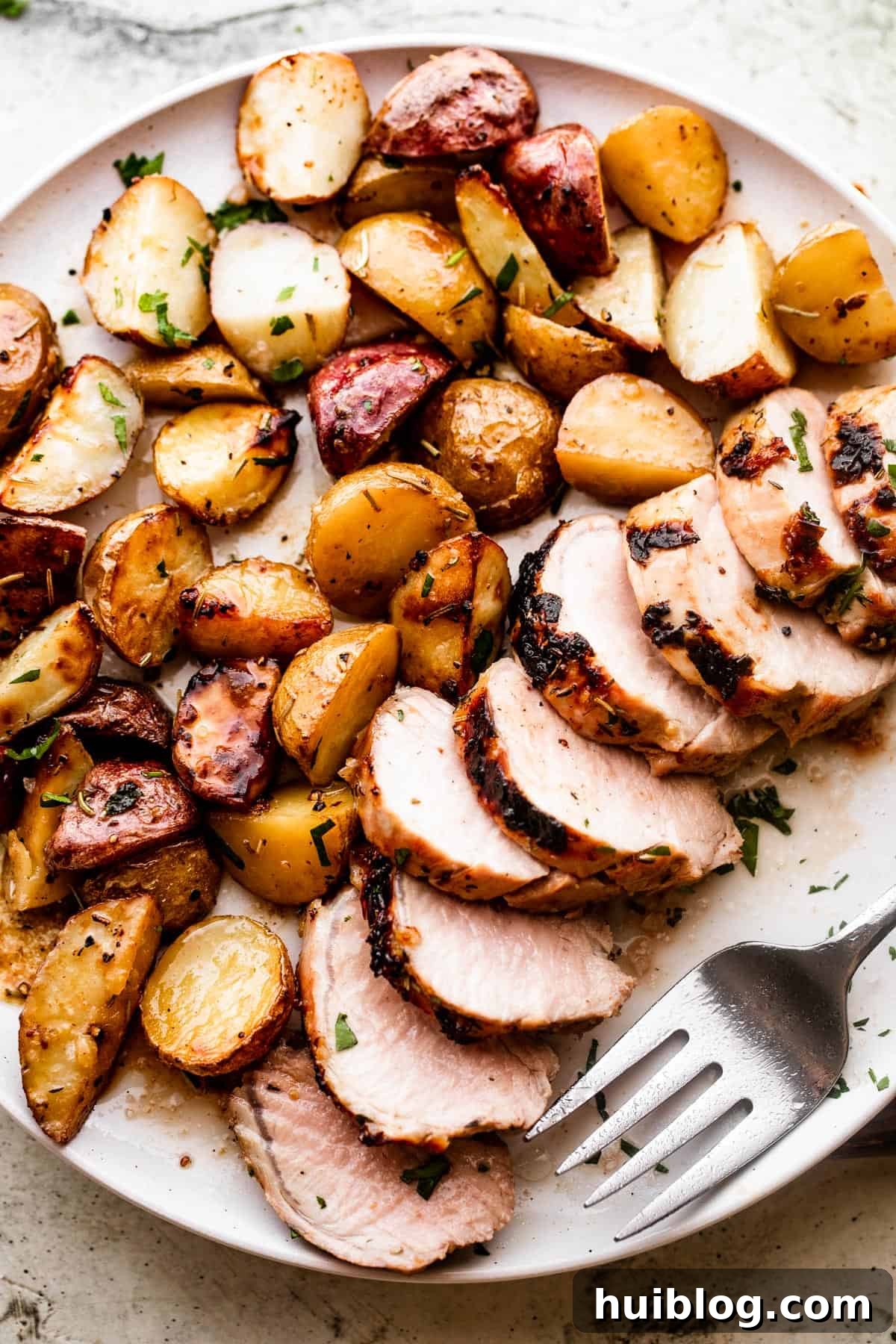
- Rest and Serve: Once cooked, remove the dish from the oven. Allow the pork tenderloin and potatoes to rest for about five minutes before slicing the pork against the grain and serving. This resting period is vital for the juices to redistribute throughout the meat, ensuring maximum tenderness and flavor.
Tips for Guaranteed Success
Achieving a perfect roast pork tenderloin with potatoes is simpler than you might imagine. By following these expert tips, you’ll consistently create a tender, juicy, and flavorful meal that will impress everyone at your table.
- Accurate Doneness is Key: The most reliable way to ensure your pork tenderloin is perfectly cooked—tender and juicy, never dry—is by using an instant-read meat thermometer. Insert it into the thickest part of the tenderloin. Pork tenderloin is safely cooked when it reaches an internal temperature of 145˚F (63˚C). Remove it from the oven as soon as it hits this temperature, as it will continue to cook slightly while resting.
- Embrace the Rosy Tint: Don’t be alarmed if, upon slicing, your pork tenderloin displays a faint rosy or pink hue in the center. This is completely normal for a perfectly cooked pork tenderloin at 145˚F, especially with leaner cuts. As long as the internal temperature is confirmed, your pork is safe, juicy, and delicious.
- Customize Your Vegetables: While baby potatoes are a fantastic choice, this dish is wonderfully adaptable. If you’re looking for alternatives or want to add more variety, consider scrubbing and quartering radishes, carrots, parsnips, or even Brussels sprouts. These hardy vegetables roast beautifully alongside the pork, absorbing the same delightful flavors.
- Pat the Pork Dry: Before applying the glaze, gently pat the pork tenderloin dry with paper towels. This step helps the glaze adhere better and promotes a superior sear and caramelization on the surface of the meat.
- Avoid Overcrowding: Ensure your baking dish or sheet pan is large enough to allow the potatoes and pork to be spread in a single layer. Overcrowding can steam the ingredients instead of roasting them, preventing them from getting beautifully crisp and browned.
- Allow for Resting Time: The resting period after baking is not optional; it’s essential. As mentioned in the instructions, allowing the pork to rest for 5-10 minutes allows the internal juices to redistribute throughout the meat, resulting in a more tender and moist final product.
Perfect Pairings: What to Serve with Pork Tenderloin
This roast pork tenderloin with potatoes is a complete meal in itself, with the main course and a starchy side baked together. However, adding another side dish or two can elevate the dining experience and introduce additional textures and flavors. Consider these easy and complementary options:
- Fresh Green Salad: A simple, crisp green salad with a light vinaigrette provides a refreshing contrast to the richness of the pork and potatoes. It adds brightness and a much-needed crunch.
- Skillet Zucchini and Mushrooms: For a vibrant and tender vegetable side, Skillet Zucchini and Mushrooms are an excellent choice. These meltingly tender veggies add a beautiful pop of color and an earthy flavor that pairs well with almost any main course.
- Warm Dinner Rolls: There’s something undeniably comforting about warm, fresh bread alongside a hearty meal. These easy No-Knead Dinner Rolls remove all the complexity from baking your own bread, offering a soft, yeasted delight perfect for soaking up any leftover sauce.
- Garlic Butter Green Beans: Classic green beans are always a welcome addition. Enhance them by sautéing with butter and garlic for a simple yet incredibly flavorful side. Try these Sautéed Garlic Butter Green Beans for a quick and delicious complement.
Storing and Reheating Leftovers Efficiently
Having leftovers of this delicious roast pork tenderloin with potatoes is a treat! Proper storage and reheating ensure that every subsequent meal is just as enjoyable as the first.
- Refrigeration: For optimal freshness, store leftover pork tenderloin and potatoes in separate airtight plastic containers or heavy-duty zip-top bags. Refrigerated pork will maintain its quality for up to 3-4 days, while the potatoes are best consumed within 2 days for optimal texture.
- Reheating Pork: To reheat the pork tenderloin without drying it out, slice it thinly if not already sliced. Add a small swirl of olive oil or butter to a skillet set over medium-low heat. Once the oil is warm, lay the pork slices in the skillet. Gently flip the pork every minute or so, heating until warmed through. The key is low heat and quick warming to avoid overcooking and preserve its tenderness. You can also reheat in the oven at a low temperature (e.g., 275°F / 135°C) covered with foil, for 10-15 minutes, adding a splash of broth to prevent drying.
- Reheating Potatoes: Roasted potatoes reheat best in an oven or air fryer to regain their crispiness. Spread them in a single layer on an oven-safe dish or baking sheet and bake at 350˚F (175˚C) for 10-15 minutes, or until heated through and crisp again. Microwaving is an option for quick reheating, but it will result in softer potatoes.
Can You Freeze Pork Tenderloin and Potatoes?
- Yes, both the cooked pork tenderloin and the roasted potatoes can be frozen safely. However, it’s important to note that the texture of the potatoes, particularly, may become slightly softer or mealy after being frozen and thawed, losing some of their original crispiness.
- To freeze, allow both the pork and potatoes to cool completely. Place them in separate freezer-safe bags or airtight containers, pressing out as much air as possible to prevent freezer burn. They can be stored in the freezer for up to 2-3 months.
- When ready to enjoy, thaw the frozen components overnight in the refrigerator before reheating using the methods described above.
Roast Pork Tenderloin with Potatoes
This elegant Roast Pork Tenderloin with Potatoes recipe features tender, juicy pork in a savory mustard and herb sauce, with crisply roasted baby potatoes. Quick, healthy, and mouthwateringly flavorful!
Ingredients
FOR THE POTATOES
- 2 tablespoons olive oil
- 2 pounds baby potatoes, quartered
- 1 teaspoon dried rosemary
- salt and fresh ground black pepper, to taste
FOR THE PORK TENDERLOIN
- 3 tablespoons olive oil
- 3 tablespoons honey
- 4 cloves garlic, minced
- 1 tablespoon whole grain mustard
- ½ teaspoon dried rosemary
- ½ teaspoon dried thyme
- salt and fresh ground black pepper, to taste
- 2 pound pork tenderloin
Instructions
- Preheat oven to 400˚F (200˚C).
- Place cut potatoes in a large, shallow baking dish.
- To the potatoes add 2 tablespoons olive oil, and season with rosemary, salt, and pepper; toss to combine evenly.
- Bake for 35 minutes.
- In the meantime, prepare the pork tenderloin glaze.
- In a mixing bowl combine 3 tablespoons olive oil, honey, garlic, mustard, rosemary, thyme, salt, and pepper; whisk until thoroughly combined.
- Brush the pork tenderloin generously with the honey mixture.
- Remove potatoes from oven. Place the pork tenderloin over the potatoes and pour any remaining honey mixture over the potatoes and pork.
- Bake for 22 to 25 minutes, or until potatoes are tender and tenderloin is cooked through. Pork is cooked through when internal temperature registers at 145˚F (63˚C). Do NOT cook any longer because the pork will be dry.
- Remove from oven and let stand about 5 minutes before cutting and serving.
Nutrition
Serving: 8 ounces | Calories: 328kcal | Carbohydrates: 27g | Protein: 26g | Fat: 13g | Saturated Fat: 3g | Polyunsaturated Fat: 2g | Monounsaturated Fat: 8g | Trans Fat: 1g | Cholesterol: 74mg | Sodium: 88mg | Potassium: 937mg | Fiber: 3g | Sugar: 7g | Vitamin A: 9IU | Vitamin C: 23mg | Calcium: 26mg | Iron: 2mg
Nutritional info is an estimate and provided as courtesy. Values may vary according to the ingredients and tools used. Please use your preferred nutritional calculator for more detailed info.
More Amazing Recipes to Explore
- Skillet Pork Chops Recipe with Apples and Onions: A comforting and flavorful one-pan meal featuring tender pork chops, sweet apples, and savory onions.
- Ranch Pork Chops Recipe: Quick and easy pork chops seasoned with a zesty ranch blend, perfect for a family-friendly dinner.
- Grilled Pork Tenderloin: For those who love the smoky flavors of the grill, this recipe offers a fantastic alternative cooking method for tenderloin.