
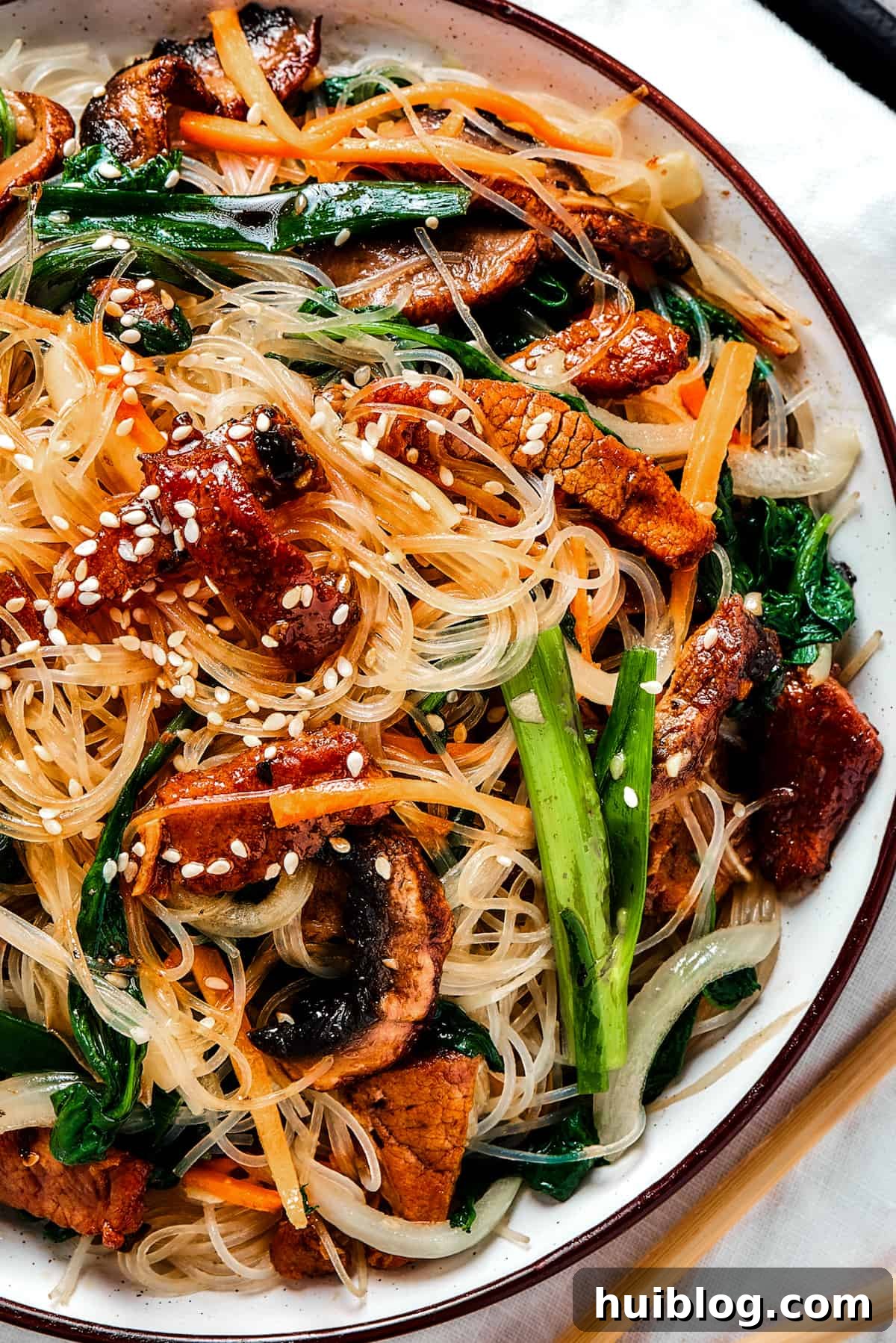
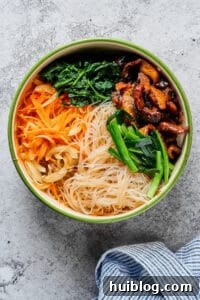
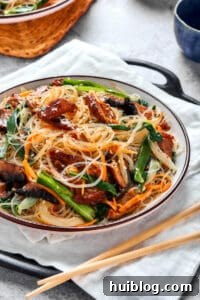
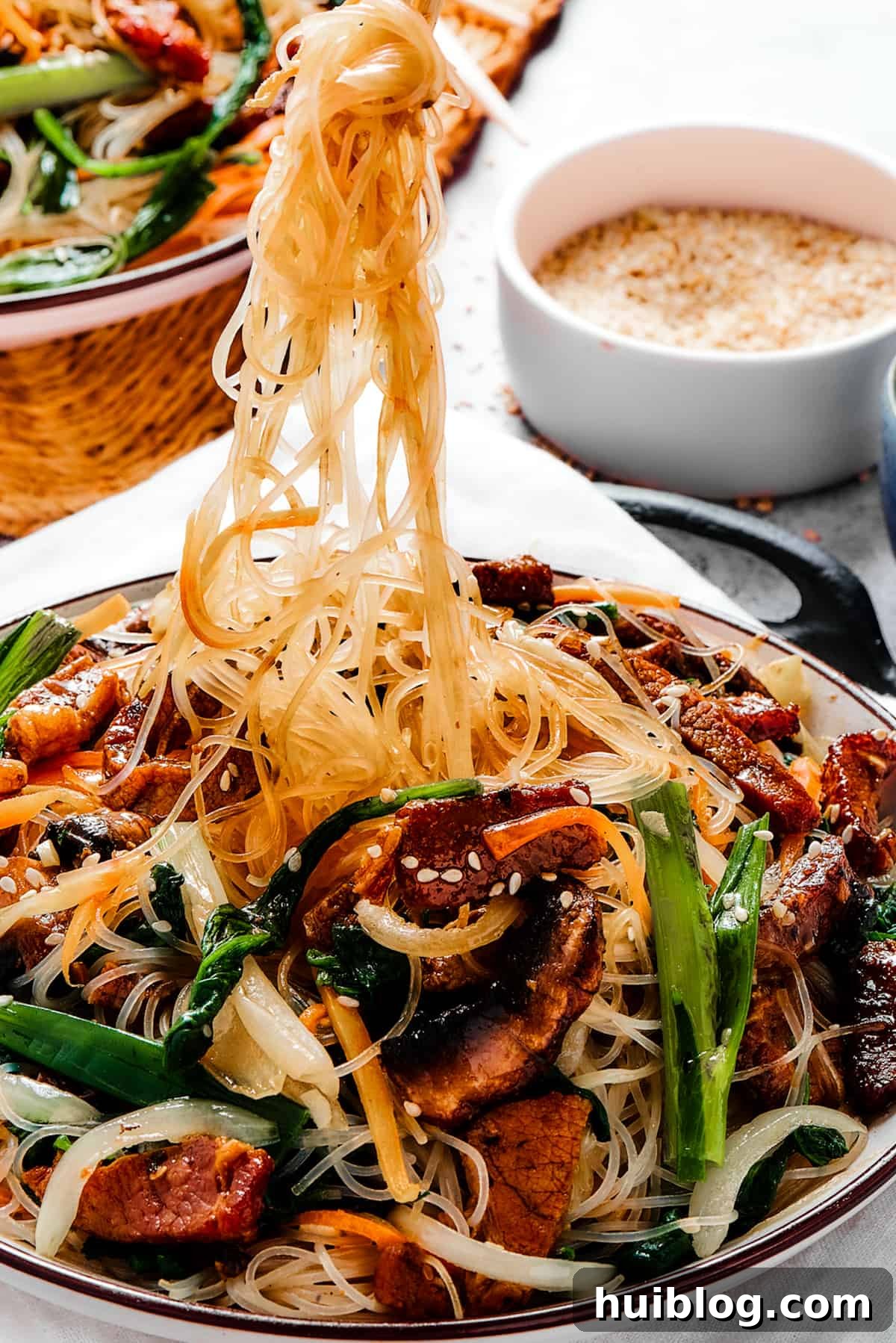
Authentic Korean Beef Japchae: A Delicious Glass Noodle Stir Fry for All Occasions is a beloved Korean classic, exquisitely prepared with tender slices of steak, a colorful assortment of fresh vegetables, and an abundance of springy, translucent glass noodles. This iconic dish is celebrated for its perfectly balanced sweet and savory sauce, which requires surprisingly few ingredients – just five essentials to achieve its signature flavor!
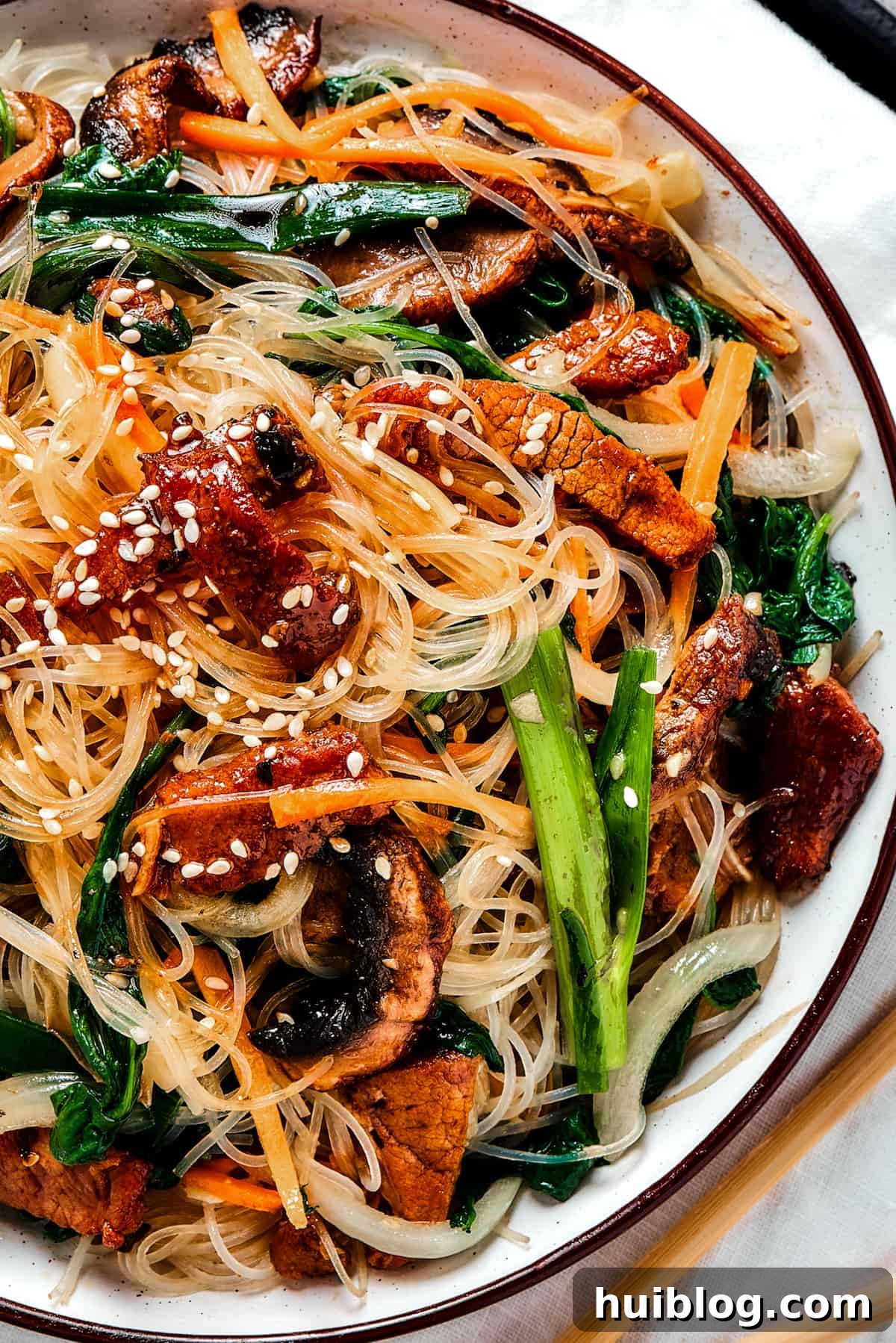
What is Japchae? A Culinary Journey into Korean Glass Noodle Stir Fry
Known in Korea as Japchae (잡채), this vibrant beef stir-fry with glass noodles transcends ordinary meals, holding a special place in Korean culinary culture. It’s a staple for everything from significant holidays and festive gatherings to simple, comforting family dinners. The moment you take your first bite, you’ll understand its widespread appeal – this dish truly has it all, offering a symphony of textures and flavors that captivate the palate.
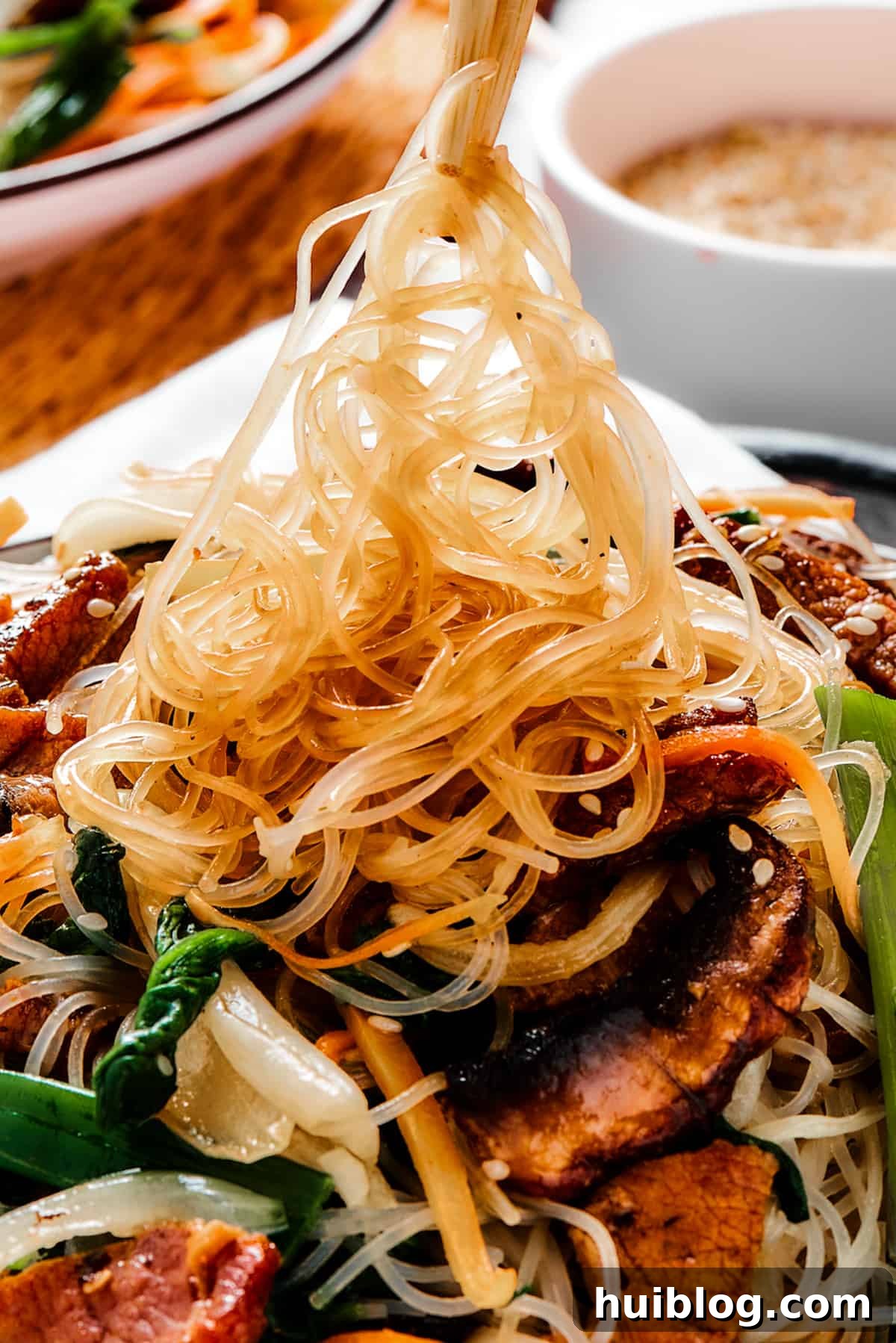
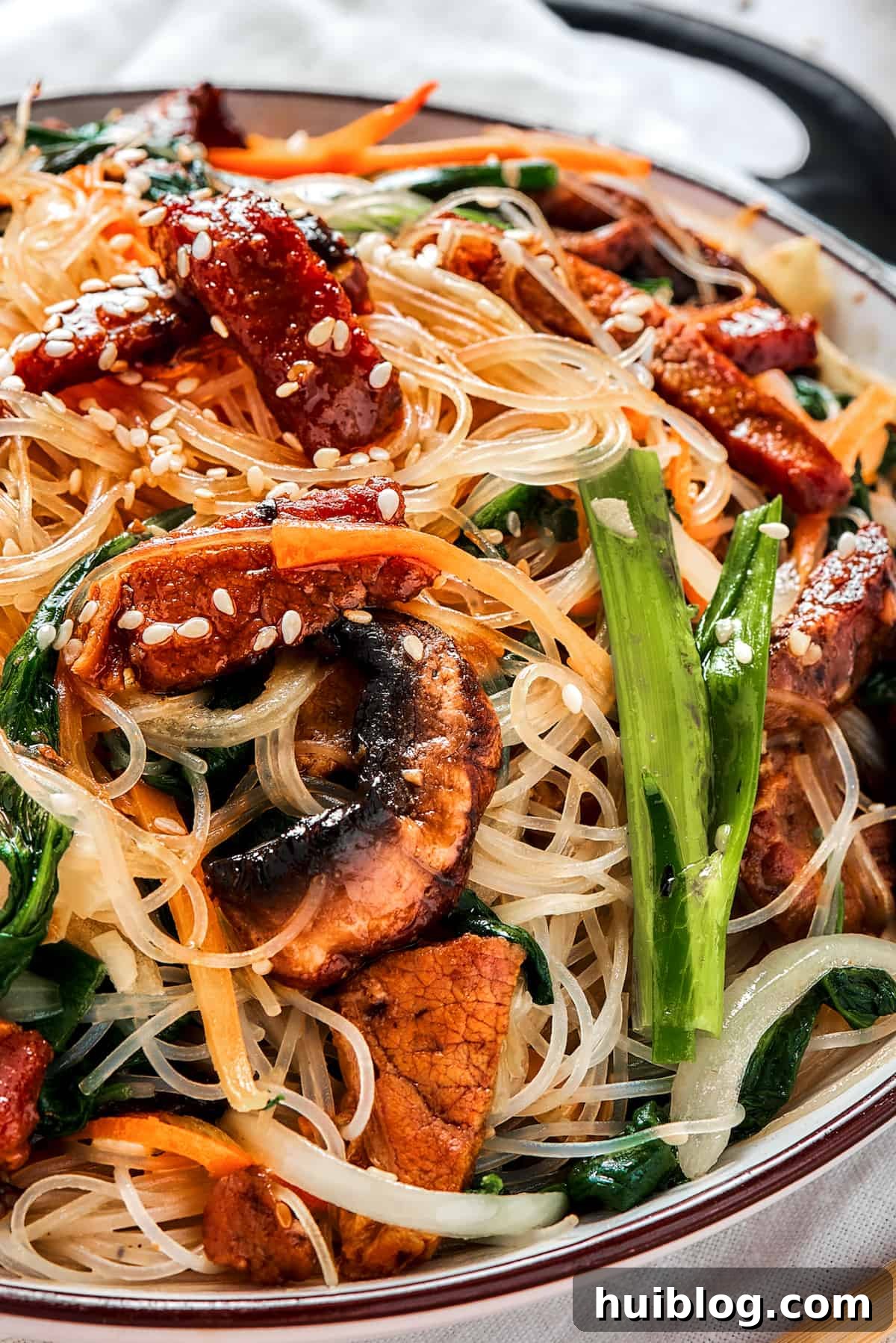
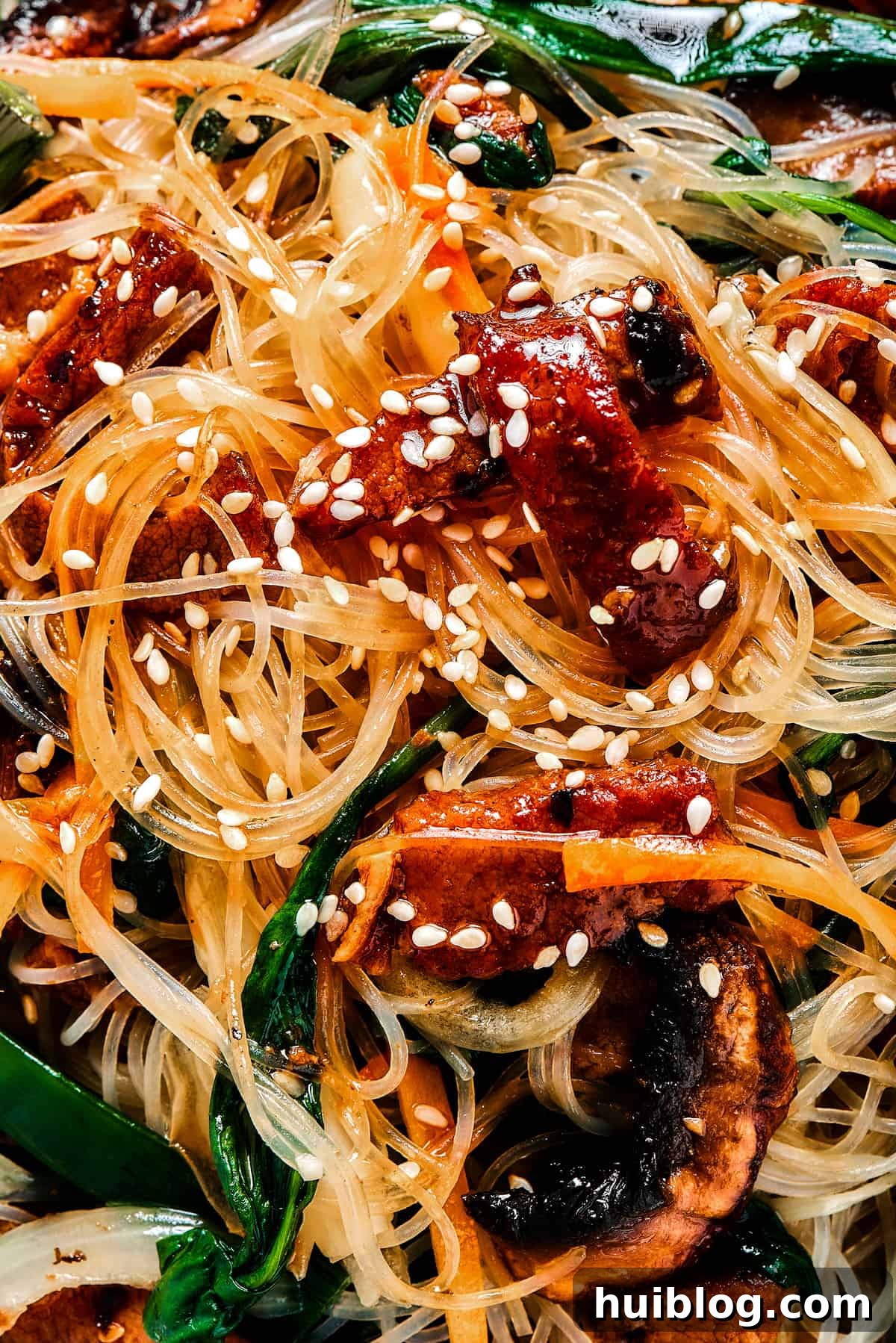
At the heart of Japchae are its unique noodles: clear, incredibly springy, and perfectly designed to soak up the rich, flavorful sauce. These translucent glass noodles, often made from sweet potato starch, offer an addictively chewy texture and a mild flavor that beautifully complements the other ingredients. If you’ve never had the pleasure of trying or cooking with them, prepare to be delighted by their distinctive mouthfeel and ability to absorb the savory seasonings, making every strand a burst of flavor.
Then there’s the sauce – a masterclass in balance. It’s a harmonious blend of salty soy, deeply savory notes, and just a hint of sweetness, creating a profile that enhances each component without overpowering it. This signature sesame-soy sauce allows the fresh, crisp vegetables and the succulent beef to truly shine, coating them in a mouthwatering glaze that defines the Japchae experience. It’s light enough to let individual flavors emerge, yet robust enough to tie the entire dish together into a cohesive, unforgettable meal.
And let’s not forget the star protein: the beef. While some traditional Japchae recipes might even call for premium cuts like filet mignon, this recipe thoughtfully utilizes thinly-sliced flank steak or sirloin steak. These cuts, when properly prepared, become wonderfully tender and absorb the marinade beautifully, adding a robust, satisfying depth to the stir-fry. Slicing the beef thinly against the grain is key to achieving that melt-in-your-mouth tenderness that makes this dish so enjoyable.
Are Glass Noodles Healthy? Unpacking the Nutritional Value of Japchae
When considering their nutritional profile, glass noodles often surprise people with their similarities to conventional wheat pasta. Typically, they contain a comparable amount of carbohydrates, though they sometimes offer slightly fewer overall calories. However, these differences are generally not dramatically significant. If you’re seeking a unique and delicious noodle dish that offers a departure from your usual pasta choices, this Japchae recipe provides an excellent and flavorful alternative.
One notable benefit of glass noodles is that they are generally gluten-free, as they are traditionally made from ingredients like sweet potato starch or mung bean starch, rather than wheat. This makes them a fantastic option for individuals with gluten sensitivities or those following a gluten-free diet. Nevertheless, it is always crucial to carefully check the packaging of your specific brand of glass noodles to confirm they are indeed gluten-free, especially if cross-contamination is a concern for severe allergies.
For those monitoring carbohydrate intake, it’s important to be aware that glass noodles are not low-carb. While they offer a distinct texture and flavor, they contribute significantly to the dish’s carbohydrate count. If you are adhering to a strict low-carb regimen, you might consider enjoying Japchae sparingly or exploring alternatives such as spiralized zucchini noodles or shirataki noodles to achieve a similar stir-fry experience with a lower carb profile.
Beyond the noodles, Japchae is packed with wholesome ingredients. The generous inclusion of various vegetables like spinach, carrots, and mushrooms provides essential vitamins, minerals, and dietary fiber, contributing to a well-rounded and nutritious meal. Lean beef adds a good source of protein and iron. Overall, Japchae can be a healthy and fulfilling dish, especially when portion sizes are managed and fresh, quality ingredients are prioritized.
Essential Ingredients for the Perfect Korean Japchae
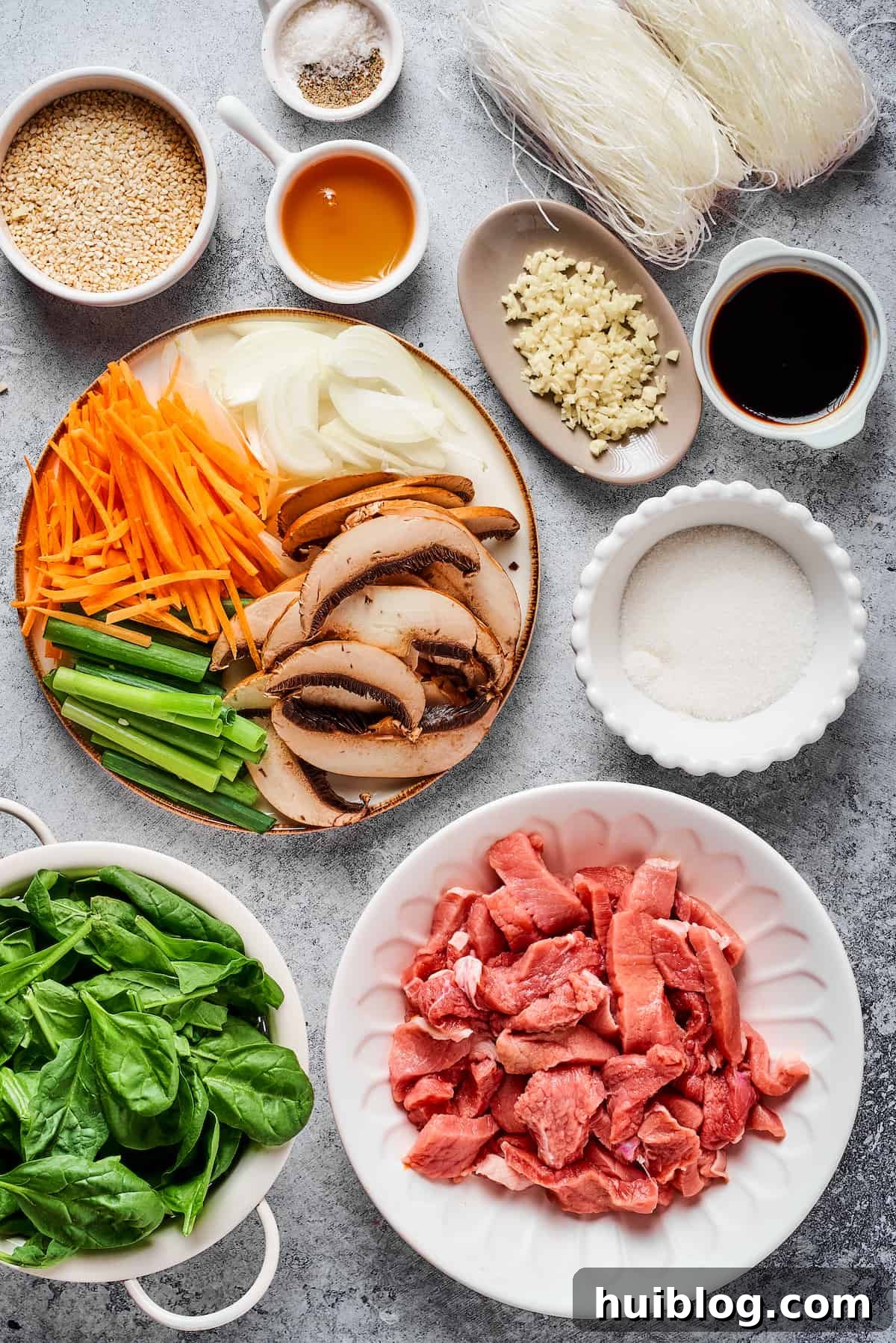
Despite its complex appearance and gourmet appeal, crafting an authentic Korean Beef Japchae relies on a surprisingly straightforward list of ingredients. The beauty of this recipe lies in how simple components come together to create a depth of flavor. The sauce, in particular, is incredibly easy to assemble, requiring just a handful of pantry staples – nothing overly fancy or hard to find!
For the Vibrant Stir-Fry:
- Glass Noodles: The undisputed star of the dish. While glass noodles can be made from various starches like mung bean, for an authentic Japchae experience, we recommend using Korean sweet potato starch noodles (dangmyeon). These are known for their signature chewiness and transparency when cooked, absorbing the sauce beautifully.
- Beef: A pound of high-quality grilling steak is ideal. Flank steak is an excellent choice for its flavor and texture, especially when thinly sliced against the grain. Sirloin steak also works wonderfully, providing tenderness and a rich beefy taste that complements the other ingredients.
- Carrots: Essential for adding a touch of natural sweetness and a vibrant orange hue. Cut them into slender matchsticks to ensure they cook quickly and integrate seamlessly into the stir-fry. Pre-cut carrot matchsticks are a convenient time-saver.
- Onion: A small yellow or white onion, thinly sliced, contributes a foundational savory sweetness to the dish as it caramelizes slightly during stir-frying.
- Mushrooms: For an earthy depth, mushrooms are a fantastic addition. Portobello mushrooms, with their meaty texture, are a great choice, but shiitake or oyster mushrooms would also lend their unique umami notes beautifully to the Japchae.
- Spinach: Adds a delicate green color and a slightly bitter contrast that balances the sweetness of the sauce. Baby spinach leaves are convenient as they are small and usually don’t require chopping. If using regular spinach, remember to tear or cut the leaves into bite-sized pieces for easier eating.
- Green Onions: Provide a fresh, pungent kick and another layer of vibrant green. Remove the roots and any wilted tips, then chop the remaining white and light green parts into bite-sized segments.
- Olive Oil: Or any high-smoke-point cooking oil suitable for stir-frying, such as peanut oil, vegetable oil, or avocado oil. It’s crucial for achieving that perfectly seared texture on the beef and vibrant crispness on the vegetables.
- Salt and Pepper: Basic seasonings used to enhance the natural flavors of the individual ingredients as they are cooked separately before being combined.
Crafting the Signature Sweet & Savory Sauce:
- Soy Sauce: The cornerstone of the Japchae sauce, providing deep umami and salty notes. For dietary preferences, tamari (gluten-free) or coconut aminos (gluten-free, soy-free) can be used as alternatives.
- Sesame Oil: Adds the characteristic nutty, aromatic flavor that is quintessential to Korean cuisine. You’ll typically find it in the international foods aisle, but sometimes it’s stocked with other cooking oils like olive oil. A little goes a long way in flavoring the entire dish.
- Sugar: A few spoonfuls of granulated sugar are vital for balancing the salty soy sauce and creating that delightful sweet-and-savory profile that Japchae is famous for.
- Garlic: Freshly minced or pressed garlic provides a pungent, aromatic foundation for the sauce, infusing it with an indispensable depth of flavor.
- Toasted Sesame Seeds: Used both within the seasoning mixture for an added nutty crunch and as a beautiful garnish to finish the dish. They add visual appeal and an extra layer of sesame flavor.
Step-by-Step Guide: How to Make Korean Beef Japchae at Home
Creating this stunning Korean glass noodle stir-fry, Japchae, is a rewarding culinary endeavor that is far less daunting than it might appear, despite the various components and steps involved. The key to a smooth cooking process lies in proper preparation and familiarizing yourself with the sequence. We highly recommend reading through the entire recipe a few times before you begin to ensure a seamless execution. Here’s a detailed breakdown of how to prepare this delicious Beef Japchae:
- Prepare the Signature Sauce: In a small mixing bowl, combine all the seasoning ingredients: soy sauce, sesame oil, sugar, minced garlic, and toasted sesame seeds. Whisk them together until the sugar is fully dissolved and the mixture is well integrated. This will be the backbone of your Japchae’s flavor.
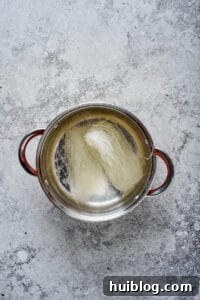
- Cook the Glass Noodles: Bring a large pot of generously salted water to a rolling boil. Once boiling vigorously, remove the pot from the heat. Carefully submerge the dried glass noodles into the hot water and allow them to soak for approximately 7 to 8 minutes, or precisely according to the package directions for your specific brand. It’s crucial not to overcook them, as they can become mushy. Drain the noodles thoroughly in a colander, then rinse them under cold running water to stop the cooking process and prevent sticking. Set the perfectly chewy noodles aside.
- Marinate the Beef: Place your bite-sized pieces of flank steak into a separate small bowl. Take about three tablespoons of your prepared seasoning mixture and pour it over the beef. Toss the beef thoroughly to ensure each piece is evenly coated in the marinade. Set the beef aside to absorb the flavors while you proceed with other steps.
- Season the Noodles: Return your drained and rinsed glass noodles to a clean bowl. Add two tablespoons of the remaining seasoning mixture to the noodles. Gently toss and mix the noodles until they are beautifully coated and glistening with the savory sauce. This pre-seasoning step is vital for ensuring the noodles are flavorful throughout the dish. Set aside.
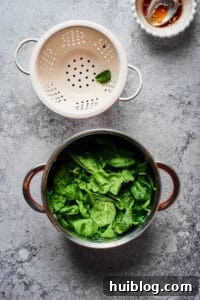
- Blanch the Spinach: In a small saucepan, bring a modest amount of water to a boil. Add the fresh spinach leaves along with a pinch of salt. Gently press the spinach down as it wilts, cooking for only about 30 seconds until just tender and vibrant green. Immediately drain the spinach, then rinse it thoroughly under cold water. This rapidly cools the spinach, preserving its bright color and nutrients while preventing it from overcooking. Squeeze out any excess water very well and set aside.
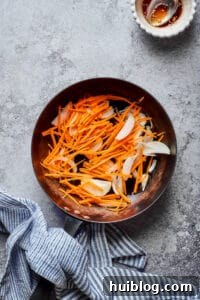
- First Stir-Fry – Carrots, Onions, and Green Onions: Heat one tablespoon of vegetable oil in a large skillet or wok over medium heat. Add the thinly sliced onions, matchstick carrots, and chopped green onions. Sprinkle with a couple of pinches of salt. Stir-fry for about 2 to 3 minutes, or until the vegetables are aromatic and slightly softened but still retain a pleasant crispness. Overcooking here will make them soggy. Transfer these vibrant vegetables to a plate and set them aside.
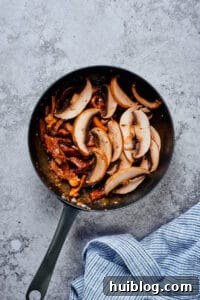
- Second Stir-Fry – Beef and Mushrooms: Add another tablespoon of vegetable oil to the same skillet, increasing the heat to medium-high. Once the oil is shimmering, add the marinated beef pieces in a single layer, if possible, to allow them to sear properly. Stir-fry for approximately 4 to 5 minutes, or until the beef is cooked through and lightly browned. Next, add the thinly sliced mushrooms to the skillet with the beef. Cover the skillet and allow them to cook for 3 minutes, or until the mushrooms are tender and have released their moisture.
- Combine with Noodles and Remaining Seasoning: Pour the seasoned glass noodles and the rest of the prepared seasoning mixture directly into the skillet with the cooked beef and mushrooms. Stir and toss everything vigorously for a few minutes, ensuring the noodles are evenly coated and absorb all the remaining sauce. The noodles will soak up the flavors and become glossy. Once the sauce is evenly distributed and absorbed, remove the skillet from the heat. Transfer the entire mixture into a large, clean mixing bowl.
- Final Assembly and Seasoning: To the large mixing bowl containing the noodles, beef, and mushrooms, add the blanched spinach, stir-fried carrots, and onions. Sprinkle with salt and freshly ground black pepper to taste. Toss everything together thoroughly until all ingredients are well combined. Sometimes, using clean hands (if the mixture is not too hot) can be the easiest way to ensure an even distribution. Taste for seasoning and adjust with more salt, pepper, or a dash more soy sauce or sesame oil as desired.
- Garnish and Serve: Generously garnish the finished Japchae with extra toasted sesame seeds. For an added layer of flavor and aroma, drizzle a little more sesame oil and a touch more soy sauce over the top just before serving. Serve warm for the best experience, or, as is often done in Korea, chill and serve it cold – it’s delicious either way!
Expert Tips for a Flawless Japchae Experience
While making Japchae is a wonderfully enjoyable culinary journey, it can feel a bit intricate due to the individual cooking of various components. To ensure your process flows smoothly and your final dish is absolutely perfect, some thoughtful planning and a few expert tips can make all the difference. Embrace the layering of flavors and textures, and you’ll create an unforgettable Korean Beef Japchae.
- Master the Art of Mise en Place: Since this delightful stir-fry involves several ingredients that are cooked separately and then combined, performing all your slicing, chopping, and measuring ahead of time is absolutely essential. This practice, known as ‘mise en place,’ ensures that when you start stir-frying, every ingredient is ready to go, preventing frantic rushes and potential burning. Having everything prepped makes the cooking process much more relaxed and efficient.
- Optimize Your Cooking Time: To save precious time in the kitchen, consider cooking the spinach and glass noodles simultaneously, utilizing separate pots. While they must be cooked individually, having two burners active for these steps can significantly reduce your total preparation time compared to cooking them one after the other. This parallel approach keeps the momentum going without sacrificing quality.
- Prioritize Quality Steak: The tenderness of the beef is paramount in Japchae. For the best results, invest in a good-quality flank steak, sirloin steak, or even skirt steak. Ensure it’s thinly sliced against the grain to break down the muscle fibers, resulting in exceptionally tender pieces that will melt in your mouth. Avoid cuts with excessive gristle, as they will detract from the dish’s luxurious texture.
- Don’t Overcook the Noodles: Glass noodles are incredibly absorbent and can quickly turn mushy if overcooked. Stick strictly to the package instructions for soaking time, and err on the side of slightly undercooking if unsure, as they will continue to soften slightly when combined with the hot sauce and other ingredients. A perfect glass noodle should be springy and chewy, not soft or brittle.
- Season as You Go: While there’s a primary sauce mixture, don’t hesitate to taste and adjust seasoning throughout the cooking process, particularly when stir-frying the vegetables and beef. A pinch of salt here and there can enhance the individual flavors before they are all united, contributing to a more nuanced final dish.
- High Heat for Stir-Frying: For the best stir-fry results, ensure your skillet or wok is properly heated with shimmering oil before adding ingredients. High heat allows the vegetables to develop a slight char and retain their crispness, and the beef to sear quickly, locking in juices. Avoid overcrowding the pan, which can lower the temperature and lead to steaming rather than stir-frying. Cook in batches if necessary.
- Gentle Mixing at the End: When you combine all the ingredients in the large mixing bowl, mix gently but thoroughly. The noodles can be delicate, so a careful tossing motion, rather than aggressive stirring, will ensure everything is evenly coated without breaking the noodles or mashing the vegetables. Using your hands (with gloves, if preferred, once the dish has cooled slightly) can give you better control.
What to Serve with Japchae: Perfect Korean Side Dishes
Japchae, with its rich array of flavors and satisfying textures, is a complete meal in itself. You truly need nothing more than a pair of chopsticks (or a fork, if you prefer!) to savor its deliciousness. However, if you’re looking to expand your Korean culinary experience or simply want to offer a more substantial spread, there are several wonderful side dishes that complement Japchae beautifully. These additions will elevate your meal into a full Korean feast, perfect for sharing with family and friends.
- Egg Drop Soup: For a light, warm, and comforting starter, a classic Egg Drop Soup is an excellent choice. Its delicate flavors and silky texture provide a soothing contrast to the savory richness of Japchae. This easy-to-follow recipe demonstrates just how simple it is to prepare this restaurant favorite right in your own kitchen, making it a perfect quick addition to any stir-fry meal.
- Potstickers: Who could possibly resist these delightful, crispy-bottomed dumplings? Easy Chicken Potstickers are not only incredibly fun to make but also utterly scrumptious to eat. Filled with a savory mixture of cabbage, scallions, and a medley of other flavorful ingredients, they offer a delightful textural counterpoint to the soft noodles and tender beef of the Japchae. Serve them with a simple dipping sauce for an extra layer of enjoyment.
- Spring Rolls: Another perennial takeout favorite that pairs wonderfully with Korean stir-fry is a batch of Golden Veggie Spring Rolls. These crispy, crunchy, and utterly craveable rolls provide a fantastic textural contrast and can be filled with a variety of vegetables. This recipe ensures you can create perfectly golden, flavorful spring rolls that are sure to bring smiles and satisfaction to your dining table, adding an irresistible crispness to your meal.
- Kimchi: No Korean meal is complete without kimchi! The fermented, spicy, and tangy cabbage offers a refreshing and zesty contrast to the savory Japchae, cutting through the richness and awakening the palate. Its probiotic benefits are an added bonus.
- Steamed Rice: While Japchae contains noodles, a small side of plain steamed white or brown rice can be a comforting accompaniment, especially if you enjoy soaking up every last drop of the delicious sauce.
Storing and Reheating Your Japchae: Best Practices
While Japchae is undeniably at its peak when enjoyed fresh off the wok, any leftovers can be safely stored and reheated. It’s worth noting, however, that the unique springy texture of the glass noodles and the crispness of the vegetables might slightly soften after refrigeration and subsequent reheating. But don’t let that deter you; the flavors will remain wonderfully delicious, making it a convenient meal for the next day.
- To store: Allow your leftover Beef Japchae to cool completely to room temperature before transferring it. Place the stir-fry into a resealable bag, ensuring as much air as possible is squeezed out, or in a well-sealed airtight container. Properly stored, it will keep fresh in the refrigerator for up to two days. Prompt cooling and airtight storage are key to maintaining quality and food safety.
- To reheat: For the best reheating results that minimize sogginess, place the chilled Japchae in a lightly-oiled skillet over medium heat. Add a tablespoon or two of water or broth to help create steam and prevent drying. Cover the skillet and cook, stirring gently and occasionally, for several minutes until the beef pieces and noodles are thoroughly heated through. Be cautious not to stir too vigorously or cook for too long, as this can cause the glass noodles to absorb too much moisture and become overly soft or even soggy. The goal is to warm it through while preserving as much of the original texture as possible.
Can I Freeze This Dish? Longevity and Texture Considerations
Yes, you absolutely can freeze leftover Beef Japchae, offering a convenient option for meal prep or enjoying this delicious Korean stir-fry at a later date. It’s a great way to extend the life of your leftovers, although it’s important to manage expectations regarding texture after the freezing and thawing process. The distinct chewiness of the glass noodles and the crispness of the fresh vegetables may become softer and slightly less vibrant.
- To freeze: Ensure the Japchae has cooled completely to room temperature. Divide the leftovers into individual freezer-safe bags or airtight containers. Press out as much air as possible from bags to prevent freezer burn, and ensure containers are sealed tightly. Label each container or bag with the date. Frozen Japchae can be safely stored for up to 2 months. Beyond this period, while still safe to eat, the quality and texture might further diminish.
- To thaw and reheat: For the best results, thaw the frozen Japchae overnight in the refrigerator. Once thawed, reheat it using the instructions provided above: in a lightly-oiled skillet over medium heat with a splash of water or broth, covered, stirring occasionally until heated through. Avoid microwaving if possible, as it can often lead to a less desirable texture for the noodles and vegetables.
Full Recipe: Authentic Beef Japchae (Korean Glass Noodle Stir Fry)
Get ready to create this incredible Korean Beef Japchae at home! Follow this detailed recipe to bring the vibrant flavors and delightful textures of this classic dish to your table.
Beef Stir Fry with Glass Noodles (Japchae)
Beef Stir Fry with Glass Noodles (Japchae) is prepared with steak, veggies, and delicious, springy glass noodles.
Ingredients
For Seasoning:
- 6 tablespoons low sodium soy sauce
- 4 tablespoons sesame oil
- 3 tablespoons sugar
- 3 cloves garlic, minced
- toasted sesame seeds, plus more for garnish
For the Stir Fry:
- 7 ounces Korean potato starch noodles (glass noodles)
- 1 pound flank steak, cut into bite-sized pieces
- 2 cups baby spinach
- 3 tablespoons vegetable oil, divided
- 1 yellow onion, thinly sliced
- 2 medium carrots, cut into matchsticks
- 2 green onions, root ends removed, cut into bite-sized pieces
- 4 to 5 fresh portobello mushrooms, thinly sliced
- salt and freshly ground black pepper, to taste
Instructions
- Mix all seasoning ingredients together in a small bowl.
- Bring a large pot of salted water to boil.
- When the water has come to a boil, remove it from the heat and place the noodles in it. Leave them in the hot water for 7 to 8 minutes, or follow the instructions on the package. Drain the water, and rinse briefly with cold water. Set aside.
- Place the beef pieces in a separate bowl, and season with about 3 tablespoons of your seasoning mixture. Set aside to marinate.
- Add 2 tablespoons of the seasoning to the drained and rinsed glass noodles. Mix well, until the noodles are evenly coated in the sauce. Set aside.
- Lightly blanch the spinach by adding it to a pot of boiling water with a pinch of salt, for about 30 seconds. Rinse under cold running water to stop the cooking process and preserve the spinach’s nutritional value. Drain and set them aside.
- Heat 1 tablespoon vegetable oil in a large skillet or wok set over medium heat; stir in the sliced onions, carrots, and green onions. Add couple pinches of salt, and cook for about 2 to 3 minutes, or until aromatic but still crisp; transfer to a plate and set aside.
- Pour a little more oil in the skillet, increase the heat to medium-high, and stir in the beef chunks; cook for about 4 to 5 minutes, or until cooked through.
- Next, add the sliced mushrooms to the beef. Cover and cook for 3 minutes, or until the mushrooms are tender and cooked.
- To the skillet, add the cooked noodles and the remaining seasoning mixture. Stir and toss to coat the noodles evenly. Once the sauce is absorbed into the noodles, remove the skillet from the heat. Transfer the ingredients to a large, clean mixing bowl.
- Add the prepared vegetables to the same bowl, along with salt and pepper to taste. Toss well to distribute the ingredients evenly. Taste and season accordingly.
- Garnish with toasted sesame seeds, adding more sesame oil and soy sauce as needed.
- Serve warm, or chill and serve cold.
Notes
Nutrition values are given as a courtesy, and are only approximations. Actual nutrition facts may vary.
Nutrition
Nutritional info is an estimate and provided as courtesy. Values may vary according to the ingredients and tools used. Please use your preferred nutritional calculator for more detailed info.
Explore More Savory Stir-Fry Delights
If you’ve enjoyed the delightful flavors and textures of this Korean Beef Japchae, you’ll love exploring other exciting stir-fry recipes. Each dish offers a unique culinary adventure, perfect for adding variety to your weeknight meals or impressing guests.
- Honey Balsamic Beef Stir Fry: A sweet and tangy twist on classic beef stir-fry, featuring a rich honey-balsamic glaze that perfectly coats tender beef and crisp vegetables. It’s a flavorful and quick meal for any night.
- Szechuan Chicken: Dive into the bold and spicy flavors of Szechuan cuisine with this tantalizing chicken stir-fry. Packed with vibrant ingredients and a fiery kick, it’s a dish that promises to awaken your taste buds.
- Pad See Ew: Experience the comforting taste of Thailand with this popular noodle dish. Wide, chewy rice noodles are stir-fried with tender meat and leafy greens in a rich, savory soy-based sauce, creating a satisfying and aromatic meal.
Frequently Asked Questions (FAQ) about Japchae
Do you have more questions about making the perfect Japchae? Here are some common queries to help you master this delicious Korean glass noodle stir fry.
Q: What makes glass noodles unique, and where can I buy them?
A: Glass noodles, or dangmyeon (당면), are typically made from sweet potato starch, giving them their characteristic transparent appearance and incredibly springy, chewy texture when cooked. This unique texture is a hallmark of Japchae. You can usually find them in the international aisle of larger supermarkets, Asian grocery stores, or easily order them online.
Q: Can I customize the vegetables in Japchae?
A: Absolutely! Japchae is highly versatile. Feel free to incorporate your favorite vegetables or whatever you have on hand. Common additions include bell peppers (red, yellow, or green), zucchini, bok choy, or even bamboo shoots. Ensure they are cut into similar sizes (matchsticks or thin slices) for even cooking, and cook them separately or in batches to maintain their vibrant colors and crisp-tender texture.
Q: Is Japchae usually served hot or cold?
A: Japchae can be enjoyed both warm and cold, which is part of its charm! It’s delicious fresh off the stove, with the noodles and vegetables still slightly warm. However, it’s also a popular dish to serve chilled as a banchan (Korean side dish) or as a refreshing main course, especially during warmer months. The flavors tend to meld even more beautifully when served cold, making it a great make-ahead option.