
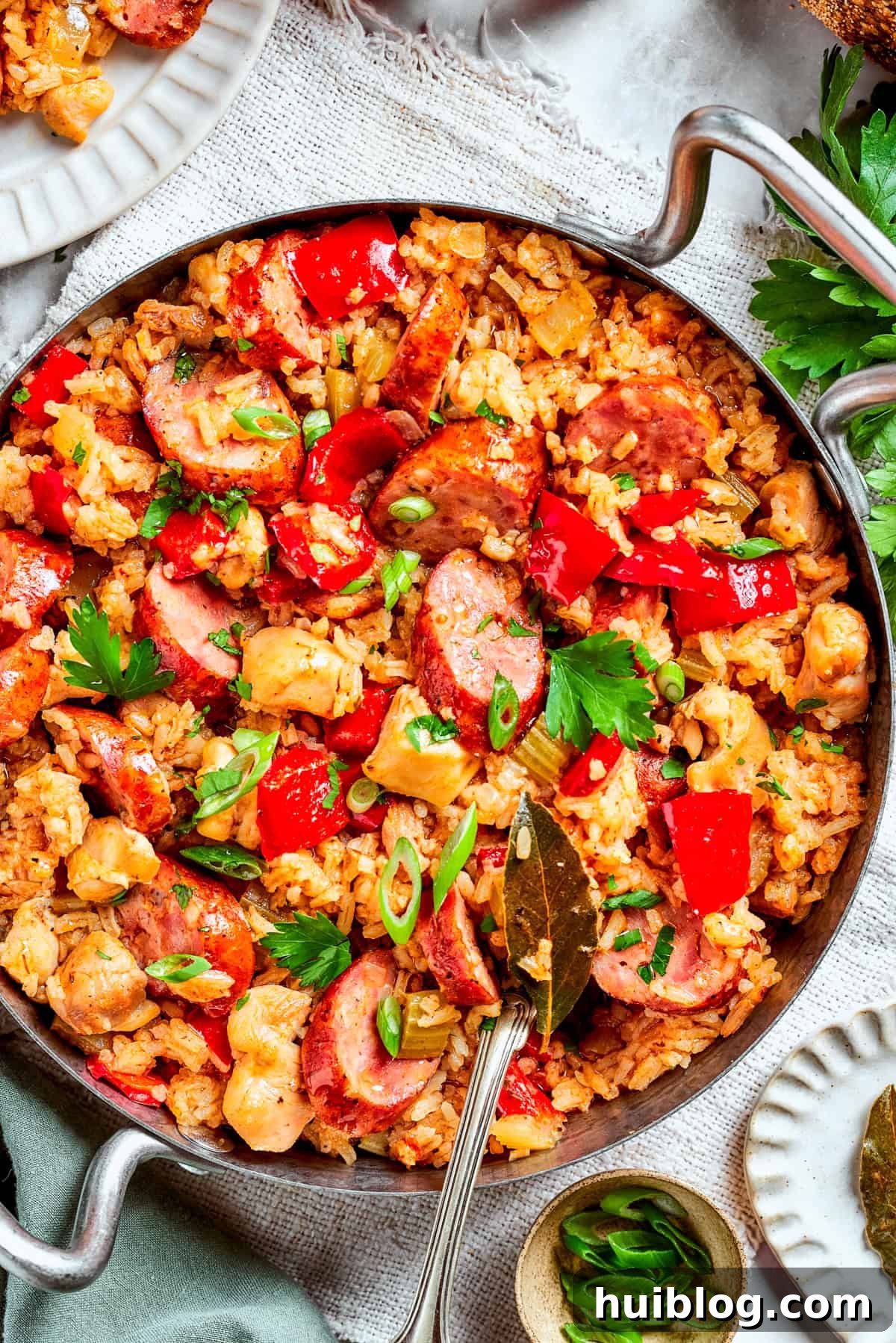
Welcome to the ultimate guide for crafting a truly unforgettable Chicken and Sausage Jambalaya! This iconic Creole and Cajun dish, famous for its rich, smoky, and spicy flavors, comes together effortlessly in a single pot. Imagine tender bites of chicken, succulent slices of spicy Andouille sausage, and perfectly cooked rice, all simmered in a robust, tomato-based broth infused with aromatic vegetables and a symphony of spices. It’s not just a meal; it’s a culinary journey to the heart of Louisiana, right in your own kitchen. And the best part? It’s a complete meal on its own, easily elevated with a simple side salad. Dinner made easy, delicious, and deeply satisfying!
If the vibrant, bold flavors of Cajun and Creole cooking captivate your palate, then you’re in for a treat. This jambalaya recipe embodies the spirit of these cuisines, delivering a comforting yet exciting experience. For more adventures in soulful Southern cooking, be sure to explore my Cajun butter chicken thighs – a quick and flavorful weeknight favorite – and this incredible air fryer shrimp boil, perfect for a fuss-free seafood feast. These dishes share the same dedication to potent spices, fresh ingredients, and hearty portions that make Louisiana cooking utterly irresistible.
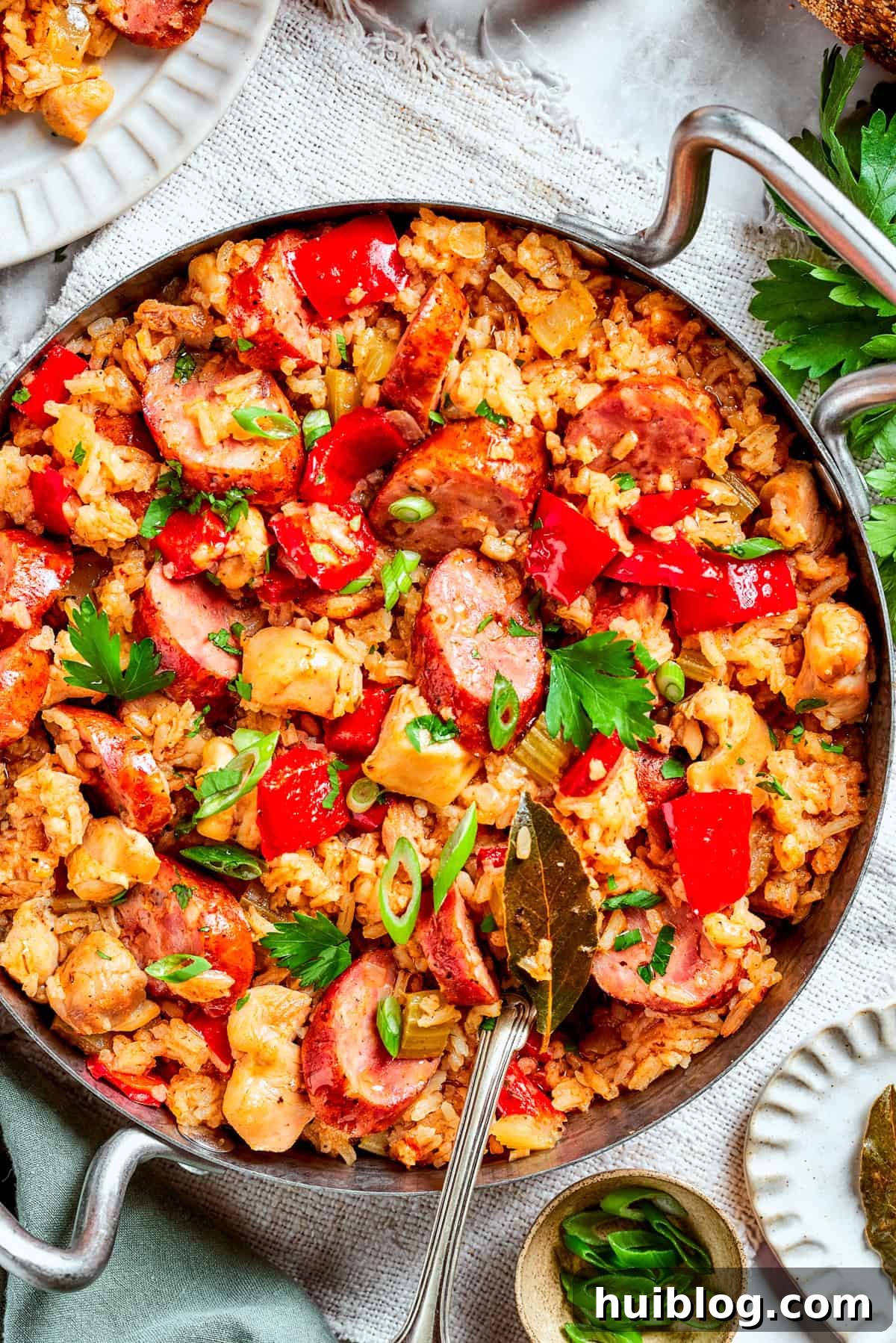
Tired of your usual chicken dinner rotation? It’s time to elevate your culinary game with this fantastic one-pan Chicken and Sausage Jambalaya. This isn’t just another meal; it’s an experience in robust flavor, incredible ease, and comforting heartiness. Everything, from the perfectly seasoned chicken and savory sausage to the fragrant rice and crisp vegetables, cooks together in a single pot – I highly recommend using a trusty Dutch oven for its even heat distribution and ample capacity. This means minimal fuss during preparation and, even better, a remarkably quick and simple cleanup, leaving you more time to savor the delicious results.
My lifelong love affair with jambalaya began during a memorable college trip to the vibrant city of New Orleans. The electric atmosphere of Mardi Gras, coupled with the explosion of flavors in every bite of authentic Cajun and Creole dishes, left an indelible mark on my memory. Since then, I’ve dedicated myself to perfecting that unforgettable taste right here at home. This particular recipe has become a cherished staple, especially with my husband, Goce, who truly appreciates its hearty, traditional roots and the incredible depth of flavor it brings to our table. He’s also a huge fan of my inventive jambalaya pasta, which brilliantly marries his love for pasta with the same bold, zesty flavors that define classic jambalaya. It’s a guaranteed crowd-pleaser at our family gatherings, bringing a touch of New Orleans’ magic and warmth to every occasion.
Why You’ll Love This Easy Chicken and Sausage Jambalaya Recipe
This Chicken and Sausage Jambalaya isn’t just a recipe; it’s a gateway to hassle-free, flavor-packed dining. Here’s why it’s destined to become a staple in your meal rotation:
- Effortless One-Pot Wonder: Say goodbye to stacks of dirty dishes! This entire meal, from start to finish, comes together beautifully in just one pot, preferably a Dutch oven. It’s the ultimate solution for busy weeknights, offering maximum flavor with minimum cleanup. From the perfectly tender rice to the succulent chicken, savory sausage, and fresh vegetables, this streamlined process makes cooking a joy, not a chore.
- Infinitely Adaptable: The beauty of jambalaya lies in its flexibility. This recipe provides a robust foundation, but it’s incredibly forgiving and easy to customize to your family’s preferences. Want more heat? Add extra cayenne. Prefer different proteins? Swap them in! It’s a versatile canvas for your culinary creativity, ensuring every batch is just right for you.
- Hearty and Wholesome: This isn’t a light snack; it’s a truly satisfying meal designed to fuel and comfort. Packed with lean protein from chicken, smoky richness from sausage, complex carbohydrates from rice, and a medley of nutritious vegetables, each serving offers a complete and balanced plate. You won’t leave the table feeling hungry after a generous portion of this deeply flavorful jambalaya!
- Authentic Cajun Flavors at Home: Experience the soulful tastes of Louisiana without leaving your kitchen. This recipe uses classic Cajun seasonings and techniques to deliver an authentic taste profile that’s both vibrant and comforting. It’s a wonderful way to introduce your family to new, exciting flavors, making dinner time an adventure.
What Is Jambalaya? Exploring This Louisiana Culinary Gem
Jambalaya is more than just a dish; it’s a vibrant cornerstone of Louisiana cuisine, reflecting a rich tapestry of cultures, including French, Spanish, and African influences. At its heart, jambalaya is a hearty, rice-based meal typically featuring a medley of meats, often including sausage and chicken, and sometimes seafood like shrimp, all cooked together in a flavorful stew with vegetables and a distinctive blend of spices.
There are primarily two main types of jambalaya: Creole (or “red” jambalaya) and Cajun (or “brown” jambalaya). Creole jambalaya, often associated with New Orleans, typically includes tomatoes, which give it its characteristic reddish hue and richer base. Cajun jambalaya, hailing from the swampy regions of Louisiana, generally omits tomatoes, relying instead on a deeply browned meat base (often achieved by searing sausage and chicken) to develop its robust “brown” color and flavor. Our recipe leans into the Creole style with its use of crushed tomatoes, offering a beautifully balanced and slightly tangy profile that many find irresistible.
Unlike its cousin, gumbo, which is a thick stew served over rice, jambalaya cooks the rice directly into the stew. This method allows the rice to absorb all the wonderful flavors of the broth, meats, and vegetables, resulting in a cohesive, flavorful, and easily scoopable meal where every grain of rice is packed with taste. The foundation of many jambalaya recipes, including this one, starts with the “Holy Trinity” of Cajun and Creole cooking: diced onion, bell pepper, and celery. These three humble vegetables create the aromatic base that sets the stage for the dish’s complex flavors.
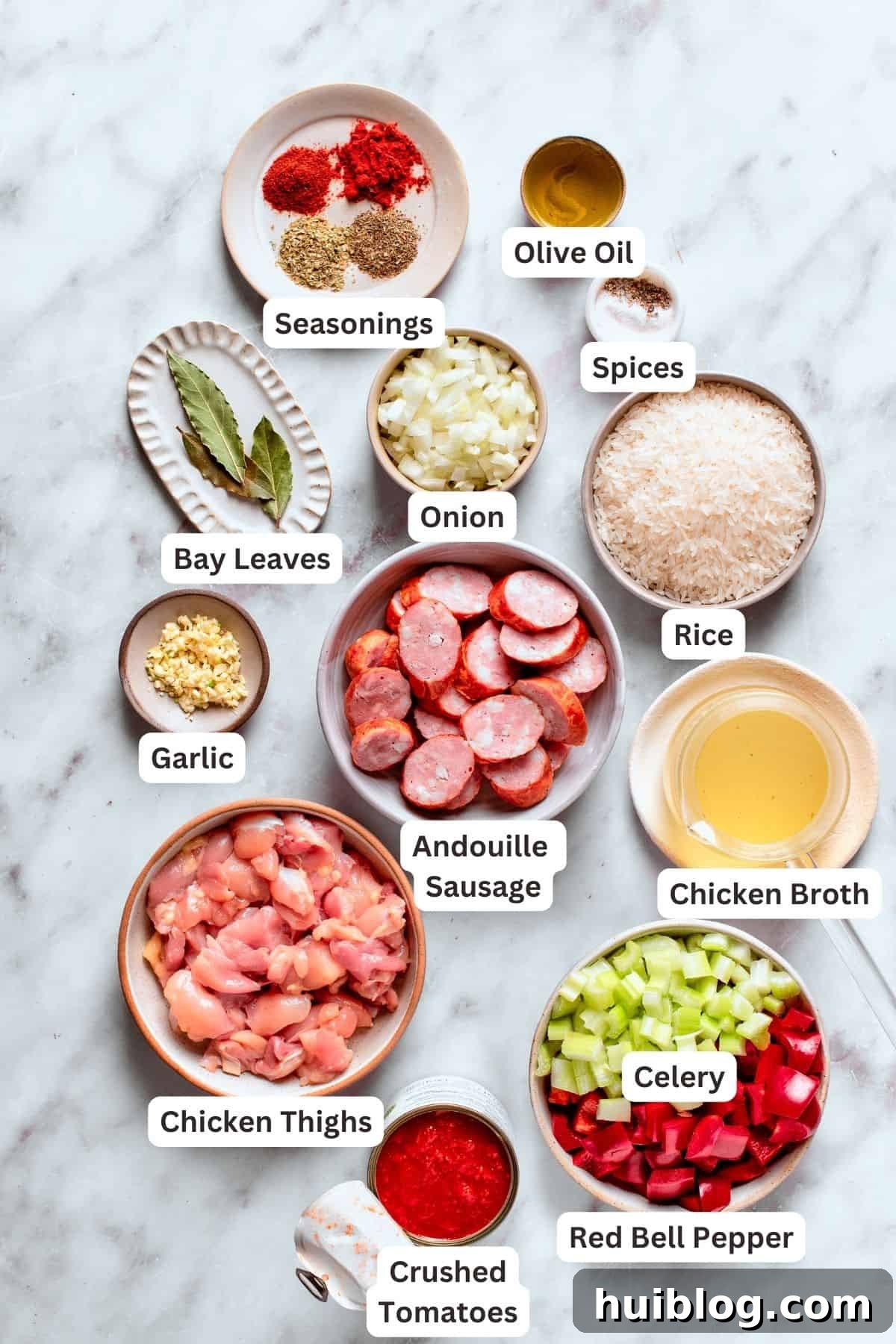
Essential Ingredients for Your Perfect Chicken and Sausage Jambalaya
Creating an authentic and incredibly flavorful jambalaya doesn’t require a trip to a specialty store. This recipe relies on a combination of readily available pantry staples and fresh ingredients that, when brought together, form the foundation of this hearty Cajun delight. Each component plays a crucial role in building the layered flavors that make jambalaya so beloved. For precise measurements and detailed instructions, please refer to the complete recipe card below.
- Olive Oil: The starting point for sautéing our proteins and aromatics. While olive oil adds a subtle fruity note, any neutral cooking oil like vegetable or canola oil will work perfectly to brown your ingredients and build flavor.
- Chicken: For the best texture and flavor, I highly recommend using boneless, skinless chicken thighs. They remain incredibly tender and juicy throughout the simmering process, absorbing all the wonderful flavors of the broth and spices. Cut them into bite-sized pieces for even cooking and easy serving.
- Salt and Pepper: These foundational seasonings are essential for enhancing the natural flavors of the chicken and balancing the entire dish. Don’t skimp on seasoning the chicken initially, as it sets the stage for a well-rounded taste.
- Onion: A critical member of the “Holy Trinity” (onion, bell pepper, celery). A medium yellow or white onion, diced, provides a sweet and pungent aromatic base that deepens as it caramelizes, contributing significantly to the jambalaya’s overall flavor profile.
- Andouille Sausage: This is truly the star sausage of Cajun cooking and a non-negotiable for authentic jambalaya in my book! Its distinct smoky, spicy, and garlicky profile is irreplaceable. If genuine Andouille is unavailable, opt for another high-quality smoked sausage with a good amount of spice to mimic that characteristic kick. Slice it into ½-inch thick rounds for hearty bites.
- Bell Pepper: Another pillar of the “Holy Trinity.” While any color bell pepper works, a large red bell pepper adds a touch of sweetness and vibrant color, contrasting beautifully with the savory elements. Dice it evenly for consistent texture.
- Celery Ribs: Completing the “Holy Trinity,” celery adds an earthy, slightly bitter, and aromatic note that is fundamental to the Cajun flavor base. Diced celery integrates seamlessly into the stew, providing depth without overpowering the other ingredients.
- Garlic: Freshly minced garlic is indispensable for its pungent, aromatic intensity. Don’t hesitate to add an extra clove or two if you’re a garlic lover! In a pinch, garlic powder can be substituted, but fresh garlic offers a superior depth of flavor.
- Jasmine Rice: The chosen grain for our jambalaya. Jasmine rice, or any good quality long-grain white rice, is preferred because it cooks up fluffy and distinct, rather than clumpy or mushy. Its slight stickiness after cooking helps bind the dish without becoming overly soft. Avoid short-grain varieties, as they can lead to a less desirable texture.
- Dried Spices: This blend is where the vibrant soul of Cajun cooking truly shines. I use a robust mix of:
- Smoked Paprika: For a beautiful color and a deep, smoky undertone that complements the Andouille sausage.
- Dried Thyme: Earthy and slightly minty, thyme is a classic herb in Louisiana cooking.
- Dried Oregano: Adds a pungent, slightly bitter, and peppery flavor that rounds out the spice blend.
- Cayenne Pepper or Red Pepper Flakes: Essential for that characteristic Cajun heat. Adjust the amount to suit your spice preference – a little goes a long way, but you can always add more!
Feel free to experiment and add other favorite spices like bay seasoning or a dash of onion powder for extra depth.
- Chicken Broth: Provides the liquid base for cooking the rice and infusing the entire dish with savory flavor. Use regular or low-sodium chicken broth, depending on your preference for saltiness. Vegetable broth is also a suitable substitute for a lighter flavor.
- Crushed Tomatoes: A hallmark of Creole-style jambalaya, crushed tomatoes lend a rich, slightly acidic, and fruity depth to the broth. For an even more intense flavor, seek out “fire-roasted” crushed tomatoes, which add a smoky sweetness.
- Bay Leaves: These fragrant leaves impart a subtle, almost floral and earthy aroma that deepens the overall complexity of the stew as it simmers. Remember to remove them before serving, as they are not meant for consumption.
- Garnish: Fresh garnishes add a burst of color and freshness, elevating the dish’s appearance and providing a final touch of flavor.
- Scallions: Sliced green onions offer a mild, oniony crunch.
- Fresh Parsley: Chopped parsley adds a bright, herbaceous note that cuts through the richness of the jambalaya.
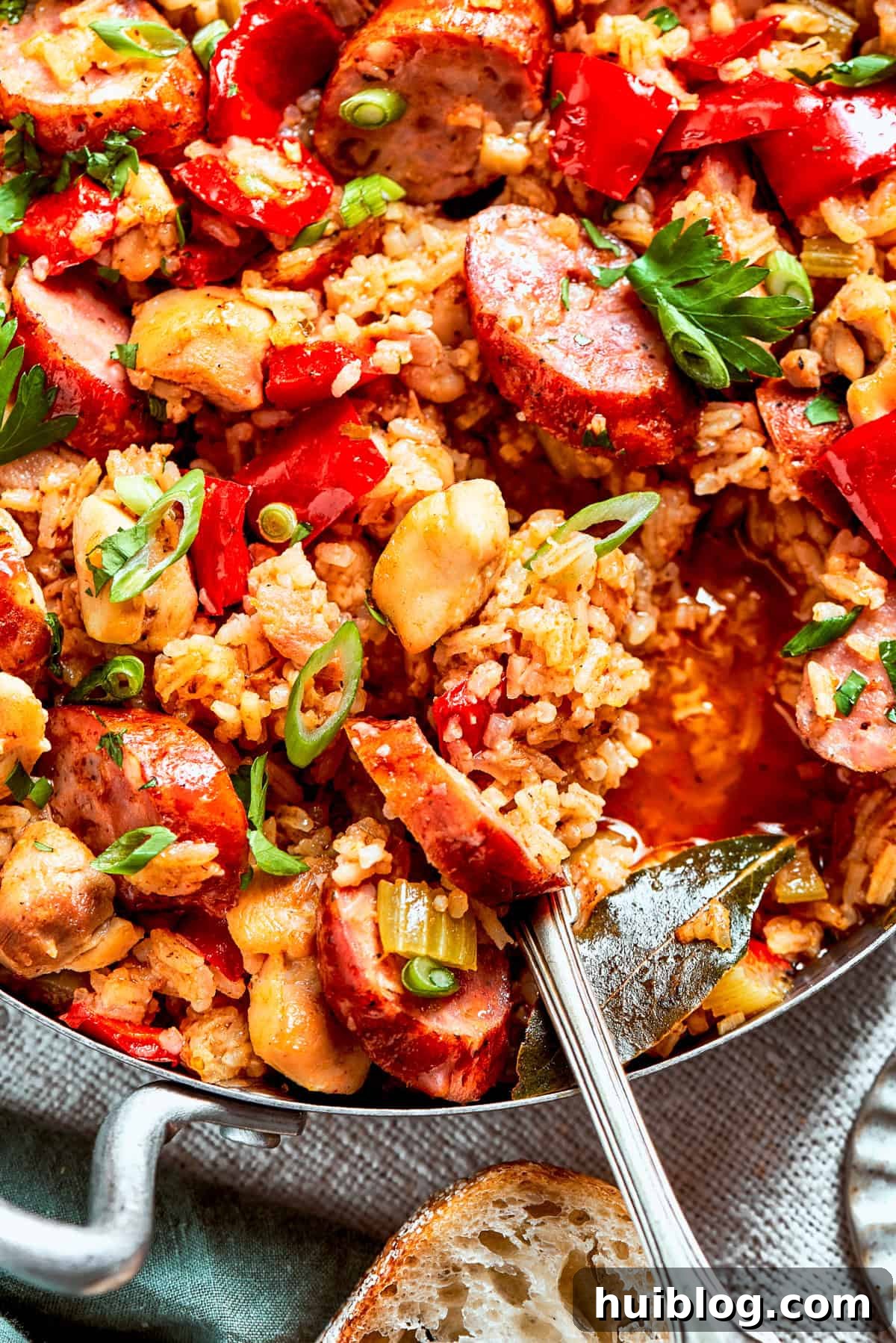
How to Make the Best One-Pot Chicken and Sausage Jambalaya
Crafting this classic Chicken and Sausage Jambalaya is a straightforward process, resulting in a dish packed with bold, authentic flavors and satisfying textures. Follow these simple, step-by-step instructions, complemented by visual cues, to create a delicious jambalaya that will impress everyone at your table and have them craving more.
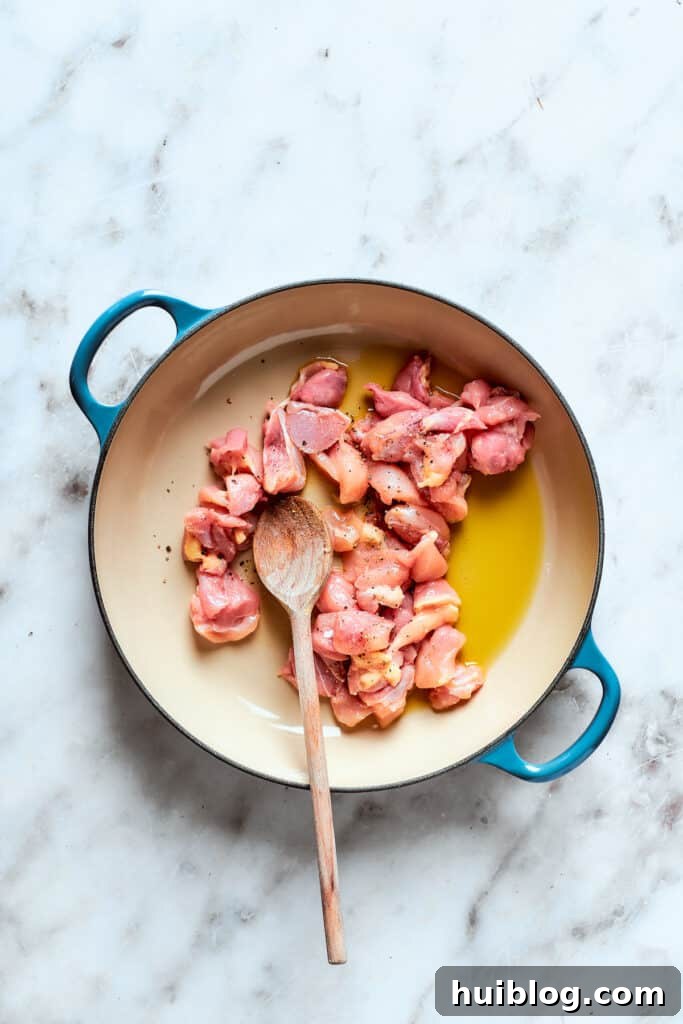

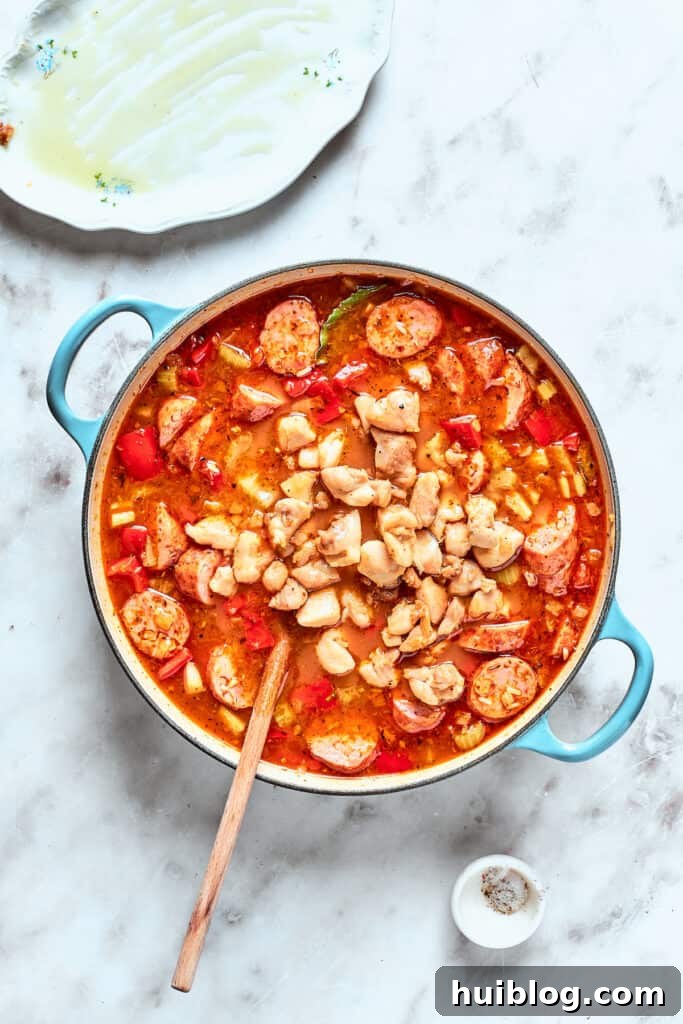
- Prepare and Season the Chicken: Begin by patting your boneless, skinless chicken thighs dry. Cut them into uniform, bite-sized pieces for even cooking. Season generously with kosher salt and freshly ground black pepper on all sides. This initial seasoning is crucial for building a strong flavor base.
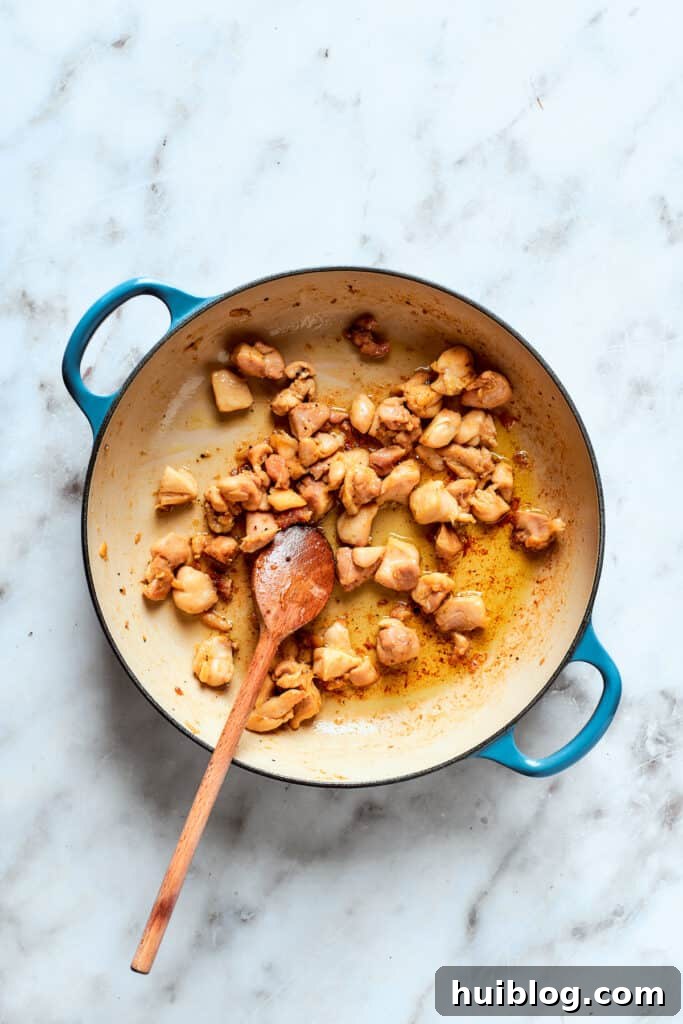
- Sear the Chicken: Heat one tablespoon of olive oil in a large, heavy-bottomed skillet or a Dutch oven over medium-high heat. Once the oil shimmers, add the seasoned chicken pieces in a single layer, making sure not to overcrowd the pan (cook in batches if necessary). Sear the chicken for approximately 6-7 minutes, turning occasionally, until it develops a beautiful golden-brown crust on all sides. This browning creates delicious fond (caramelized bits) at the bottom of the pot, which will add incredible depth to your jambalaya. Once browned, remove the chicken from the pot and set it aside, covering it loosely with foil to keep it warm and retain its juices.
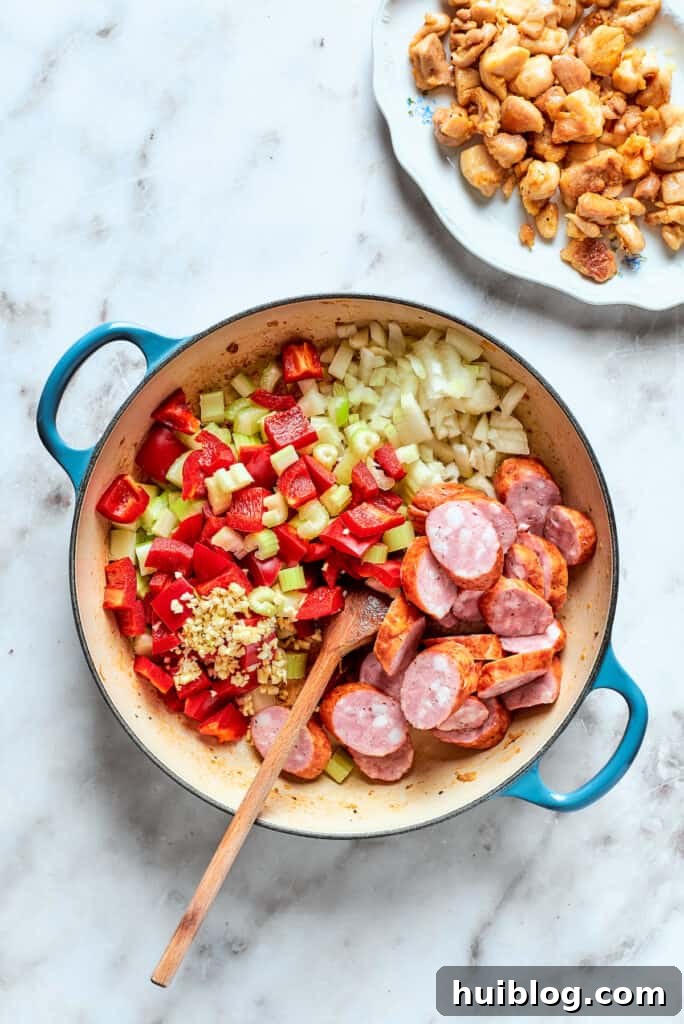
- Sauté the “Holy Trinity” and Sausage: Using the same pot (don’t clean it – those browned bits are flavor!), reduce the heat slightly to medium. Add the diced yellow onion, sliced Andouille sausage, diced red bell pepper, and diced celery. Sauté these ingredients for about 5-7 minutes, stirring occasionally, until the vegetables begin to soften and the sausage starts to brown and release its aromatic oils. Stir in the minced garlic during the last minute of cooking to prevent it from burning, allowing its fragrance to fully develop.
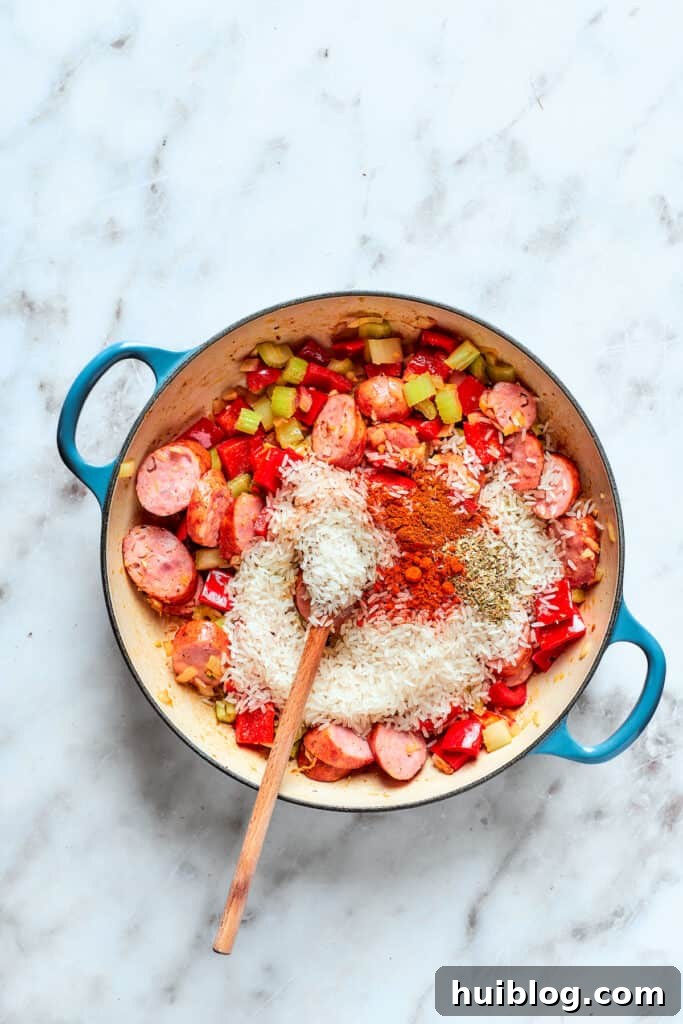
- Toast the Rice and Spices: Add the dry long-grain rice (such as Jasmine rice) directly into the pot with the sautéed vegetables and sausage. Sprinkle in the smoked paprika, dried thyme, dried oregano, and cayenne pepper (or red pepper flakes). Stir well for 1-2 minutes, ensuring that every grain of rice and all the vegetables are thoroughly coated with the spices. Toasting the rice briefly helps prevent it from becoming mushy and enhances its nutty flavor.
- Combine, Simmer, and Cook: Return the previously browned chicken thighs to the Dutch oven, nestling them among the rice and vegetables. Pour in the chicken broth and crushed tomatoes, and add the two bay leaves. Stir everything gently to combine, ensuring the liquid is evenly distributed. Bring the mixture to a rolling boil over medium-high heat. Once boiling, immediately reduce the heat to low, cover the pot tightly with a lid, and let it simmer for 15 to 20 minutes. Resist the urge to lift the lid frequently, as this releases steam crucial for cooking the rice. The jambalaya is ready when the rice has absorbed almost all the liquid and is tender. Stir once or twice during simmering to prevent sticking and promote even cooking.
- Finishing Touches: Once the rice is cooked and the jambalaya is moist but not soupy, remove the pot from the heat. Carefully fish out and discard the bay leaves – they’ve done their job imparting flavor!
- Adjust Seasoning: Give the jambalaya a final taste test. Adjust the seasoning with additional salt and freshly cracked black pepper as needed to achieve your desired flavor balance. A pinch more cayenne can be added if you prefer extra heat.
- Serve and Garnish: Ladle generous portions of the hot jambalaya into bowls. Garnish each serving with freshly sliced scallions and a sprinkle of chopped fresh parsley for a burst of color and fresh flavor. Serve immediately and enjoy the fruits of your labor!

Recipe Tips & Variations for Your Chicken and Sausage Jambalaya
Jambalaya is wonderfully forgiving and incredibly versatile. Here are my top tips and creative variations to help you customize this dish to perfection, ensuring every bite is exactly how you like it!
- Mastering the Spice Level: One of the joys of jambalaya is tailoring its heat. Sometimes I crave a fiery kick, and other times a milder, comforting warmth. You can easily adjust the amount of cayenne pepper or red pepper flakes added during cooking. For those who like varying levels of spice at the table, a drizzle of your favorite hot sauce or a sprinkle of extra red pepper flakes over individual portions is a fantastic solution, allowing everyone to customize their plate. Don’t be afraid to experiment with other chili powders if you’re looking for different flavor profiles.
- Always Choose Long-Grain Rice for Best Texture: The texture of your jambalaya is paramount. A common pitfall is a mushy, overly soft rice, which can happen when using short-grain varieties. To achieve that ideal fluffy, distinct, yet moist consistency, always opt for long-grain white rice, such as Basmati or Jasmine rice. These varieties hold their shape better during the simmering process, absorbing the liquid without breaking down too much. Rinsing the rice before adding it can also help remove excess starch, contributing to a less sticky result.
-
Get Creative with Protein Substitutions: While chicken and Andouille sausage are classic, this recipe serves as an excellent base for various proteins.
- Seafood Sensation: For a true New Orleans experience, introduce shrimp, crawfish, or even crab meat. If adding shrimp, stir them in during the last 5-7 minutes of simmering, as they cook very quickly. For other seafood, pre-cook separately and add at the end to prevent overcooking.
- Pork Perfection: Diced pork shoulder or country-style ribs can be browned alongside the chicken for a richer, more robust flavor.
- Vegetarian Twist: Easily adapt this recipe for a meatless version! Omit the chicken and sausage (or use plant-based sausage alternatives) and introduce hearty options like canned kidney beans or black beans (drained and rinsed). You can also add more substantial vegetables like mushrooms, zucchini, or butternut squash. Just remember to adjust the cooking time as needed.
-
Embrace the “Jumble” with Other Vegetables: The word “jambalaya” itself loosely translates to “a jumble,” signifying its adaptable nature. Feel free to incorporate other vegetables you have on hand or that are in season.
- Tomato Variations: Instead of crushed canned tomatoes, you can use fresh diced tomatoes when in season for a brighter flavor.
- More Aromatics: Add extra garlic, leeks, or even a different type of onion (like red onion) for nuanced flavors.
- Hearty Additions: Sliced mushrooms, corn kernels (fresh or frozen), green beans, or even diced sweet potatoes can be wonderful additions, adding both texture and nutrition.
- Greens: Stir in a handful of fresh spinach or collard greens during the last few minutes of cooking for an added boost of color and nutrients.
The key is to maintain a balance and ensure the vegetables cook through without becoming overly soft.
- Don’t Skimp on the Fond: That browned residue at the bottom of your pot after searing the chicken and sausage is pure flavor! Deglaze the pan with a splash of broth or water, scraping up all those delicious bits. This “fond” will dissolve into your liquid, adding incredible depth and richness to your jambalaya.
Perfect Pairings: What to Serve with Chicken and Sausage Jambalaya
While this Chicken and Sausage Jambalaya is undoubtedly a complete and satisfying meal on its own, I often find myself wanting to round out our dinner with a few fresh accompaniments. These sides not only add variety and contrast but also enhance the overall dining experience, cutting through the richness of the jambalaya and offering a refreshing balance.
- Crisp Salads: A light, vibrant salad is the perfect counterpoint to the hearty and flavorful jambalaya. My personal favorite is a refreshing Avocado and Tomato Salad, whose creamy avocado and juicy tomatoes offer a cool, zesty contrast. You could also opt for a simple green salad with a bright vinaigrette to cleanse the palate. For an extra creamy and zesty kick, consider topping individual servings of jambalaya with a dollop of fresh Avocado Salsa.
- Freshly Baked Bread: There’s nothing quite like using a piece of warm, crusty bread to soak up every last drop of that savory jambalaya sauce. It’s an absolute must for many! Make a batch of my easy No Knead Dutch Oven Bread for a beautifully rustic loaf, or for something truly special, try the flavorful No Knead Skillet Cheese Bread. The soft interior and crispy crust of freshly baked bread complement the texture of the jambalaya perfectly.
- Vibrant Green Vegetables: To add a burst of freshness and extra nutrition, consider serving a simple green vegetable side. A big pile of tender Sautéed Green Beans, lightly seasoned, would be delightful. Alternatively, the flavorful Romano Beans in Garlic Butter Sauce offer a rich, garlicky addition that pairs wonderfully with Cajun spices.
- Corn Delights: Corn is a natural partner to Southern and Cajun dishes. We absolutely love serving Grilled Corn on the Cob when it’s in season for its sweet, smoky char. Another fantastic option, especially for a comforting touch, is a fluffy Corn Soufflé, which adds a creamy, sweet element that balances the savory spice of the jambalaya.
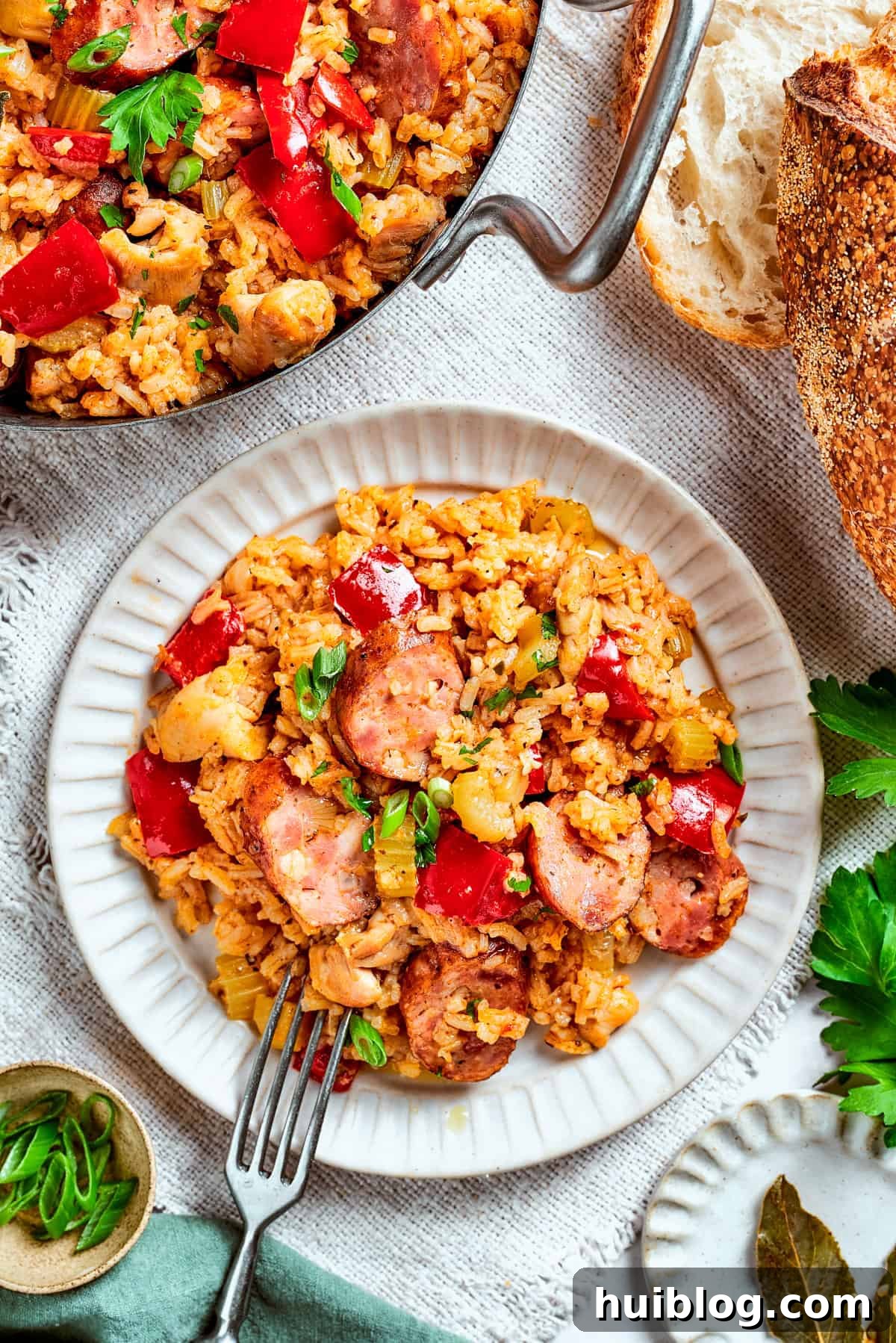
Storing and Reheating Your Chicken and Sausage Jambalaya
One of the many benefits of a hearty dish like jambalaya is how well it keeps, often tasting even better the next day as the flavors have more time to meld. Proper storage ensures you can enjoy delicious leftovers for days to come.
- Refrigeration: Once your jambalaya has cooled completely to room temperature, transfer it to an airtight container. Store it in the refrigerator for up to 3-4 days. Ensure it’s sealed well to maintain freshness and prevent it from drying out or absorbing other fridge odors.
- Freezing: For longer storage, jambalaya freezes beautifully. Allow it to cool completely, then transfer individual portions or a larger batch into freezer-safe airtight containers or heavy-duty freezer bags. Remove as much air as possible to prevent freezer burn. Jambalaya can be stored in the freezer for up to 3 months. Thaw overnight in the refrigerator before reheating.
-
Reheating Instructions:
- Microwave: This is the quickest method for individual servings. Place your desired portion in a microwave-safe dish. Add a splash of chicken broth or water (about 1-2 tablespoons per serving) to reintroduce moisture and prevent dryness. Cover loosely and heat in 1-minute increments, stirring well after each minute, until it is thoroughly heated through and steaming.
- Stovetop: For larger quantities or to achieve a fresher texture, reheat jambalaya in a pot or Dutch oven over medium-low heat. Add a bit of chicken broth or water to prevent sticking and dryness. Stir frequently, breaking up any clumps, until it’s piping hot. This method helps the rice rehydrate more evenly.
Always ensure that leftovers are reheated to an internal temperature of 165°F (74°C) to ensure food safety.
More Mouthwatering Easy Chicken Recipes to Explore
If you’ve enjoyed the comforting and versatile nature of this Chicken and Sausage Jambalaya, you’ll love diving into more of my easy chicken recipes. Chicken is a fantastic protein for weeknight meals, offering endless possibilities for flavor and preparation. Here are a few more favorites to inspire your next dinner:
- Flavorful Chicken Souvlaki: Transport your taste buds to the Mediterranean with these succulent marinated chicken skewers, perfect for grilling or pan-frying. They’re light, fresh, and incredibly satisfying.
- Creamy Pesto Chicken: A quick and indulgent dish where tender chicken breasts are bathed in a rich, vibrant pesto cream sauce. Serve over pasta or with crusty bread for a truly delightful meal.
- One-Pot Creamed Spinach Chicken: Embrace another one-pot wonder with this comforting recipe featuring juicy chicken smothered in a luxurious creamed spinach sauce. Minimal cleanup, maximum flavor!
- Homemade Chicken Alfredo Pizza: Take pizza night to a new level with this delectable creation. A creamy Alfredo base, tender chicken, and plenty of cheese make for an irresistible homemade pizza experience.
Chicken and Sausage Jambalaya Recipe
This Chicken and Sausage Jambalaya is a flavor-packed feast featuring juicy chicken bites, spicy sausage, and tender rice, all folded into a rich, tomato-based broth. It’s a true one-pot wonder perfect for a hearty family meal.
By: Katerina | Easy Weeknight Recipes
Prep Time: 15 minutes
Cook Time: 45 minutes
Total Time: 1 hour
Servings: 8 servings
Ingredients
For the Jambalaya:
- 1 tablespoon olive oil
- 3 to 4 boneless skinless chicken thighs, cut into bite-sized pieces
- ½ teaspoon kosher salt
- ¼ teaspoon black pepper
- 1 medium yellow onion, diced
- 1 pound Andouille sausage, sliced into ½-inch thick rounds
- 1 large red bell pepper, seeded and diced
- 2 celery ribs, diced
- 2 cloves garlic, minced
- 1½ cups dry long-grain rice (or jasmine rice)
- ½ teaspoon smoked paprika
- ½ teaspoon dried thyme
- 1 teaspoon dried oregano
- ⅓ teaspoon cayenne (or red pepper flakes, adjust to taste)
- 4 cups low-sodium chicken broth
- ½ cup crushed tomatoes
- 2 bay leaves
- ½ teaspoon salt, or to taste
- Freshly cracked black pepper, to taste
To Serve:
- Sliced scallions
- Chopped fresh parsley
Instructions
- Prepare and Season the Chicken: Season the chicken pieces generously with kosher salt and black pepper on both sides.
- Cook the Chicken: Heat olive oil in a large skillet or Dutch oven over medium-high heat. Add the seasoned chicken thighs and cook until golden brown on both sides, about 6-7 minutes. Remove the chicken from the Dutch oven and set it aside, covering with foil to keep warm.
- Sauté the Veggies and Sausage: In the same pot, add the diced onion, sliced Andouille sausage, red bell pepper, celery, and minced garlic. Cook until the vegetables are softened and the sausage begins to brown, about 5 minutes.
- Stir the Rice and Spices: Add the dry long-grain rice and the seasoning blend (smoked paprika, thyme, oregano, cayenne) to the Dutch oven. Stir well to coat the rice and vegetables with the spices for 1-2 minutes.
- Combine and Simmer: Return the browned chicken thighs to the Dutch oven. Pour in chicken broth, crushed tomatoes, and bay leaves. Bring the mixture to a boil, then cover and reduce heat to low. Simmer for 15 to 20 minutes, or until the rice has absorbed the liquid and is cooked through. Stir occasionally to prevent sticking.
- Finish: Once the jambalaya is cooked, remove from the heat and discard the bay leaves.
- Taste and Adjust: Adjust the seasoning with additional salt and freshly cracked black pepper, if needed.
- Enjoy: Serve hot, garnished generously with sliced scallions and chopped fresh parsley.
Nutrition Facts (Estimated per serving)
Serving: 12 ounces | Calories: 414kcal | Carbohydrates: 34g | Protein: 24g | Fat: 20g | Saturated Fat: 6g | Polyunsaturated Fat: 4g | Monounsaturated Fat: 9g | Trans Fat: 0.1g | Cholesterol: 89mg | Sodium: 850mg | Potassium: 562mg | Fiber: 2g | Sugar: 3g | Vitamin A: 817IU | Vitamin C: 29mg | Calcium: 41mg | Iron: 2mg
Nutritional information is an estimate and provided as a courtesy. Values may vary according to the exact ingredients, brands, and tools used. Please use your preferred nutritional calculator for more detailed and accurate information.