
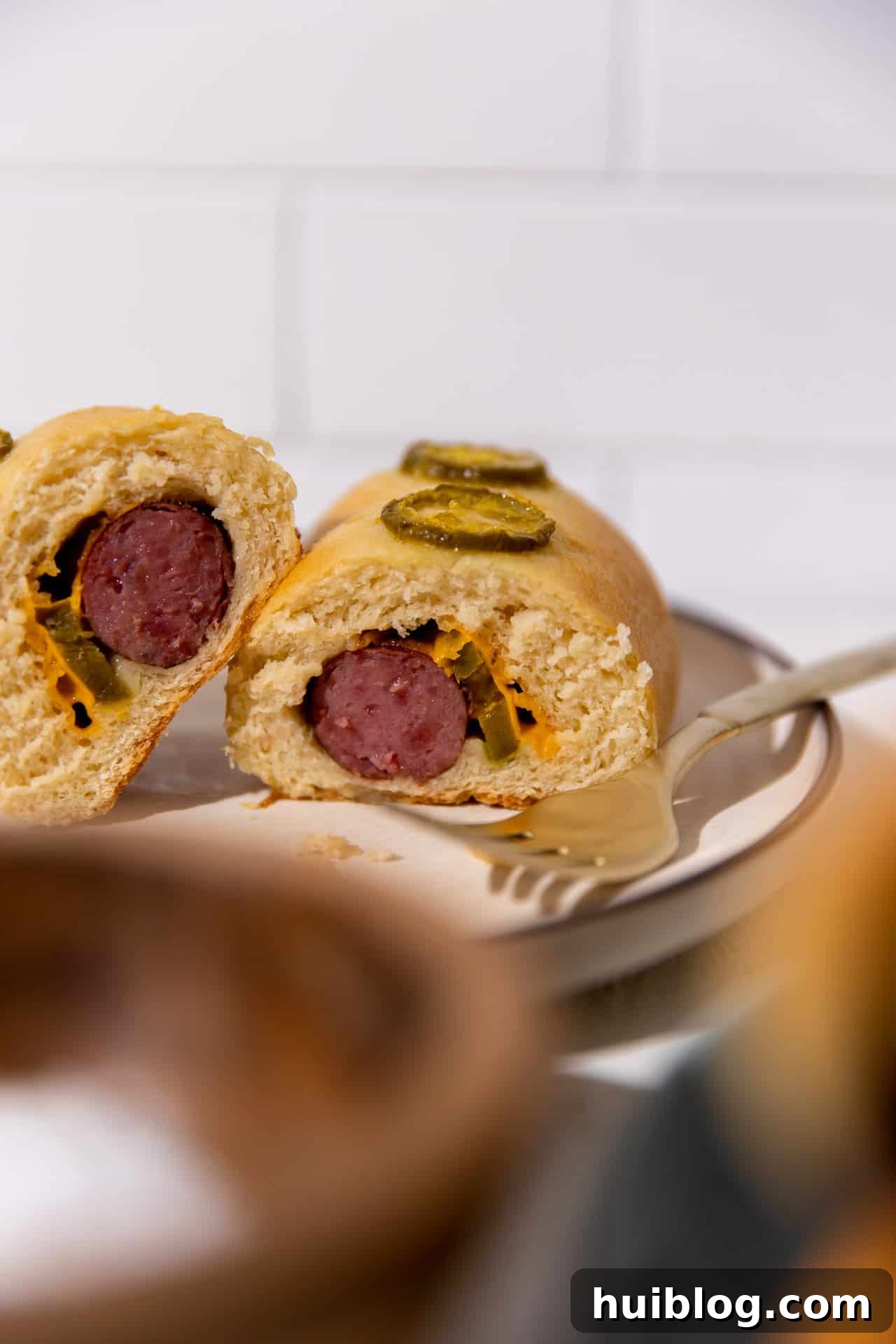
Authentic Texas Sausage Kolaches: A Delicious Homemade Klobasnek Recipe
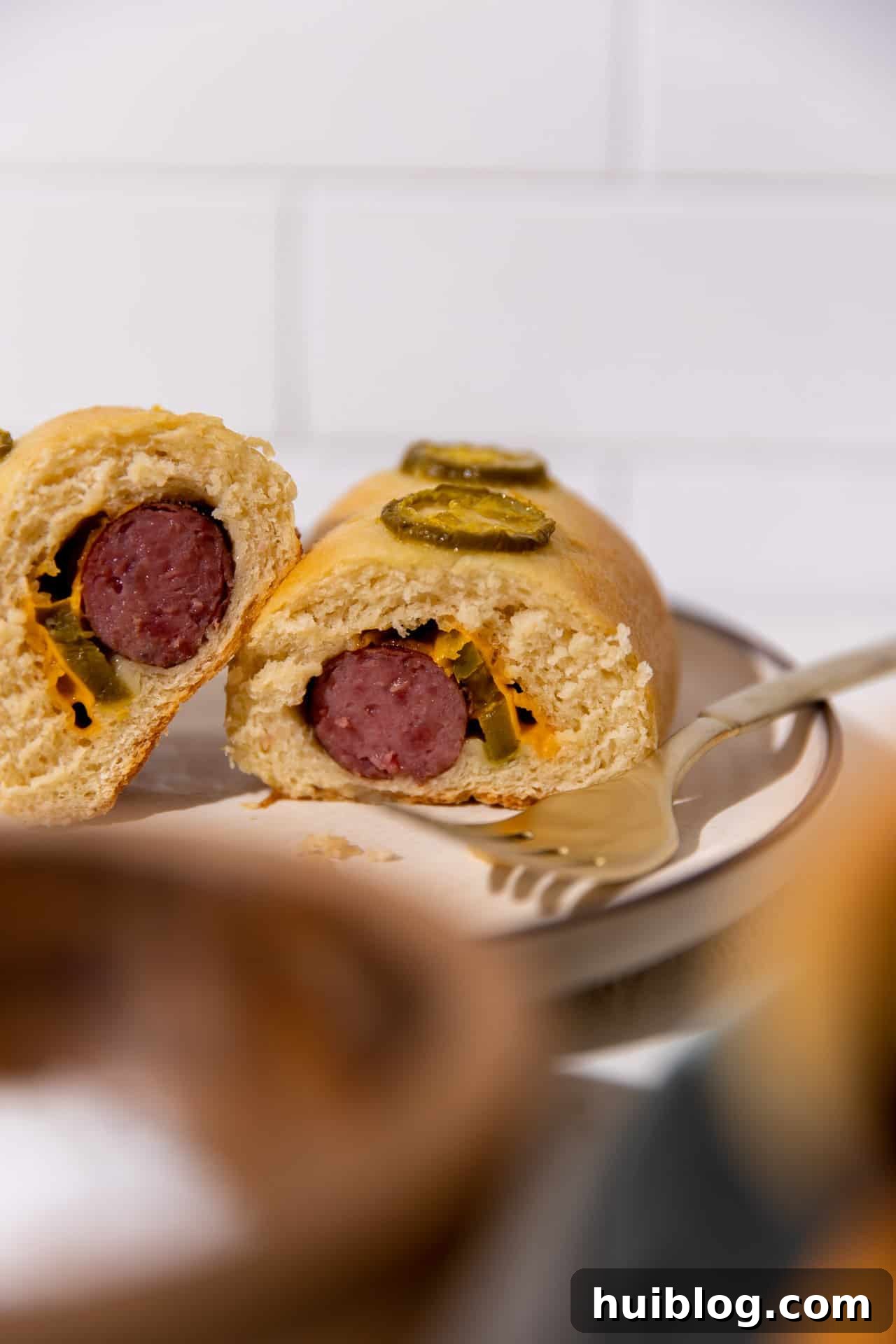
Craving a hearty, satisfying breakfast that transports you straight to a Texan morning? Look no further than these incredible Texas Sausage Kolaches! Made with a soft, sweet yeast breading that perfectly encases a savory, cheese-filled sausage (often with a kick of jalapeño), these pastries are a beloved staple across the Lone Star State. Forget the long lines at the donut shop and discover the joy of baking your own fresh, warm kolaches right in your kitchen. This comprehensive guide will walk you through every step to create these iconic breakfast delights, ensuring a fluffy, flavorful experience that will have everyone asking for more.

The Beloved Texas Sausage Kolache: A Culinary Journey
Texas Sausage Kolaches, locally pronounced “kol-ah-chees,” are more than just a breakfast item; they’re a cultural icon. Found in almost every donut shop and bakery across Texas, these delightful pastries have a fascinating history rooted in Czech immigration. Originally, Czech immigrants brought their traditional sweet kolache recipe to Central Texas in the 1800s. These were typically round, slightly sweet buns with a dollop of fruit filling in the center. However, as cultures blended and tastes evolved, an ingenious savory variation emerged.
The “sausage kolache” as Texans know it today is technically called a Klobasnek (klo-bah-snek) in Czech tradition, referring to a savory pastry with meat. Despite this distinction, the term “kolache” became a catch-all in Texas for both the sweet, fruit-filled versions and their savory, sausage-wrapped counterparts. This unique fusion of Czech baking techniques with Texan culinary preferences created a new regional delicacy. The addition of cheese and often pickled jalapeños transformed the klobasnek into a truly Texan breakfast masterpiece, offering a perfect blend of sweet, savory, and spicy notes in every bite.
Why Bake Homemade Texas Sausage Kolaches?
While grabbing a kolache from your local shop is convenient, there’s an unparalleled satisfaction and superior flavor that comes from making them at home. Here’s why you should embrace the homemade route:
- Unmatched Freshness: There’s nothing quite like a warm kolache fresh from your oven, with the aroma of freshly baked bread filling your kitchen.
- Customization is Key: You have complete control over the ingredients. Choose your favorite type of sausage, cheese, and adjust the spice level with jalapeños (or omit them entirely for a milder version).
- Quality Ingredients: Select high-quality, fresh ingredients for a healthier and more delicious result compared to mass-produced versions.
- A Fun Family Activity: Making kolaches can be a wonderful activity to share with family, from kneading the dough to rolling and filling each pastry.
- Better Than the Bakery: With our optimized recipe, your homemade kolaches will boast a fluffier dough and a richer flavor profile, easily surpassing many store-bought options, especially with the added honey butter glaze.
Gather Your Ingredients: Crafting the Perfect Kolache Dough and Filling
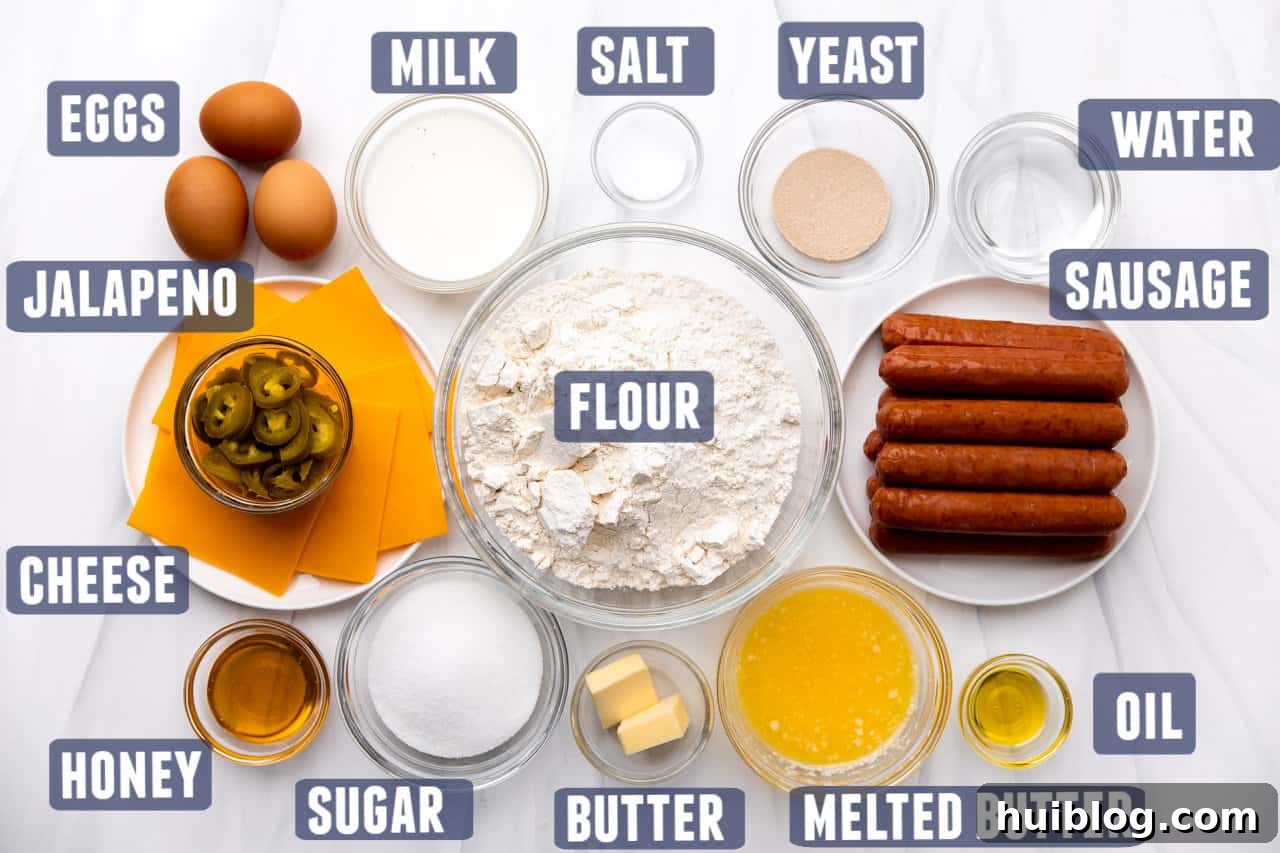
Creating the perfect Texas Sausage Kolache starts with understanding the role of each ingredient in both the fluffy, slightly sweet dough and the savory, satisfying filling. Precision in baking ensures a consistent and delicious outcome every time.
Dough Essentials:
- Warm Water: Crucial for activating the yeast. Ensure it’s around 110°F (43°C) – too hot will kill the yeast, too cold won’t activate it.
- Sugar: Not just for sweetness, a small amount helps “feed” the yeast, encouraging it to bloom. The remaining sugar contributes to the dough’s signature sweet and rich flavor.
- Active Dry Yeast: The leavening agent that gives the kolaches their airy, fluffy texture. Always bloom it first to ensure it’s active.
- Unsalted Butter: Melted and cooled, it adds richness and tenderizes the dough. Using unsalted butter allows you to control the overall salt content.
- Milk: Contributes to the dough’s softness and flavor. Whole milk is recommended for the best results.
- Large Eggs: Provide structure, richness, and help with browning. Ensure they are beaten before adding to the wet ingredients.
- Salt: Essential for balancing the flavors and controlling the yeast activity. Don’t skip it!
- All-Purpose Flour: The backbone of the dough. While the recipe specifies a quantity, always have a little extra on hand for dusting, as humidity and flour type can affect absorption.
Savory Filling Options:
- Sausage: The classic choice is a smoked polish sausage, but many Texan donut shops use beef hot dogs or breakfast sausages. Opt for a fully cooked or smoked sausage to ensure it’s warmed through and flavorful during the short baking time. If using raw sausage, pre-cook it completely.
- Cheese: Sliced or shredded, mild cheddar, Monterey Jack, or a Colby Jack blend are popular choices. The cheese melts beautifully, adding a creamy, savory layer to the kolache.
- Jalapeños: Pickled jalapeños offer a consistent tang and moderate heat that pairs wonderfully with the sausage and cheese. If using fresh jalapeños, it’s highly recommended to sauté them first to soften them and mellow their raw bite.
Mastering Homemade Texas Sausage Kolaches: A Step-by-Step Guide
Baking homemade kolaches is a rewarding process, and following these detailed steps will ensure you achieve perfectly fluffy and flavorful results.
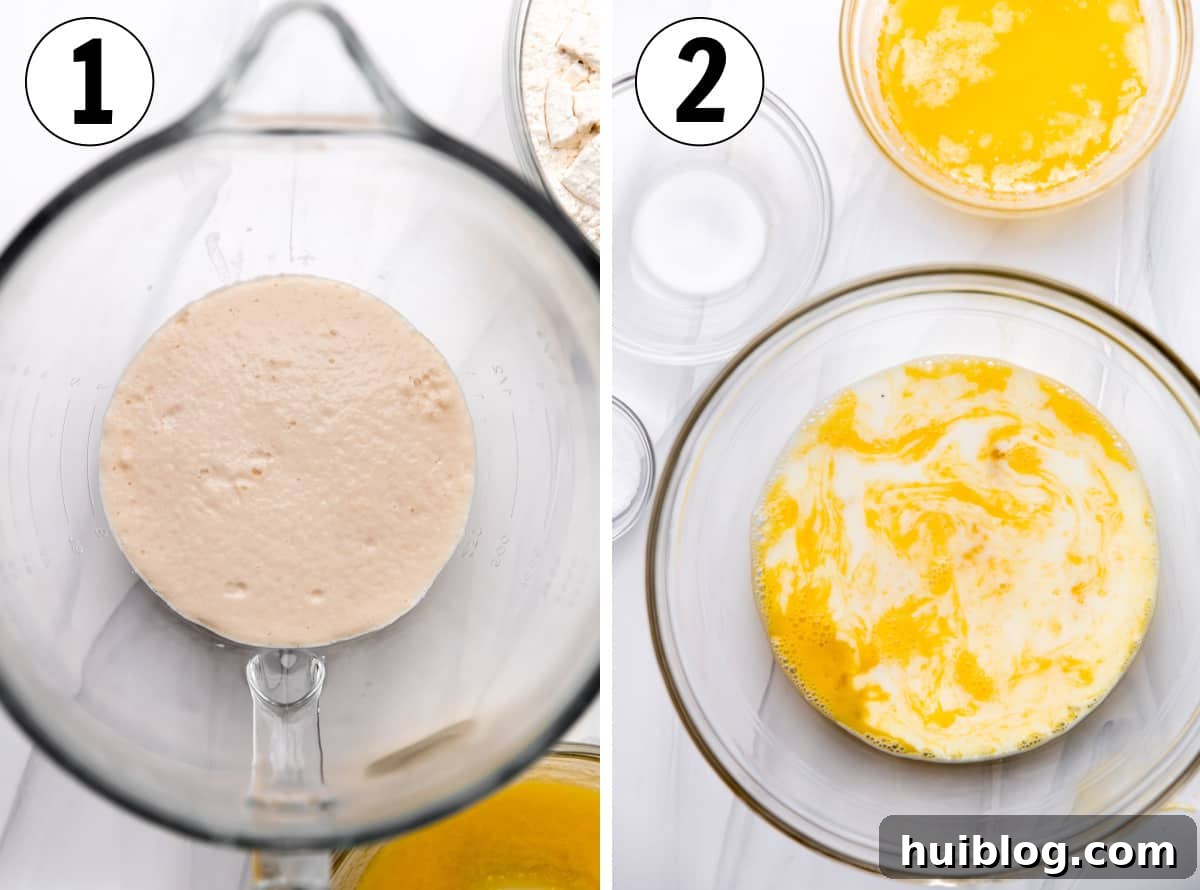
- Activate the Yeast: In the bowl of your stand mixer (or a large mixing bowl if mixing by hand), pour in the warm water. Stir in 1 teaspoon of the sugar and the active dry yeast. Let this mixture sit undisturbed for about 5 to 10 minutes. You should see it become bubbly and foamy, indicating the yeast is active and ready to work. If no bubbles appear, your yeast may be expired, and you’ll need to start with new yeast.
- Combine Wet Ingredients: In a separate bowl, whisk together the beaten eggs, melted and cooled unsalted butter, milk, the remaining sugar, and salt until well combined. This ensures even distribution of flavors.
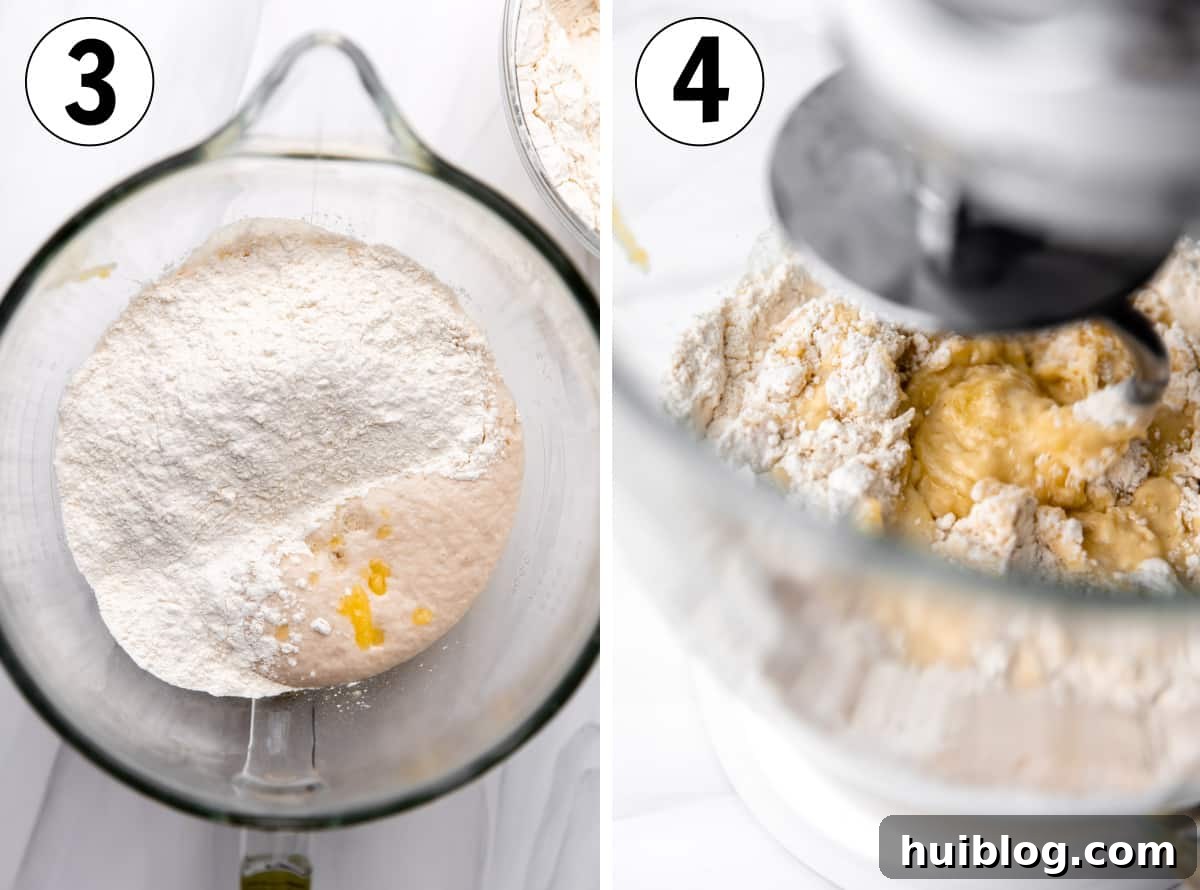
- Integrate Wet and Dry: Pour the egg-butter-milk mixture into the activated yeast mixture in your stand mixer bowl. Add half of the all-purpose flour to the bowl.
- Begin Mixing the Dough: Attach the dough hook to your stand mixer. Start mixing on low speed until the flour is just incorporated. Then, add the remaining flour. Continue to mix on medium-low speed for another 2-3 minutes. The dough will be quite sticky at this stage, but this higher hydration contributes to a very tender and moist kolache.
- Initial Kneading: Lightly sprinkle about a tablespoon of the extra flour onto a clean, dry work surface. Using a silicone spatula or your hands, scrape all the sticky dough out of the mixer bowl onto the floured surface. Gently knead the dough by hand for just 2-3 times. The small amount of flour on the surface should be enough to make the dough form into a smooth, cohesive ball without being overly sticky. Avoid adding too much additional flour, as this can make the kolaches dry.
- First Rise: Lightly grease a large clean bowl with a teaspoon of oil, ensuring the bottom half is coated. Place the dough ball into the bowl, then give it a quick spin and flip it over to lightly grease the top of the dough. Cover the bowl tightly with plastic wrap or a clean kitchen towel. Place it in a warm, draft-free place to rise for 1 hour, or until it has doubled in size. During the last 20-15 minutes of this rise time, cook your sausages according to package instructions until warmed through and lightly seared on all sides, then set them aside to cool slightly.
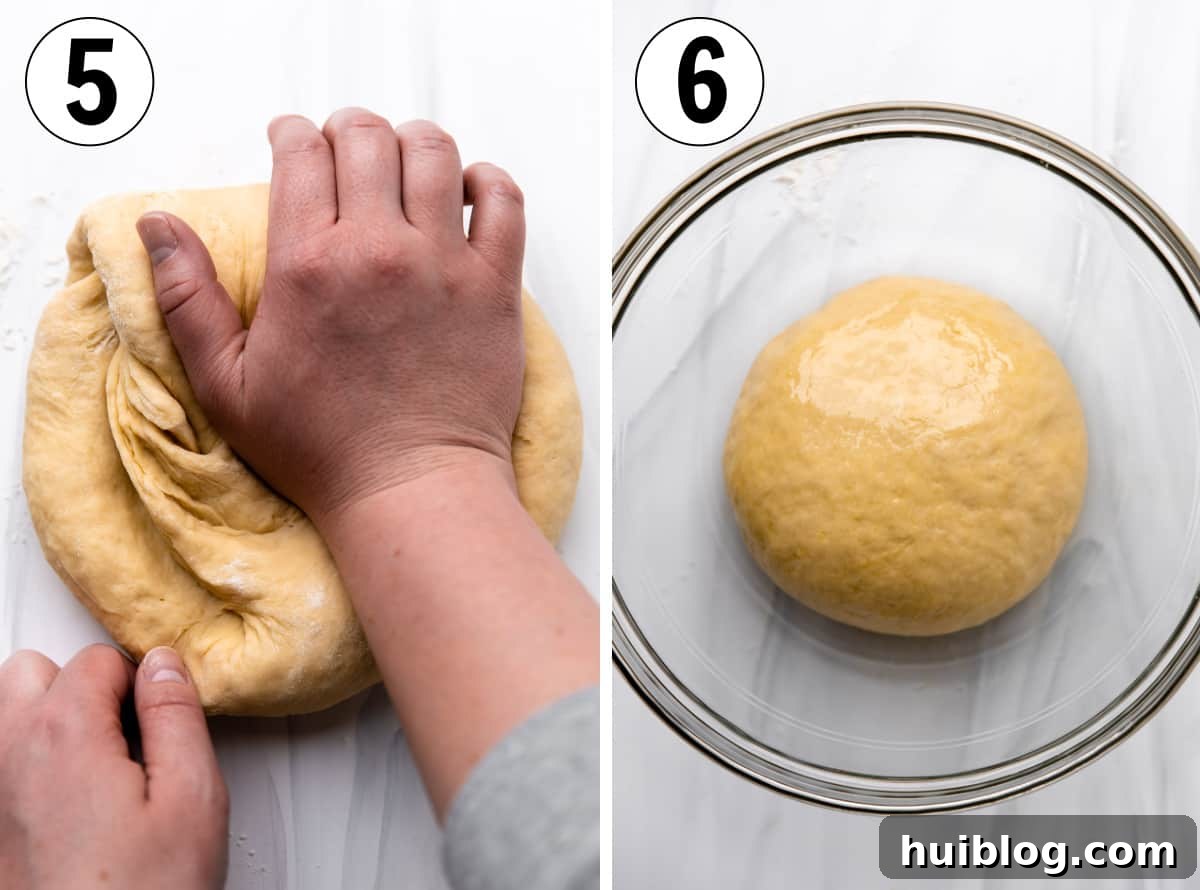
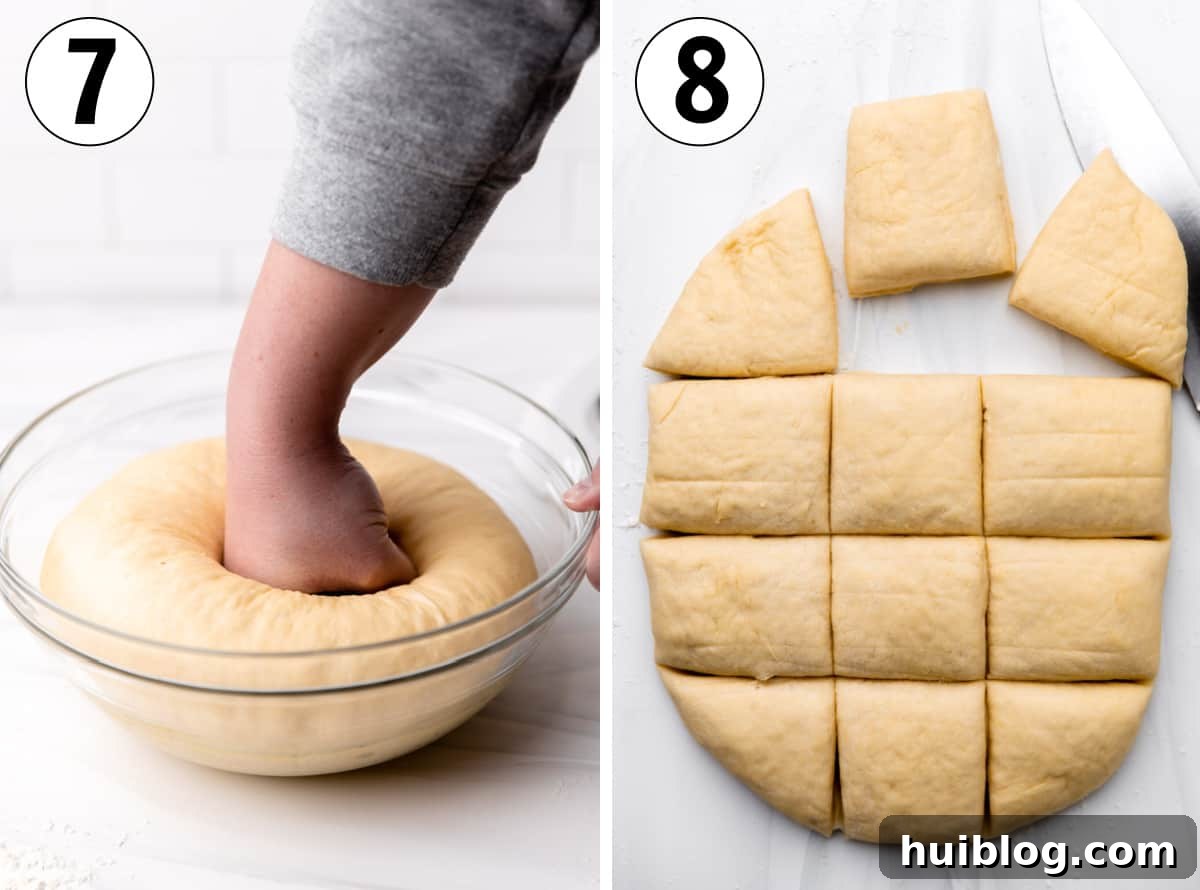
- Prepare Work Surface: Once the dough has doubled, gently remove the plastic wrap and “punch down” the dough to release the air. Transfer the dough to a lightly floured work surface, using the remaining tablespoon of flour for dusting. Press the dough out evenly into a rectangular shape, approximately 7 inches by 5 inches.
- Divide the Dough: Using a sharp knife or a bench scraper, divide the dough into 12 equal square portions. This size is ideal for wrapping around a standard hot dog-sized sausage.
- Prepare Baking Sheet: Line a large baking sheet with a silicone baking mat or spray it generously with non-stick cooking spray. This will prevent sticking and help with easy cleanup.
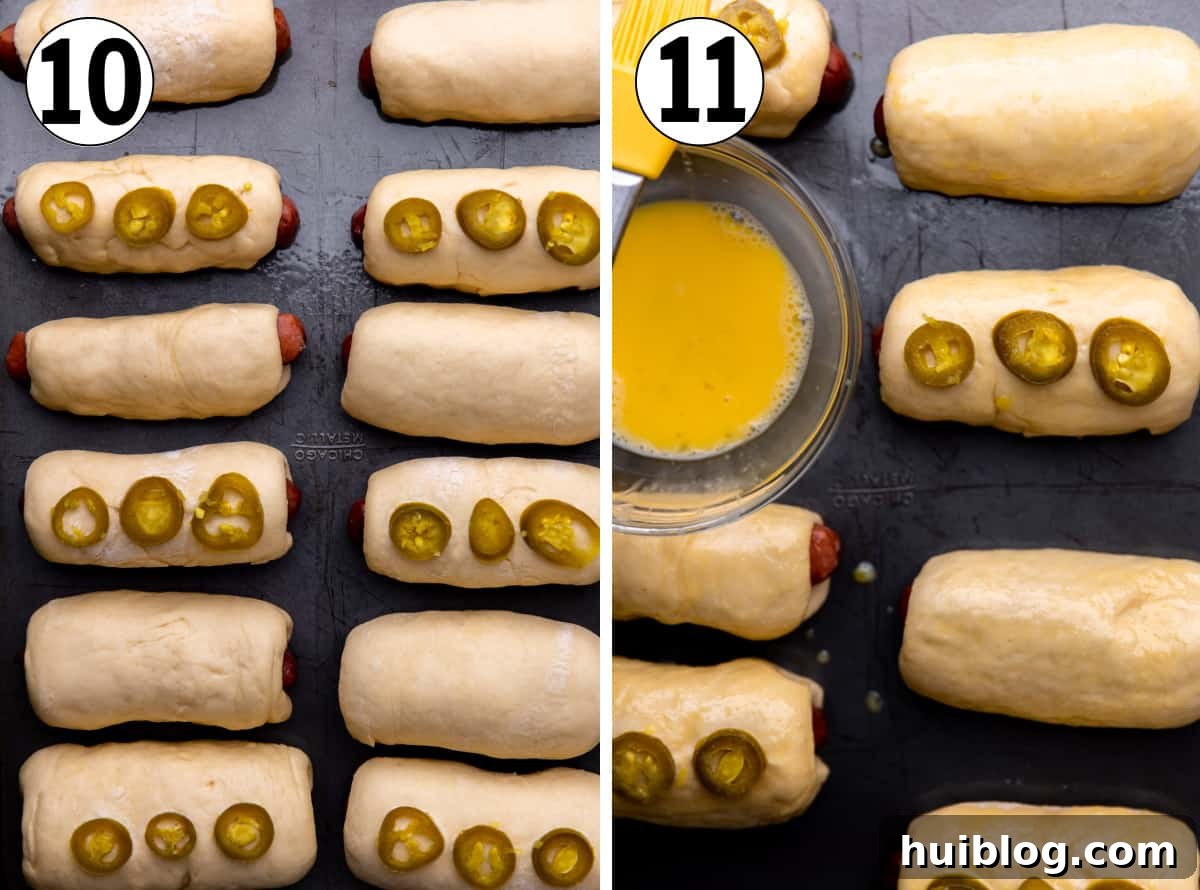
- Assemble the Kolaches: Take one portion of dough and gently flatten it into a larger square, about 3 inches by 3 inches. Place half a slice of cheese (or a small handful of shredded cheese) onto one side of the dough. Lay a few slices of pickled jalapeño (if using) on top of the cheese, then place a cooked sausage on top of the jalapeños. Carefully roll the dough up, starting from the side with the filling, until the sausage is fully enclosed. Pinch the edges of the dough together firmly to seal the kolache completely, ensuring no filling leaks out during baking. Place the assembled kolache, seam-side down, on your prepared baking sheet. If desired, you can press a few extra jalapeño slices onto the top of the dough for identification or extra spice.
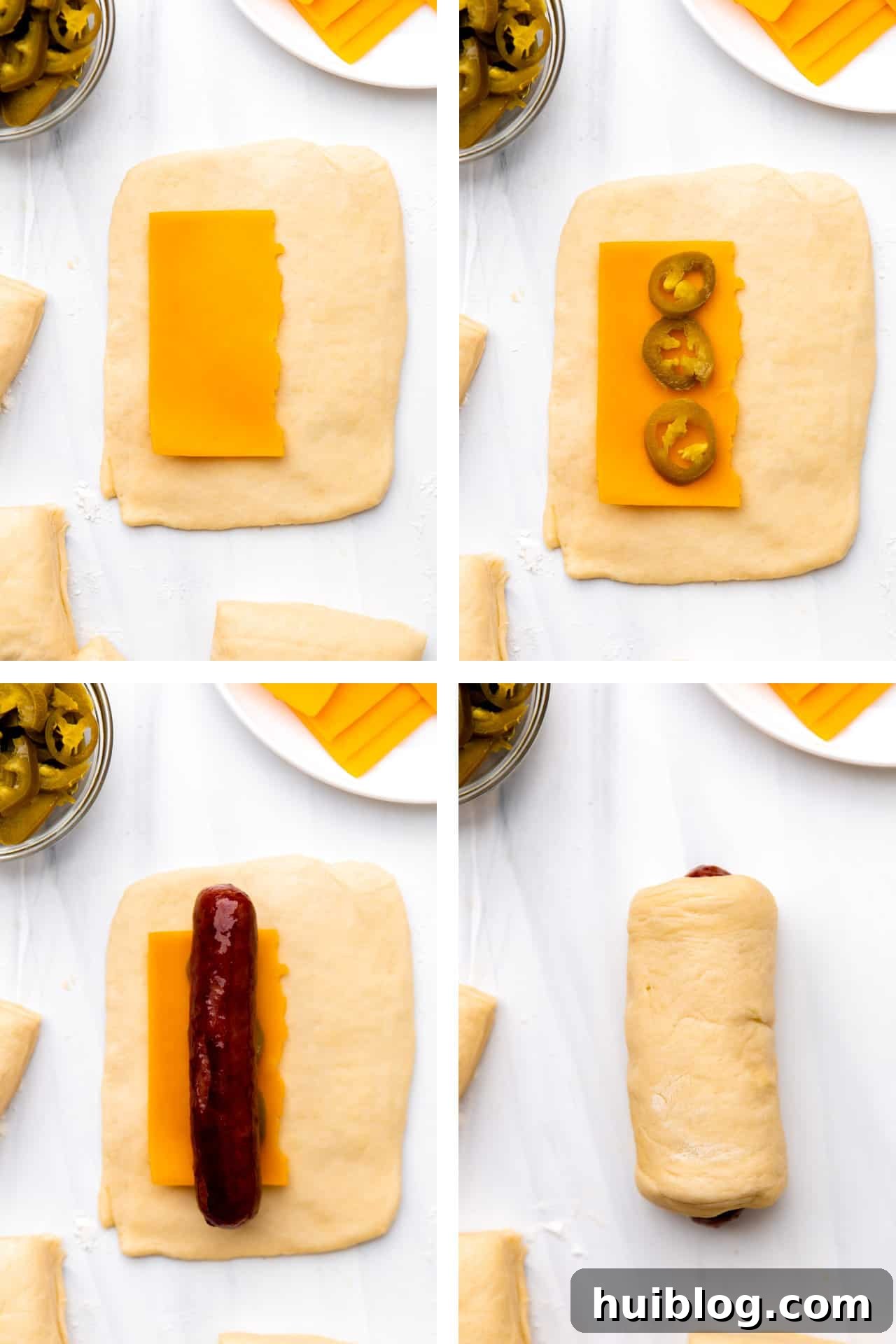
- Second Rise: Repeat the filling and rolling process with the remaining dough portions. Arrange the kolaches on the baking sheet about 1/2 to 1 inch apart. They will expand as they rise and bake, but it’s okay if they touch slightly—you can easily separate them after baking. Cover the baking sheet loosely with plastic wrap or a clean towel and let the kolaches rise for an additional 45 minutes in a warm spot. During the last 15 minutes of this rise, preheat your oven to 400°F (200°C).
- Egg Wash & Bake: In a small bowl, whisk together 1 large egg with 1 teaspoon of water to create an egg wash. Gently brush this mixture over the tops and sides of the risen kolaches. This egg wash will give them a beautiful golden-brown color and a subtle sheen. Bake in the preheated oven for 14-15 minutes, or until the tops are gloriously golden. For even browning, rotate the baking sheet halfway through the baking time.
- Honey Butter Glaze: While the kolaches are still hot from the oven, quickly prepare the honey butter glaze. Melt 2 tablespoons of unsalted butter and stir in 2 tablespoons of honey until thoroughly combined. Generously brush this sweet glaze over the tops of the hot kolaches. This step adds a wonderful sweetness and shine, enhancing the tender dough.
- Serve Warm: Let the kolaches cool on the baking sheet for a few minutes before serving. They are best enjoyed warm, allowing the cheese to remain gooey and the dough to be at its softest.
Expert Tips for Perfectly Baked Texas Kolaches
Achieving kolache perfection is within reach with a few insider tips and tricks:
- Customize Your Jalapeños: Not everyone loves the heat! For a family with mixed preferences, prepare some kolaches without jalapeños. To differentiate them, you can place a few sliced jalapeños on top of the spicy ones before baking as a visual marker. Remember, pickled jalapeños are generally less spicy and more consistent in flavor than fresh ones. If using fresh, sauté them first to soften and reduce their raw intensity.
- Make Ahead for Convenience: Kolaches are fantastic for meal prep! You can prepare them the night before. After assembling the kolaches and placing them on the baking sheet, let them complete only about 30 minutes of their second rise. Then, cover the baking sheet tightly with plastic wrap and refrigerate overnight. The next morning, remove them from the fridge while your oven preheats, letting them come to room temperature for about 30-45 minutes before brushing with egg wash and baking as instructed. This allows for a fresh, warm breakfast with minimal morning effort.
- Experiment with Fillings: While sausage, cheese, and jalapeños are classic, the versatility of the kolache dough allows for endless variations.
- Ham and Cheese: A simple yet delicious combination, perfect for a milder flavor.
- Breakfast Scramble: Cooked scrambled eggs with diced sausage or bacon make for a complete breakfast in one pastry.
- Boudin Kolaches: For a true Louisiana-Texas crossover, use cooked boudin (a sausage mixed with rice and spices) as a flavorful filling.
- Sweet Options: Although this recipe focuses on savory, the sweet dough can also be adapted for traditional fruit fillings like prune, poppy seed, or apricot if you’re feeling adventurous (adjusting sugar content in dough might be needed for very sweet fillings).
- Dough Handling: The dough is designed to be sticky for maximum tenderness. Avoid the temptation to add too much extra flour during kneading or rolling, as this will result in a dry, tough kolache. A lightly floured surface and greased hands are your best friends.
- Storage and Reheating: Leftover kolaches can be stored in an airtight container at room temperature for up to 2 days, or refrigerated for up to 4 days. For longer storage, freeze them individually wrapped for up to 2-3 months. Reheat in a microwave for 30-60 seconds, or in a preheated oven (350°F/175°C) for 10-15 minutes until warmed through.
Kolache FAQs: Debunking Myths and Clarifying Terms
Navigating the world of kolaches can sometimes be confusing, especially with their rich cultural history. Here are answers to some frequently asked questions:
Traditional kolaches originated in Bohemia, a region now part of the Czech Republic. Czech immigration to Texas began in the 1850s, bringing with them their beloved baking traditions. Once settled in Central Texas, their sweet kolache dough was adapted to local tastes, eventually being used to encase savory fillings like Polish sausage, and later, cheese and jalapeños. This culinary evolution transformed the Czech pastry into a classic Texan recipe, a testament to the blending of food cultures. So while the origins are Czech, the sausage-filled variations are indeed a unique and widespread Texas staple, featured in almost all local donut shops throughout the state.
Absolutely not! This is a common point of contention among Texans. “Pigs in a blanket” are typically made using a pre-made crescent roll dough, which is flaky and savory. Kolaches (or klobasneks, when savory) are made using a distinct, homemade sweet yeast dough. This dough is characteristically soft, fluffy, and slightly sweet, providing a delightful contrast to the savory sausage and cheese filling. The sweet dough makes kolaches a completely different experience than your average pig in a blanket. Referring to a Texas Sausage Kolache as a “pig in a blanket” is a surefire way to lightly offend a Texan!
While the vast majority of Texans will simply call them “sausage kolaches” or just “kolaches,” the actual traditional Czech name for a pastry filled with meat is a Klobasnek. The term “kolache” traditionally refers to the sweet, fruit-filled versions. However, due to regional adoption and simplification, “kolache” has become the common term for both sweet and savory varieties in Texas.
Once cooled, store your homemade kolaches in an airtight container at room temperature for up to 2 days. For extended freshness, they can be refrigerated for up to 4 days. If you’ve made a large batch, kolaches freeze beautifully. Wrap each kolache individually in plastic wrap, then place them in a freezer-safe bag or container. They can be frozen for up to 2-3 months.
To reheat refrigerated kolaches, you can warm them in a microwave for 30-60 seconds until heated through. For a crispier exterior, place them in a preheated oven at 350°F (175°C) for 10-15 minutes. Frozen kolaches can be thawed in the refrigerator overnight or reheated directly from frozen in a 350°F (175°C) oven for 20-25 minutes, or until warmed through and golden.
More Delicious Breakfast Recipes to Try
If you loved these Texas Sausage Kolaches, be sure to explore more of our favorite hearty breakfast recipes that are perfect for any morning:
- Migas
- Loaded Buttermilk Biscuits
- Homemade Southern Biscuits
- Cheese Grits
Texas Sausage Kolaches (Klobasnek)
Prep:
30
Cook:
14
Resting Time:
1 45
Total:
2 29
Servings:
12
Author:
Serene

Ingredients
- ½ cup water (118 g) warmed to 110 degrees F
- ½ cup sugar
- 1 tbsp active dry yeast
- 8 tbsp unsalted butter melted and cooled
- ½ cup milk (123 g)
- 2 large eggs beaten
- 1 tsp salt
- 4 cups all purpose flour (545 g) plus 2 tablespoons for dusting
- 12 sausages (full hot dog size)
Egg Wash
- 1 large egg
- 1 tsp water
Honey Butter
- 2 tbsp unsalted butter
- 2 tbsp honey
Instructions
-
Pour the warm water into the bowl of a stand mixer.
-
Add 1 teaspoon of the sugar and the yeast. Stir to combine. Let this sit for 5 minutes to activate the yeast, it will be bubbly and foamy.
-
Stir together the eggs, melted butter, milk, remaining sugar, and salt.
-
Add this mixture to the yeast mixture in the bowl. Pour in half of the flour.
-
Using a dough hook, mix until combined.
-
Add the remaining flour and mix. Dough will be sticky. Continue to knead for another 2-3 minutes, dough will still be sticky.
-
Sprinkle a tablespoon of flour on a clean working surface. Using your hands or a silicone spatula scrape all of the dough onto the floured surface.
-
Using your hands, knead the dough 2-3 times until dough forms into a smooth ball thanks to the small amount of extra flour on your work-surface.
-
Pour the teaspoon of oil into a large bowl and spread around to coat the bottom half of the bowl, then place the dough in the bowl, spin and turn over so the top of the dough is lightly greased.
-
Cover and let rise in a warm place for 1 hour.
-
After 40 minutes, while dough is still rising, add the sausages to a large skillet and cook until warmed through, turning while they cook to ensure all sides are lightly seared.
-
Remove the cover from the dough bowl, punch the dough down, then remove the dough to a work surface lightly sprinkled with the remaining tablespoon of flour.
-
Press the dough into a rectangular shape, approximately 7 inches by 5 inches.
-
Cut the dough into 12 equal square shapes.
-
Prepare a large baking sheet with a silicone mat or sprayed with non stick cooking spray. Set aside.
-
Working with one piece of dough at a time, press the dough into a larger square shape, approximately 3 inches by 3 inches. Place a half slice of cheese on one side, then lay the sliced jalapeño on top, then the sausage.
-
Roll the dough and pinch together where it meets.
-
Place on the prepared baking sheet with the seam side down.
-
Press some sliced jalapeno on the top of the dough if desired.
-
Continue until all the kolaches are prepared. Place the kolaches on the baking sheet with approximately 1/2 to 1 inch of space in between, they rise while they bake, but it’s ok if they run into each other.
-
Cover and let rise for an additional 45 minutes.
-
While rising, preheat oven to 400 degrees F.
-
Remove the cover from the kolaches, prepare the egg wash by beating the egg with the water. Then brush this over the top of the dough.
-
Bake for 14-15 minutes until the tops are golden. Turn the baking sheet during the middle of baking if needed for even browning.
-
Remove from the oven, combine the melted butter and honey, and brush this on top of the kolaches while they are still hot.
-
Let cool for several minutes, then serve warm.
Equipment
-
stand mixer
-
large baking sheet
-
silicone baking mat
Notes
- Sausage: classic options would include a polish sausage. Many local donut shops simply use beef hot dogs.
- Cheese: sliced or shredded cheese will work, use what you have on hand.
- Jalapeños: for this particular recipe, pickled jalapeños work better. If you have fresh on hand and would prefer to use that I would recommend sautéing them first before adding to the recipe.
- Make Ahead: prepare these the night before, cut the second rise (after they are prepped and on the baking sheet) to only 30 minutes. Cover with plastic wrap nice and tight and place in the refrigerator overnight. The next morning, remove from the fridge and let sit out at room temperature while the oven preheats and bake as instructed.
Nutrition
Calories: 559kcal |
Carbohydrates: 44g |
Protein: 19g |
Fat: 34g |
Saturated Fat: 14g |
Polyunsaturated Fat: 4g |
Monounsaturated Fat: 13g |
Trans Fat: 1g |
Cholesterol: 128mg |
Sodium: 757mg |
Potassium: 294mg |
Fiber: 1g |
Sugar: 12g |
Vitamin A: 431IU |
Vitamin C: 1mg |
Calcium: 36mg |
Iron: 3mg
Nutrition information is automatically calculated, so should only be used as an approximation.
Like this? Leave a comment below!
- Recipe first published April 3, 2020. Recipe has been changed and updated as of July 1, 2022. Original recipe can be found here. Images and video updated to reflect changes.
- Photography by the talented @KJandCompany.co